
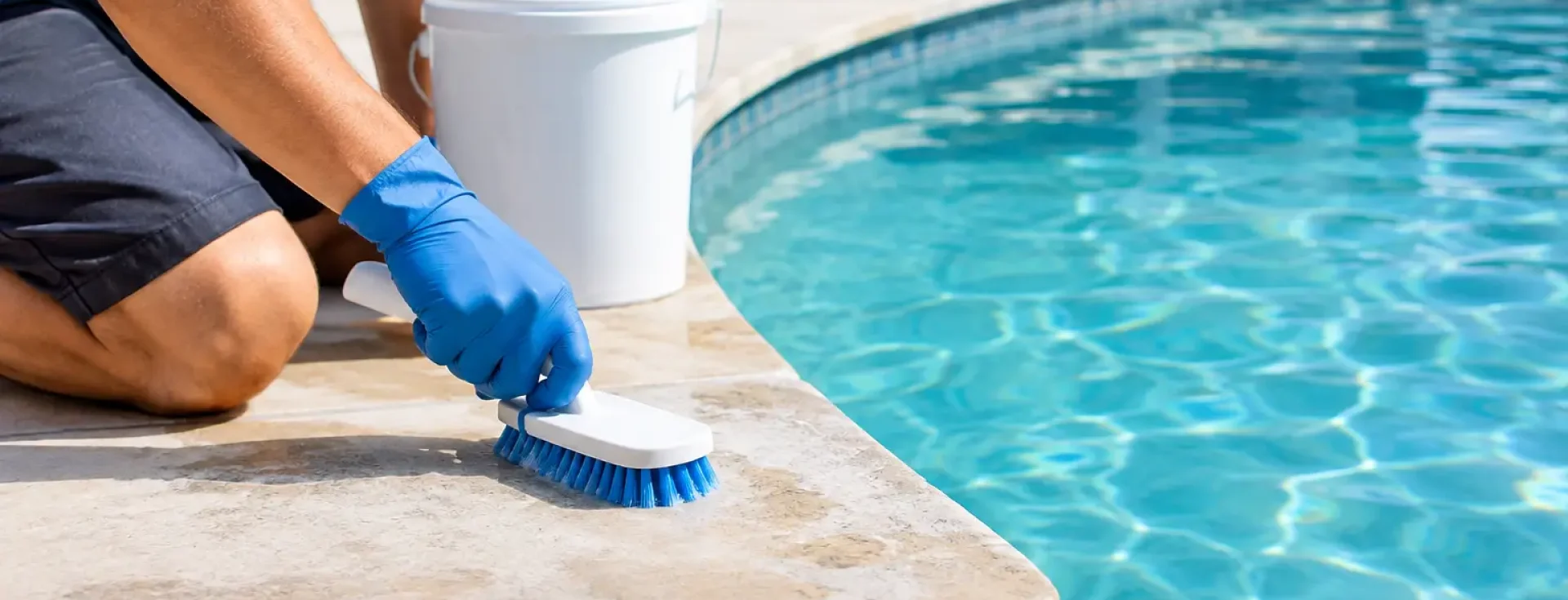
A brown ring at the waterline, a cluster of dark spots on the floor, or a faded patch near an inlet can diminish the appearance of an otherwise exceptional pool. Knowing how to remove pool stains begins with identifying what caused them. The wrong treatment can permanently etch plaster, fade tile grout, or disturb water chemistry, while the right approach restores a clean, refined finish without compromising the pool’s long-term performance.
For villa pools, hospitality properties, and high-visibility commercial facilities, stain removal should be treated as part of professional surface care, not as a quick cosmetic fix. The goal is to remove the visible mark, correct the source, and protect the finish from recurring damage.
Identify the Pool Stain Before Treating It
Pool stains generally come from one of three sources: metals in the water, organic debris, or mineral scale. Their color, location, and response to testing offer important clues. A stain that appears suddenly after adding water, chemicals, or a metal-based algaecide may be metal-related. A stain beneath a tree line or near a skimmer basket is more likely caused by leaves, berries, algae, or other organic material.
Mineral staining is especially common in hot climates where evaporation is high and water is regularly topped up. Calcium, magnesium, and other dissolved minerals can leave white, gray, or tan deposits around the waterline and on tile. These deposits may feel rough to the touch and become more difficult to remove when left untreated.
Common Stain Types and Their Causes
Brown, rust-colored, green, blue, or black marks often point to metals. Iron commonly creates brown or orange stains, while copper may leave blue-green or dark gray discoloration. Copper can enter the water through corroding equipment, certain algaecides, source water, or excessive use of mineral-based products.
Organic stains tend to be green, brown, reddish, or almost black. They develop when leaves, pollen, insects, berries, algae, or tannin-rich debris remain in contact with the surface. These stains are common in pools with inconsistent circulation, insufficient sanitation, or delayed cleaning.
White or pale gray marks around the waterline are usually scale rather than a conventional stain. Unlike loose dirt, scale bonds tightly to tile and plaster. It often develops when calcium hardness or pH remains too high, particularly in pools exposed to heat and substantial evaporation.
How to Remove Pool Stains Safely
The best method depends on the stain and the pool finish. Plaster, quartz, pebble, tile, vinyl, and fiberglass surfaces all react differently to chemicals and abrasive tools. A treatment suitable for ceramic tile can damage a softer plaster finish, while aggressive brushing can scratch fiberglass or vinyl.
Start by testing and balancing the water. Check pH, total alkalinity, sanitizer level, calcium hardness, and cyanuric acid. If metals are suspected, test for iron and copper as well. Correcting chemistry first prevents a stain treatment from creating further discoloration or allowing the mark to return shortly afterward.
For many organic stains, brushing the affected area with the correct pool brush and maintaining proper sanitizer levels is the first line of treatment. A nylon brush is appropriate for vinyl and fiberglass, while plaster and concrete finishes may tolerate a stainless-steel brush when used carefully. Brushing should be followed by adequate circulation and filtration so loosened contaminants are removed from the water.
If a localized organic mark remains, a professional can apply a controlled chlorine-based treatment directly to the affected area. This may lift stains from algae residue, leaf tannins, or other natural debris. Direct chemical application should be handled cautiously, since concentrated products can bleach or weaken certain finishes.
Treating Metal Stains
Metal stains require a more measured approach. Raising chlorine aggressively is rarely the answer and can make some metal staining worse. Instead, a qualified technician may use a reducing agent designed to lift metal discoloration from the surface, followed by a quality metal sequestrant in the water. The sequestrant keeps dissolved metals suspended so they can be managed through filtration and water treatment rather than settling back onto the pool surface.
This process works best when water chemistry is controlled before and after application. High pH can cause metals to precipitate out of solution, creating fresh stains. A professional service team can also inspect heaters, heat exchangers, fittings, and circulation equipment for corrosion or metal components that may be introducing contaminants.
Removing Waterline Scale
Waterline scale should be removed with products specifically formulated for pool tile and the relevant finish. Mild scale can often be treated through careful brushing and a suitable non-abrasive scale remover. Heavy deposits may require professional tile cleaning or controlled acid-based treatment.
Acid is not a universal solution. Used incorrectly, it can damage grout, etch plaster, weaken surface texture, and create uneven coloration. Draining a pool for an acid wash also carries risks, including surface stress, groundwater pressure, and unnecessary water loss. It should only be considered when a trained pool professional has confirmed that the finish and stain condition justify it.
Avoid Treatments That Create Permanent Damage
A clean pool surface should never come at the expense of the finish. Household cleaners, abrasive scouring pads, wire brushes, and unapproved acids can cause costly damage that is far more visible than the original stain. This is particularly relevant for premium mosaic tile, polished stone surrounds, quartz plaster, and decorative water features where appearance depends on consistent materials and precise detailing.
Do not mix chemicals or apply multiple stain removers without a clear diagnosis. Chlorine, acids, metal treatments, and scale removers can react unpredictably when combined. Always allow the circulation system to run after treatment, clean the filter as needed, and retest water chemistry before swimmers return to the pool.
When stains cover large sections of the pool, return quickly after treatment, or appear alongside cloudy water, rough surfaces, recurring algae, or equipment corrosion, the issue is likely systemic. At that point, surface cleaning alone will not deliver a lasting result.
Prevent Pool Stains From Returning
Prevention is built on stable water chemistry, consistent circulation, and dependable equipment. Keep pH and alkalinity within the recommended range for the pool system, maintain appropriate sanitizer levels, and test calcium hardness regularly. For properties that rely on top-up water with elevated mineral content, proactive metal and scale management can protect finishes before visible deposits develop.
Skimming debris promptly, brushing walls and steps, and vacuuming settled material reduce the chance of organic staining. Filtration also matters. A properly sized pump and clean filter help capture fine particles before they settle into pores, grout lines, or textured pool finishes.
For commercial pools, hotels, towers, and large residential communities, a scheduled maintenance program offers a significant advantage. Regular inspections can identify early scaling, imbalanced chemistry, deteriorating seals, poor circulation, and equipment wear before they affect the visual standard of the pool.
When Professional Pool Stain Removal Is the Better Choice
A small leaf stain may respond to basic maintenance, but premium pools deserve a more exact approach when the cause is uncertain. Professional diagnosis is particularly valuable for metal staining, widespread discoloration, rough scale, recurring marks, and stains on delicate surfaces. It reduces the risk of replacing tile, resurfacing plaster, or correcting avoidable equipment damage later.
Aquatic Pools and Fountains provides technical guidance and maintenance support for residential and commercial aquatic environments where finish quality, water clarity, and reliable operation all matter. A trained assessment can determine whether the answer is water balancing, targeted chemical treatment, filtration correction, equipment repair, or specialized surface care.
The most effective stain removal is rarely the harshest treatment. It is the precise treatment that respects the pool’s finish, corrects the water condition behind the problem, and preserves the elegant appearance your property was designed to deliver.