
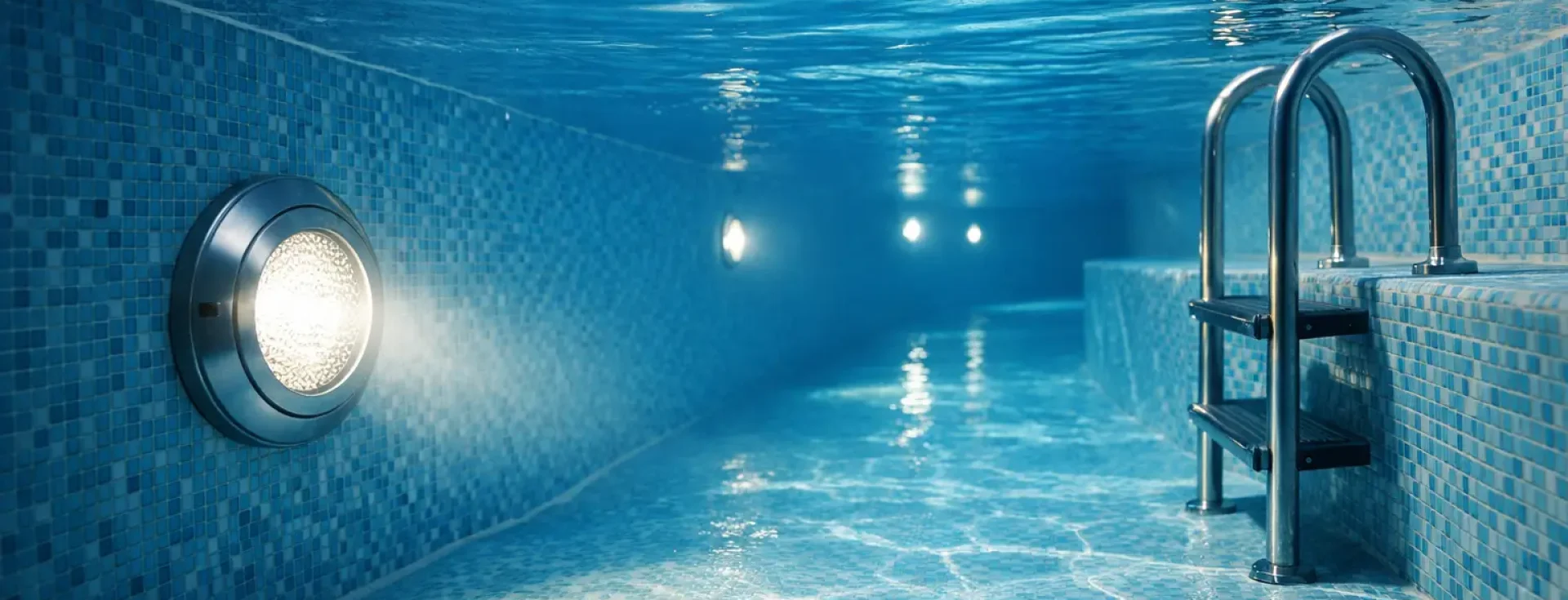
A pool can look impressive in daylight and still feel unfinished after sunset. The difference is often in the lighting. Well-chosen swimming pool lights underwater do more than add visual appeal – they shape the entire experience of the pool, improve visibility, support safer use at night, and give a residential or commercial property a far more polished finish.
For villa owners, hospitality operators, and developers, underwater lighting is not a detail to treat as an afterthought. It affects how the water looks, how the pool is used, and how well the installation performs over time. In premium environments, lighting needs to be elegant, dependable, and built for continuous exposure to demanding conditions.
Why swimming pool lights underwater matter
Underwater lighting serves two purposes at once: performance and presentation. From a practical standpoint, it makes the pool edge, steps, entry points, and underwater contours easier to see after dark. That matters for residential pools, but it is even more critical for hotels, apartment amenities, and shared-use facilities where safety and visibility are part of daily operation.
At the same time, lighting defines the mood of the space. A cool white light can make a pool look crisp and contemporary. A warmer tone can soften the environment around a villa terrace or landscaped deck. Color-changing systems can create more dramatic effects for entertainment areas, luxury hospitality settings, or branded commercial environments.
The right result depends on more than choosing a fixture that looks good in a catalog. Beam spread, housing material, niche compatibility, power supply, and installation quality all affect the final outcome.
Choosing the right swimming pool lights underwater
Not every light is suitable for every pool. Concrete pools, tiled pools, fiberglass shells, overflow pools, and water features each have different technical requirements. Depth, pool dimensions, wall finish, and circulation design also influence how the light performs once installed.
LED lighting is now the preferred standard for most premium projects. It offers lower energy consumption, longer service life, and better control over brightness and color. Compared with older halogen systems, LED fixtures generally require less maintenance and provide a more refined lighting effect. For property owners focused on long-term operating efficiency, that makes them the stronger investment.
That said, not all LED products are equal. Build quality matters. In a climate such as the UAE, where pools are used heavily and equipment is exposed to heat, chemical treatment, and continuous operation, low-grade fixtures tend to show their weaknesses quickly. Poor sealing, inconsistent output, weak housing materials, and unstable drivers often lead to early failure.
For that reason, commercial buyers and quality-conscious homeowners usually benefit from selecting lighting from established global brands with a proven record in aquatic applications. A premium fixture costs more upfront, but it often delivers far better durability, cleaner illumination, and fewer service interruptions.
What to look for in a premium underwater lighting system
A high-quality lighting system should be evaluated as a complete installation, not as a single standalone item. The fixture is only one part of the equation. Transformers, control systems, cabling, waterproof seals, and installation methods must all work together correctly.
Material quality is one of the first things to assess. Stainless steel and high-grade engineered polymers are common in dependable underwater lighting products. The ideal choice depends on the pool design, water chemistry, and application. In some settings, a corrosion-resistant polymer body may be more practical. In others, stainless steel complements the finish and design language of the pool more effectively.
Ingress protection and sealing quality are equally important. Underwater lights operate in a harsh environment. If water enters the fitting, performance drops quickly and replacement becomes unavoidable. A properly specified product with professional installation reduces that risk significantly.
Light output also deserves careful attention. More brightness is not always better. An oversized fixture in a compact pool can create glare and harsh reflections rather than elegance. On the other hand, a large commercial pool may need multiple carefully positioned fittings to avoid dark zones. Good lighting design creates even visual coverage without making the water feel overlit.
White light or color-changing LEDs?
This choice depends on the property, the intended use, and the atmosphere the client wants to create.
White LED lighting remains the preferred option for many luxury homes, lap pools, and formal hospitality settings. It delivers a clean, timeless appearance and often highlights tile finishes, water clarity, and architectural lines more effectively than color-changing systems. Cool white tends to feel modern and crisp, while warm white can create a softer, more relaxed evening setting.
Color-changing RGB or RGBW lighting is popular in entertainment-focused villas, resorts, rooftop pools, and commercial projects where visual impact is part of the appeal. These systems allow scene control and dynamic effects, which can be valuable for branded environments or event-driven spaces. The trade-off is that they require more sophisticated controls and, in some cases, more planning to ensure colors appear balanced across the pool.
For many clients, the best decision is not about features alone. It is about how the pool is actually used. A private residence focused on quiet evening swimming may be better served by elegant white lighting. A hospitality venue designed to impress guests after dark may benefit more from programmable color effects.
Installation quality makes the difference
Even the best fixture can underperform if it is installed incorrectly. This is where many pool lighting problems begin.
Placement has a direct effect on both appearance and usability. Lights should be positioned to reduce glare from common seating areas and main viewing angles. They should also illuminate steps, ledges, and swim paths effectively. In overflow or architectural pools, the placement strategy often needs to align with the visual symmetry of the overall design.
Electrical safety is another non-negotiable factor. Underwater lighting must be installed using the correct voltage, transformer arrangement, waterproof connections, and protective components. This is not an area for shortcuts. Professional installation protects the equipment, the pool structure, and the people using it.
Retrofit projects require especially careful assessment. Replacing outdated underwater lights in an existing pool can be straightforward, but it can also involve compatibility issues with old niches, cable runs, transformers, or control systems. In those cases, technical guidance before product selection prevents expensive mistakes later.
Maintenance and lifespan expectations
Swimming pool lights underwater are designed for durability, but they are not maintenance-free forever. Their lifespan depends on the product grade, operating hours, water chemistry, and the overall condition of the electrical system.
LED fixtures generally last much longer than traditional lamps, but real-world performance varies. If the pool has unstable power supply conditions, poor water balance, or aging infrastructure, even a premium light can be affected. Routine inspection helps identify seal wear, condensation issues, wiring concerns, or control failures before they develop into larger problems.
For commercial properties, proactive maintenance is particularly valuable. A failed underwater light in a hotel or shared residential facility does not just affect appearance. It affects guest perception, safety, and the standard of the property. Planned servicing helps maintain a consistent presentation and avoids reactive repairs during peak usage periods.
The value of expert supply and technical support
For premium pool projects, buyers rarely need just a product. They need the right specification, dependable stock availability, proper installation support, and ongoing service capability.
That is why many developers, facility teams, and villa owners prefer working with a specialist supplier that understands the full aquatic system. Underwater lighting must coordinate with the pool finish, circulation equipment, electrical layout, and long-term maintenance strategy. When those decisions are handled with technical precision, the final result looks better and performs better.
Aquatic Pools and Fountains supports this level of execution by combining quality equipment, technical guidance, and installation-focused expertise for residential and commercial aquatic environments across the region.
When underwater lighting is worth upgrading
If a pool still uses older halogen lamps, inconsistent lighting zones, or fittings with recurring failures, an upgrade usually makes sense. The improvement is visible immediately. Energy use is reduced, maintenance requirements often drop, and the pool gains a far more refined nighttime appearance.
An upgrade is also worth considering during renovation, deck enhancement, tile replacement, or control system modernization. Lighting should be planned as part of the complete pool environment, not treated as a separate accessory purchased at the end.
The best underwater lighting does not call attention to the fixture itself. It makes the water look inviting, the pool easier to use, and the property more complete after dark. If that is the standard you want, selecting the right system from the start is always the better decision.