
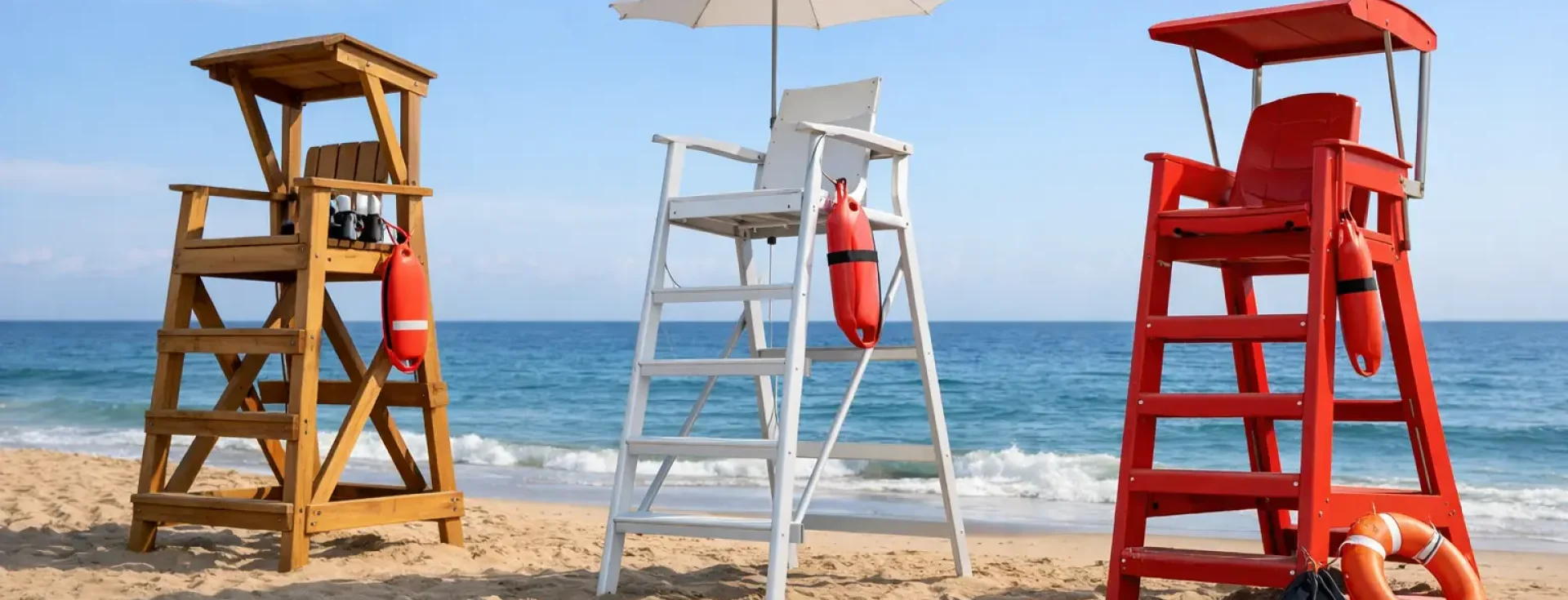
A life guard chair changes how a pool is supervised the moment it is placed correctly. At a busy hotel deck, a residential compound pool, or a commercial aquatic facility, elevation gives attendants a clearer sightline, faster response visibility, and a stronger command position over the water. That matters in any setting where safety standards, guest confidence, and operational control are expected to perform at a high level.
For property owners and operators, this is not a minor accessory. A poorly chosen chair can create blind spots, deteriorate quickly under sun and water exposure, and look out of place in an otherwise premium environment. The right chair supports safety while also matching the quality standards of the surrounding pool installation.
Why a life guard chair still matters
Advanced monitoring systems, deck cameras, and strict staffing protocols all have value, but none of them replace direct visual supervision from the proper vantage point. A life guard chair allows an attendant to scan the full water surface with fewer obstructions from bathers, furniture, umbrellas, and deck movement. In practical terms, that reduces reaction time and improves overall oversight.
This is especially relevant for hospitality properties, residential communities, schools, and private clubs where pools are used by swimmers of different ages and confidence levels. In these environments, supervision has to be immediate, not theoretical. A raised chair supports that requirement with a simple but highly effective design advantage.
There is also a psychological effect. Guests and residents notice when a pool is clearly supervised. A visible, well-positioned lifeguard station signals control, professionalism, and care. For premium properties, that visible layer of safety contributes to the total experience just as much as lighting, water clarity, and deck finish.
What to look for in a life guard chair
The best life guard chair is not chosen by height alone. It has to perform under daily use, weather exposure, and constant deck-side cleaning. Material quality is the first filter. In hot climates and chemically treated pool environments, corrosion resistance is essential. Powder-coated metal, marine-grade components, and UV-stable seating surfaces usually offer better long-term value than lower-cost alternatives that look acceptable on delivery but age poorly.
Structural stability is equally important. A chair should feel planted and secure, with a base that resists movement and a frame engineered for commercial use. This is one area where buying purely on price often creates problems later. If the chair rocks, flexes, or loosens over time, it affects both safety and user confidence.
Comfort should not be overlooked either. Lifeguards and attendants may spend extended periods seated while maintaining focus. A chair with appropriate foot support, secure access steps, and an ergonomic sitting position supports better supervision. If the seat is awkward or tiring, concentration tends to drop faster, particularly during long operating hours.
Height, positioning, and line of sight
Not every pool needs the tallest chair available. The correct height depends on pool size, deck layout, bather load, and nearby obstructions. A compact residential or boutique hospitality pool may only need moderate elevation to achieve strong visibility. A larger commercial or community pool may require a taller station to overcome wider sightlines and heavier deck activity.
Positioning matters just as much as product selection. A chair placed in the wrong corner can limit visibility rather than improve it. Ideally, the station should allow direct observation of entry points, shallow and deep zones, and the areas where children or inexperienced swimmers are most likely to gather. If landscaping, shade structures, or decorative features interfere with those views, the chair location should be reconsidered before installation is finalized.
This is why technical guidance is valuable during equipment selection. A chair should fit the pool’s operating reality, not just its dimensions on paper.
Materials that hold up in premium pool environments
For luxury villas, hotels, residential towers, and commercial properties, visual quality matters alongside performance. A life guard chair sits in plain sight. If it fades, stains, or corrodes prematurely, it affects the presentation of the entire pool area.
Aluminum is a common choice because it offers a good balance of strength and corrosion resistance. Stainless steel can also perform well when properly specified, though grade selection matters in harsh environments. Plastic components should be heavy-duty and UV-resistant, not brittle or thin. Fasteners, footrests, and seat supports should all be selected with the same attention to durability because weak secondary components often fail before the frame itself.
In regions with intense sun, airborne dust, and heavy water treatment cycles, maintenance demands rise. Equipment that looks durable in mild conditions may not perform the same way in a demanding outdoor pool setting. For that reason, commercial buyers and developers usually benefit from specifying chairs built for continuous exposure rather than occasional recreational use.
Matching the chair to the property type
A single model does not suit every project. A private villa pool may prioritize compact dimensions, clean aesthetics, and easy repositioning. A hotel or resort may need a more prominent and polished chair that complements a premium deck while supporting frequent use. A school, sports facility, or community pool may place greater emphasis on height, durability, and operational practicality.
For facility managers, replacement planning also matters. Standardized equipment across multiple sites can simplify maintenance, training, and procurement. On the other hand, high-visibility properties often require a more tailored choice that aligns with the overall design language of the space.
This is where a supplier with both inventory depth and technical understanding adds real value. The decision is not only about choosing a chair. It is about choosing the right specification for the environment, user load, and long-term maintenance expectation.
Installation and deck integration
A high-quality life guard chair can still underperform if deck integration is handled poorly. The surrounding area should provide safe footing, clear access, and adequate working space. If the base interferes with circulation routes or is placed too close to loungers, planters, or rescue equipment, response efficiency suffers.
Permanent and semi-permanent installation options each have advantages. A fixed chair may suit high-traffic commercial pools where positioning must remain consistent and secure. A movable chair can be useful in flexible or seasonal layouts, though it should still be stable enough for regular professional use. The right choice depends on how the pool is operated day to day.
Appearance should also be considered during installation. In premium environments, safety equipment should feel integrated rather than improvised. Clean positioning, proportionate scale, and coordinated material finishes help the chair contribute to the space rather than interrupt it.
When lower cost becomes expensive
There is always pressure in procurement to compare visible products by price. With a life guard chair, that approach can be shortsighted. Lower-cost models may reduce upfront spend, but they often bring compromises in stability, coating quality, seat durability, and long-term maintenance. In a commercial setting, repeated repairs, early replacement, and visual deterioration quickly erase any initial savings.
The more practical comparison is total value over time. A well-built chair that remains stable, presentable, and easy to maintain over years of use is usually the stronger investment. It supports safety operations better and protects the standard of the property.
For buyers responsible for hospitality assets, residential developments, or branded commercial spaces, that distinction matters. Safety equipment should never look temporary.
A stronger standard for pool safety
Choosing a life guard chair is ultimately about more than buying a seat with height. It is a decision about visibility, supervision, durability, and presentation. For premium residential and commercial pools, the best results come from selecting equipment that is engineered for the environment, aligned with the property’s operational needs, and installed with professional care.
Aquatic Pools and Fountains supports that standard with premium pool equipment, technical guidance, and dependable supply for projects that cannot afford compromises. If you are planning a new installation or upgrading an existing facility, the right chair is one of the clearest ways to make safety visible from the first glance.