
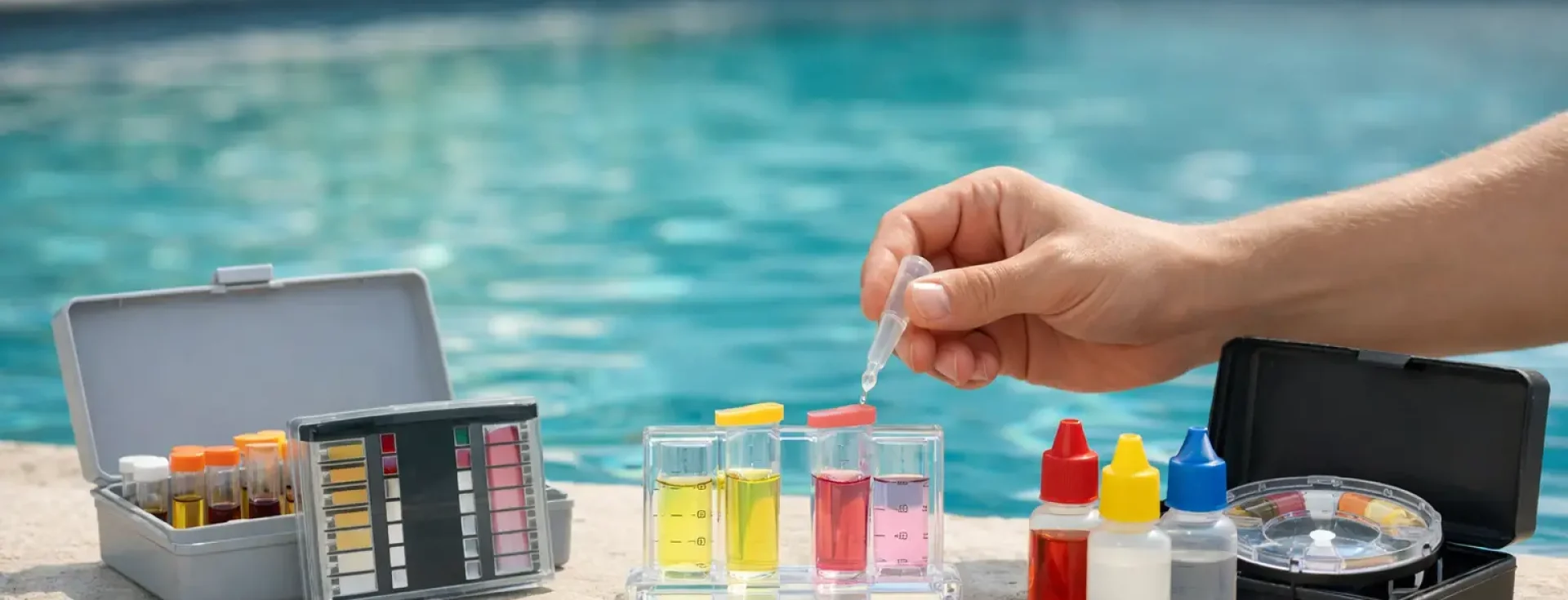
A clear pool can still be chemically out of balance. That is where a pool water testing kit becomes essential. For villa owners, hospitality operators, and facility teams managing premium aquatic spaces, accurate testing is not a minor maintenance task. It is the foundation of water quality, swimmer comfort, equipment protection, and long-term operating efficiency.
Why a pool water testing kit matters more than appearance
Water that looks clean can still carry the wrong pH, low sanitizer, excessive alkalinity, or early signs of scale-forming conditions. In high-value residential and commercial pools, those imbalances show up quickly in ways that matter. Swimmers notice eye and skin irritation. Tiles and fittings begin to show deposits. Pumps, heaters, and disinfection systems face unnecessary strain. Chemical consumption also rises when water is not kept within the correct range.
A dependable pool water testing kit gives operators and owners a clear reading of what the water needs before issues become expensive. This is especially important in climates where heat, sun exposure, and frequent pool usage can shift chemistry faster than many people expect. Testing is not simply about compliance or routine care. It is about protecting the overall standard of the pool environment.
What a quality pool water testing kit should measure
Not every testing method delivers the same level of control. The right kit should cover the core values that directly affect water balance and treatment performance.
At minimum, most premium pool owners and maintenance teams should monitor pH, free chlorine or bromine, total alkalinity, and calcium hardness. In some settings, cyanuric acid is also important, especially for outdoor pools where sunlight can reduce sanitizer efficiency. Commercial and hospitality environments may require broader testing depending on bather load, water source, and the treatment systems in use.
A reading is only useful if it leads to action. If pH is too high, chlorine becomes less effective and water can turn dull. If alkalinity drifts out of range, pH becomes harder to control. If calcium hardness is excessive, scale can build on finishes and equipment. A strong pool water testing kit helps identify these conditions early, before they affect appearance, comfort, or system durability.
Test strips, liquid kits, and digital options
Choosing the right format depends on how the pool is used, who is maintaining it, and how precise the readings need to be.
Test strips
Test strips are fast and convenient. They work well for routine residential checks and for users who want a simple testing process without handling multiple reagents. A good strip can provide a quick view of sanitizer, pH, and alkalinity in seconds.
The trade-off is precision. Strip results can be harder to interpret if lighting is poor or if the user has limited experience comparing colors. For basic monitoring, they are practical. For technical troubleshooting or higher-spec facilities, they may not be enough on their own.
Liquid reagent kits
Liquid kits remain a strong choice for users who want more reliable manual testing. They typically offer better accuracy than basic strips and are often preferred by trained pool professionals. They also make it easier to confirm water balance when adjustments need to be calculated with confidence.
The trade-off here is time and handling. Staff need to follow the instructions correctly, keep reagents stored properly, and replace components as needed. For many premium residential and commercial pools, this extra step is worthwhile because the readings support better decisions.
Digital testers
Digital pool testers appeal to buyers who want speed, consistency, and easier interpretation. In managed properties or commercial settings, digital systems can reduce guesswork and support more standardized maintenance practices. Some are especially useful when multiple pools or water features must be monitored to the same quality standard.
Digital equipment does come with a higher upfront cost, and calibration or sensor care may be required depending on the model. Still, for clients who prioritize accuracy and operational control, digital testing often justifies the investment.
How to choose the right kit for your pool
A pool water testing kit should match the complexity of the installation, not just the size of the pool. A private villa plunge pool has different needs than a hotel leisure pool, a residential tower amenity deck, or a commercial aquatic facility.
For residential owners, ease of use often matters most. The right kit should be simple enough for regular checks while still providing dependable readings on the most critical parameters. If the pool is maintained by a service team, a more advanced kit may still be valuable for owner oversight between visits.
For facility managers and hospitality operators, consistency and documentation usually matter more. In those environments, it makes sense to use a kit that supports repeatable readings and can keep pace with higher bather loads, variable weather conditions, and stricter operational standards.
It also helps to think beyond the test itself. A premium kit should be supported by available replacement reagents, clear instructions, and guidance on interpreting results correctly. The best product is not always the one with the longest feature list. It is the one that integrates well into your actual maintenance routine.
Common buying mistakes
Many buyers choose a testing kit based only on price. That can be costly later. A low-grade kit that produces vague or inconsistent readings often leads to overcorrecting the water or missing developing issues altogether.
Another mistake is buying a kit that tests too few parameters. Chlorine and pH are essential, but they do not tell the whole story. Water balance depends on the relationship between several values, and ignoring alkalinity or hardness can create recurring problems that are difficult to trace.
Storage is another overlooked factor. In hot environments, reagents and strips can lose reliability if they are not kept correctly. A testing kit should be treated as a precision maintenance tool, not as a disposable accessory left in a pump room without temperature control.
Finally, some property owners rely on occasional professional checks without any in-house testing between service visits. That may work for low-use pools, but for premium properties where water quality is part of the overall experience, more frequent monitoring is the stronger standard.
Why testing supports equipment life and operating costs
Water chemistry affects far more than swimmer comfort. It directly influences the performance and lifespan of pumps, filters, heaters, chlorinators, fittings, and interior finishes. When chemistry stays out of range, equipment wear tends to accelerate.
High acidity can be corrosive to metal components and surface materials. High calcium levels can create scale inside circulation systems and heating equipment. Poor sanitizer balance can increase biofilm risk and put added pressure on filtration and disinfection systems. These are not isolated maintenance issues. They affect the reliability of the entire pool system.
That is why professional-grade testing is part of premium asset protection. Accurate readings support efficient chemical use, reduce unnecessary service interventions, and help preserve both aesthetics and system performance. In practical terms, a quality pool water testing kit is a small investment compared with the cost of correcting water damage or replacing stressed equipment.
The value of expert guidance
Even the best test kit is only as effective as the action taken after the reading. Some water issues are straightforward, but others involve multiple imbalances that need to be corrected in the right order. That is where technical support makes a real difference.
For property owners and commercial buyers investing in high-end aquatic environments, product selection should be backed by real pool expertise. Aquatic Pools and Fountains supports clients with premium water testing solutions as part of a broader equipment and maintenance approach designed for lasting performance. That matters when the goal is not simply to keep a pool open, but to keep it operating at a standard that reflects the quality of the property.
The right testing kit gives you clarity. The right support ensures that clarity turns into better water, stronger equipment protection, and a more dependable pool environment every day.
If your pool is expected to look exceptional and perform without compromise, your testing standards should match it.