
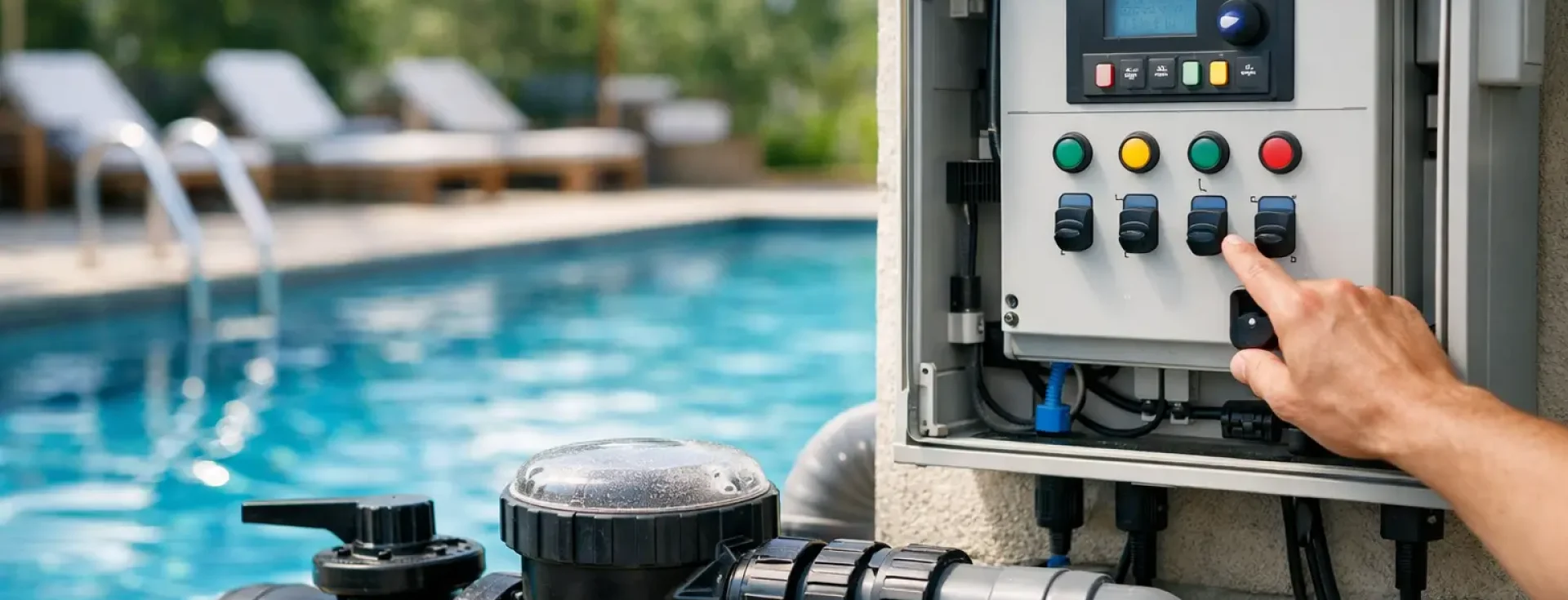
A pool that looks exceptional on the surface can still underperform behind the scenes if its controls are outdated, inconsistent, or poorly matched to the equipment. A swimming pool pump control panel is what brings order to filtration, circulation, timing, and protection, turning separate components into a system that runs with precision.
For villa owners, hospitality operators, facility teams, and developers, this is not a minor electrical accessory. It is a central point of control that affects water quality, operating cost, equipment lifespan, and day-to-day reliability. When selected correctly, it supports a cleaner pool, smoother maintenance routines, and stronger long-term performance.
What a swimming pool pump control panel actually does
At its core, a control panel manages when and how the pool pump operates. That sounds straightforward, but in premium residential and commercial installations, the panel often does much more. It can regulate start and stop cycles, coordinate multiple pumps, integrate with timers, protect motors from overload, and connect with other pool equipment such as heaters, lighting, water features, and dosing systems.
In a simple residential setup, the panel may only handle scheduled filtration and basic on-off switching. In a larger property or commercial environment, it can become a more advanced control hub with contactors, breakers, relays, digital timers, and protection logic designed to keep operations stable under demanding conditions.
That difference matters. A luxury villa pool and a hotel pool may both need reliable circulation, but their usage patterns, hours of operation, and maintenance pressures are very different. The right panel should reflect the actual duty of the system, not just the basic presence of a pump.
Why the right control panel matters more than many buyers expect
Pump quality gets attention. Filters, lighting, and finishes usually do too. The control panel is often treated as a background item, even though it directly affects how those investments perform.
A poor-quality or underspecified panel can lead to irregular pump cycles, unnecessary energy use, nuisance tripping, and avoidable wear on motors and connected equipment. It can also create service complications when electricians or maintenance teams need to troubleshoot a system that was not properly organized from the beginning.
A well-built panel does the opposite. It improves operational consistency, helps maintain correct turnover timing, supports safer power distribution, and gives technicians a cleaner, more efficient service environment. For commercial properties, that translates into fewer interruptions and better asset protection. For homeowners, it means less guesswork and more dependable daily operation.
Key features to look for in a swimming pool pump control panel
The best choice depends on the project, but certain features consistently separate a dependable panel from a basic enclosure with switches.
Build quality should come first. In warm climates and equipment rooms with moisture exposure, the enclosure, internal wiring standard, and component quality all matter. A panel may appear acceptable at installation and still become a weak point later if the protection level is poor or internal components are not suited to the environment.
Motor protection is equally important. Overload protection, short circuit protection, and proper breaker sizing help prevent costly damage. This is especially relevant where pumps run for long hours or support larger hydraulic systems.
Timer functionality is another major consideration. Digital scheduling offers more precision than manual control and helps optimize filtration hours without constant operator input. For many properties, this is one of the simplest ways to improve efficiency.
If the pool system includes variable speed pumps, water features, heat pumps, chemical dosing, or lighting control, compatibility becomes critical. Not every panel is designed to coordinate more than one piece of equipment. Choosing a panel without enough capacity can limit future upgrades or force unnecessary retrofits.
Ease of maintenance also deserves attention. Clear labeling, organized internal layout, and accessible components save time during inspections and repairs. That may seem like a small advantage during procurement, but over the life of the system it has real value.
Residential and commercial needs are not the same
A control panel for a private backyard pool should not be judged by the same criteria as a panel for a residential tower, hotel, or wellness facility. Both need reliability, but the scale and complexity are different.
In residential projects, owners often prioritize simplicity, clean operation, and low intervention. They want the pump schedule to run properly, the system to remain protected, and the controls to be straightforward for routine use. A well-configured panel with timer control and dependable protection is often the right fit.
Commercial projects demand more. There may be multiple pumps, extended run times, backwash coordination, circulation zones, or integration with broader facility maintenance systems. In these environments, underspecifying the panel can create recurring operational issues that cost far more than the initial savings.
This is where professional equipment matching matters. Selecting the panel based on actual load requirements, site conditions, and future service needs is a stronger approach than buying by price alone.
Common mistakes when selecting a pool pump control panel
One of the most common mistakes is focusing only on the pump horsepower and ignoring the rest of the system. Voltage, phase, current draw, control logic, and connected accessories all influence the correct panel selection.
Another mistake is treating all panels as interchangeable. They are not. Some are built for basic switching, while others are engineered for more advanced coordination and protection. A panel that works in a small residential application may be completely unsuitable for a larger commercial pool.
Installation quality is another deciding factor. Even a premium panel can underperform if it is poorly wired, badly located, or installed without proper load balancing and protection setup. The panel should always be seen as part of the total system design.
Buyers also sometimes overlook future expansion. If a property may later add heating, water features, automated disinfection, or upgraded pumps, it is worth considering a control solution that can accommodate those additions. That approach is often more cost-effective than replacing the panel later.
The value of professional specification and installation
A swimming pool pump control panel should be selected with the same care as the pump itself. That means looking at pump type, flow requirements, electrical supply, usage schedule, and environmental conditions as one package.
Professional specification helps avoid mismatched components and gives the project a cleaner technical foundation. It also supports compliance, safer operation, and more predictable maintenance over time. In premium properties, where aesthetics and equipment performance are expected to align, this level of planning is part of delivering a complete result.
For buyers managing multiple assets or large-scale developments, supplier capability matters as much as the product. Stock availability, access to reliable brands, technical guidance, and after-sales support all influence how quickly issues can be resolved and how well the system performs in the long term.
That is why many serious buyers prefer to work with a full-scope partner rather than sourcing the panel as an isolated electrical item. When equipment supply, technical review, installation support, and maintenance understanding come together, the result is more dependable and easier to manage.
A smarter investment for long-term pool performance
The control panel is not the most visible part of a pool system, but it is one of the most influential. It affects timing, safety, efficiency, and overall equipment coordination every single day.
For luxury homes, commercial pools, hospitality environments, and high-value real estate, the right choice supports both operational confidence and asset protection. A premium installation deserves more than a generic control box. It deserves a properly selected, professionally installed solution built for the actual demands of the property.
Aquatic Pools and Fountains supplies and supports premium pool equipment solutions for residential and commercial projects that require reliability, technical precision, and long-term value. If you are evaluating a new installation or upgrading an existing system, the best next step is to choose a control panel that works as hard as the pool it is designed to serve.
A well-run pool rarely calls attention to its controls, and that is exactly the point – when the right panel is in place, performance feels effortless.