
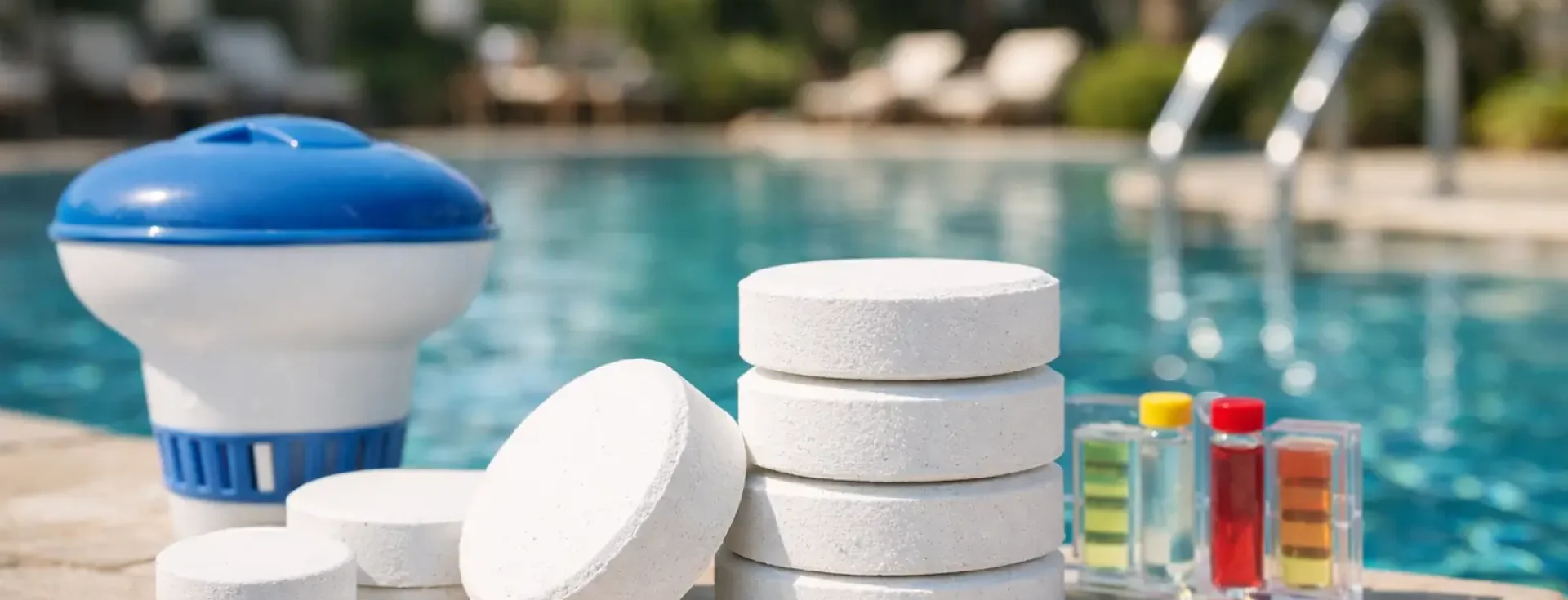
A pool can look perfectly clear and still be chemically unstable by the afternoon. In hot climates and high-use environments, chlorine tablets remain one of the most reliable ways to maintain steady sanitation without constant manual dosing. For villa pools, hospitality properties, and commercial facilities, they offer practical control, consistent disinfection, and a cleaner operating routine when paired with proper testing and circulation.
Why chlorine tablets remain a standard choice
Chlorine demand changes throughout the day. Sun exposure, swimmer load, windblown debris, and water temperature all affect how quickly sanitizer is consumed. Tablets help smooth out those fluctuations by dissolving gradually, which makes them especially useful for pools that need dependable daily protection.
That steady release is the main advantage. Instead of sharp chemical peaks followed by long drops, chlorine tablets support a more even sanitizer residual. In residential pools, that means simpler upkeep. In commercial settings, it means a more controlled water treatment strategy and fewer sanitation surprises between service intervals.
They are also easy to integrate into established systems. Most are used in floating dispensers or automatic chlorinators, so there is no need to hand-feed sanitizer every day. For properties where presentation matters as much as performance, that consistency supports both water clarity and user confidence.
How chlorine tablets work in real pool conditions
Most chlorine tablets used for swimming pools are formulated to dissolve slowly as water moves around them. As they dissolve, they release chlorine into the water to kill bacteria, control algae, and oxidize organic contaminants.
The actual dissolve rate depends on several factors. Water flow makes a difference, so a tablet in an efficient feeder will behave differently from one in a floating dispenser. Water temperature also matters. Warmer water generally increases chlorine consumption, which is especially relevant in sunny outdoor pools. Bather load matters too. A private pool used on weekends has different sanitation needs than a hotel pool or a shared residential facility operating every day.
This is where experience matters. Tablets are effective, but they are not a set-and-forget solution. They work best as part of a complete water treatment program that includes filtration, circulation, pH adjustment, and routine testing.
Choosing the right chlorine tablets
Not all tablets perform the same way, and selection should match the pool’s size, usage pattern, and treatment equipment. For most applications, larger slow-dissolving tablets are preferred because they deliver a controlled feed over time. They are widely used in both residential and commercial pools because they support stable sanitizer levels with less manual intervention.
Quality matters. Lower-grade chemical products may dissolve unevenly, leave residue, or create inconsistent dosing. For premium aquatic environments, it makes sense to use chlorine tablets from trusted manufacturers with clear labeling, predictable performance, and suitable compatibility with your chlorinator or feeder system.
It also helps to think beyond the chemical itself. If the circulation system is weak, the feeder is undersized, or the water balance is already off, even a high-quality tablet will not solve the underlying issue. Reliable sanitation comes from the whole system working correctly, not from one product alone.
Where to place chlorine tablets safely
The safest and most effective place for chlorine tablets is in a designated feeder, chlorinator, or floating dispenser designed for that purpose. This allows controlled contact with moving water and reduces the risk of concentrated chlorine damaging pool finishes or equipment.
They should not be placed directly in the skimmer basket unless a professional specifically recommends it for the system and operating pattern. When the pump shuts off, highly chlorinated water can sit in the plumbing line and increase wear on equipment. That trade-off is often overlooked, especially in residential pools where owners are trying to simplify maintenance.
Direct placement in the pool is also a poor practice. A tablet resting on the finish can cause surface staining or bleaching. In premium pools with refined tile, plaster, or custom interior finishes, that is not a small mistake. Correct dosing equipment protects both the water and the investment.
What chlorine tablets do well – and where caution is needed
Chlorine tablets are excellent for maintaining a baseline sanitizer level. They are practical, compact to store, and efficient for routine use. For many pool owners and facility teams, they reduce labor and make day-to-day water care more manageable.
Still, they are not the answer to every water problem. If a pool has already turned cloudy or algae has started to develop, tablets alone may act too slowly. In those cases, a faster corrective treatment may be required along with filtration support and balance correction.
There is also a chemistry trade-off to understand. Many tablets add stabilizer to the water as they dissolve. Stabilizer helps protect chlorine from sunlight, which is useful in outdoor pools, but excessive buildup can reduce chlorine efficiency over time. In practical terms, that means the pool may test as if chlorine is present while sanitation performance still falls short.
For that reason, regular water testing is essential. A pool that relies heavily on chlorine tablets without periodic review can drift into imbalance gradually. The water may still look acceptable at first, but performance, comfort, and treatment efficiency will suffer.
Best practices for daily use
A professional standard approach is straightforward. Keep the circulation system in good condition, use tablets through proper dosing equipment, and test water consistently rather than reacting only when the pool looks off. Sanitizer readings, pH, total alkalinity, and stabilizer levels should all be checked on a routine schedule appropriate to the pool’s usage.
For residential properties, that may mean a simpler weekly routine supported by seasonal adjustments. For hotels, residential towers, or high-traffic amenities, testing and dose control should be far more frequent. The heavier the use, the less room there is for guesswork.
It is also wise to treat chlorine tablets as one part of a layered maintenance plan. A clean filter, strong circulation, brush-and-vacuum routines, and occasional shock treatment all support better tablet performance. When one part of that program is neglected, the sanitizer has to work harder than it should.
Storage and handling matter more than most buyers expect
Chemical performance starts before the product reaches the water. Chlorine tablets should be stored in a cool, dry, well-ventilated area away from direct sunlight and moisture. The container should remain sealed, and the product should be kept away from incompatible chemicals.
Mixing different pool chemicals, even accidentally through shared scoops or damp storage areas, creates unnecessary risk. Commercial operators usually recognize this immediately, but homeowners sometimes underestimate it. Premium pool care is not just about aesthetics. It is about disciplined, safe operation.
Buying from a supplier with dependable stock and proper product handling also matters. Chemical products exposed to poor storage conditions or inconsistent inventory turnover may not deliver the level of reliability expected in a high-value installation.
Chlorine tablets for residential and commercial pools
The needs of a private villa pool are different from those of a hospitality or multi-user facility, but chlorine tablets can serve both when applied correctly. In residential settings, they offer convenience and steady sanitation with less day-to-day attention. In commercial settings, they support structured maintenance programs and predictable dosing when integrated with appropriate equipment and testing protocols.
The main difference is precision. A homeowner may prioritize simplicity and clean water with minimal hassle. A facility manager has to think about compliance, swimmer load, operating hours, and equipment wear. Both benefit from tablet-based chlorination, but the supporting strategy is not identical.
That is why many clients prefer working with a full-scope aquatic partner rather than buying chemicals in isolation. The right product choice is only part of the equation. Feeder sizing, circulation design, water testing systems, and service support all affect the final result. Aquatic Pools and Fountains serves that broader requirement with premium products, technical guidance, and maintenance expertise suited to both luxury residential and demanding commercial environments.
When to get professional guidance
If chlorine levels swing constantly, water turns cloudy despite routine treatment, or pool surfaces and fittings show unusual wear, the issue may not be the tablets themselves. It may be the wrong feeder setup, poor circulation, overstabilization, or a broader water balance problem.
Professional assessment is especially valuable for large pools, temperature-controlled pools, fountains with treatment requirements, and commercial properties where appearance and hygiene standards are non-negotiable. A precise recommendation saves time, protects equipment, and avoids repeated chemical correction.
Chlorine tablets are simple in concept, but strong results come from using them with the right system, the right schedule, and the right oversight. When the goal is clear water, protected finishes, and consistent daily performance, careful chemical management is not an extra step. It is part of maintaining a pool that continues to look as refined as the property around it.