A beautiful pool can lose its appeal fast when the system behind it is underpowered, noisy, difficult to maintain, or simply not built for the environment. That is why swimming pool equipment should never be treated as an afterthought. For villas, residential towers, hotels, and commercial properties, the right equipment determines water quality, operating cost, safety, and the long-term value of the installation.
In premium projects, appearance and engineering go together. A pool may look impressive on day one, but lasting performance depends on what sits in the plant room, how each component is sized, and whether the system is supported by experienced technical guidance. Buyers who focus only on upfront price usually pay more later through downtime, frequent replacement, and inconsistent water conditions.
What swimming pool equipment actually includes
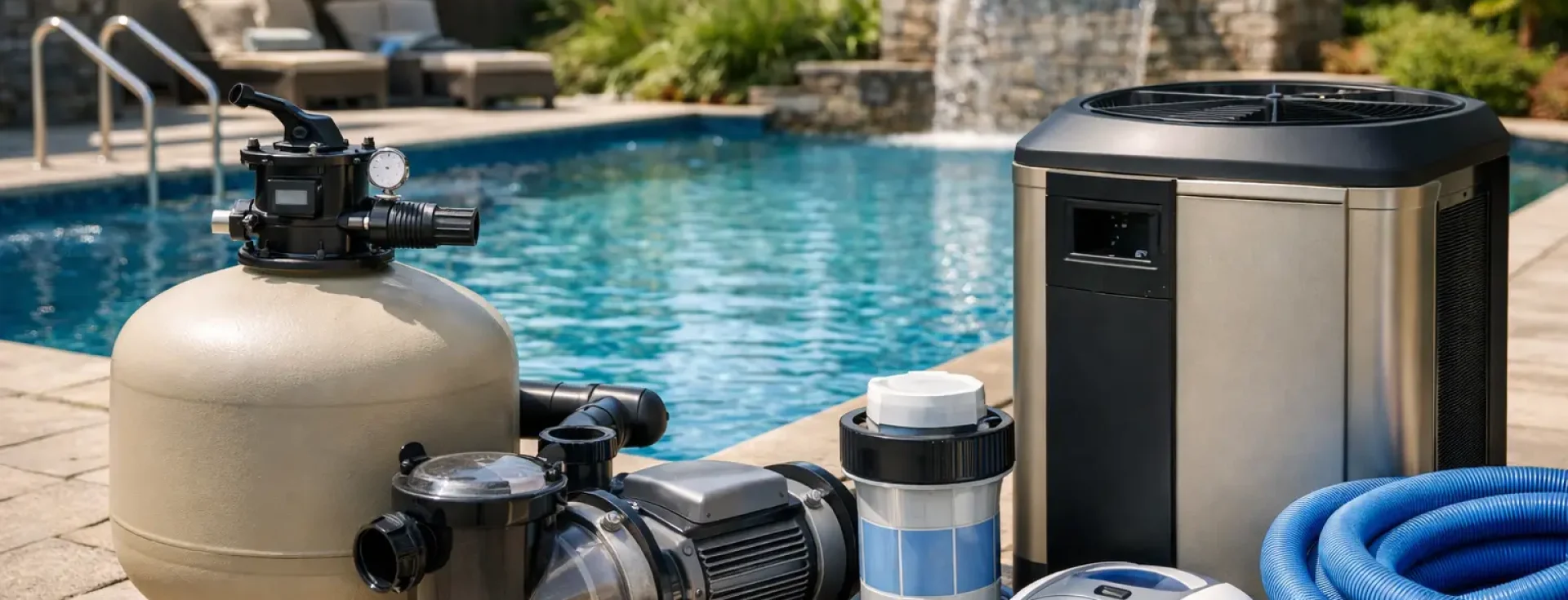
The term swimming pool equipment covers far more than a pump and filter. A complete setup is a coordinated system designed to circulate, clean, disinfect, protect, and enhance the pool. Core equipment typically includes pumps, filtration systems, underwater lighting, fittings, cleaning tools, disinfection units, chemical dosing solutions, heat-cool pumps, water testing systems, and safety products.
For high-end residential and commercial environments, each category matters. Pumps keep water moving at the right rate. Filters remove suspended particles that make water look dull or place strain on sanitation systems. Disinfection equipment controls bacteria and algae. Lighting shapes the visual effect of the pool at night. Safety and surround accessories support usability, compliance, and peace of mind.
This is where many projects go wrong. Equipment is often purchased in pieces rather than designed as one operating system. A powerful pump paired with the wrong filter, or a luxury pool finished with basic fittings, creates avoidable performance issues. Premium results require compatibility, balance, and technical planning.
The equipment decisions that have the biggest impact
Pump selection is one of the most important choices in any pool system. The pump drives circulation, which affects filtration, chemical distribution, and water clarity. An undersized pump may struggle to maintain healthy turnover. An oversized pump can waste energy, create noise, and put unnecessary pressure on the system. The best choice depends on pool size, pipe design, intended usage, and whether the site is residential or commercial.
Filtration deserves the same attention. Sand filters remain popular for durability and straightforward operation, while cartridge and specialty filtration options can offer finer performance in the right application. What matters most is not choosing the trendiest option but selecting a filter that matches the hydraulic design and maintenance expectations of the property.
Disinfection is another area where short-term thinking creates long-term problems. Basic manual chlorination may be sufficient for some pools, but larger properties, hospitality settings, and high-use facilities often benefit from more advanced dosing and disinfection systems. These setups help maintain stable water quality with greater consistency. They also reduce the risk of human error, which is especially important where guest experience and public health standards are involved.
Temperature control has become increasingly important across the UAE. A pool that is uncomfortable for part of the year will not deliver full value. Heat-cool pumps allow owners and operators to manage water temperature more efficiently, extending usability and improving comfort without relying on less efficient methods. For luxury villas and hospitality properties, this is not a minor upgrade. It directly affects how often the pool is used and how the asset is perceived.
Why premium properties need a higher standard of swimming pool equipment
Not every pool has the same demands. A private villa pool used by a family a few times a week does not operate like a hotel pool, a residential tower amenity, or a commercial water feature. Usage patterns, bather load, operating hours, and design expectations all change the equipment requirement.
For residential buyers, the priority is often a combination of quiet operation, visual elegance, low maintenance, and dependable water quality. Equipment needs to perform well without becoming a constant management task. Owners also want solutions that protect the finish, preserve energy efficiency, and support a refined outdoor living environment.
Commercial projects require a more rigorous approach. Facility managers and developers need systems that can withstand heavy usage, maintain consistent performance, and support efficient service routines. In these settings, product quality is only part of the equation. Spare parts availability, technical support, and maintenance response also matter because downtime affects residents, guests, and brand reputation.
That is why experienced buyers do not look at swimming pool equipment as a simple product purchase. They look at it as an operational decision. The right supplier should be able to advise on product selection, installation requirements, maintenance strategy, and future servicing from the start.
Climate, water conditions, and durability in the UAE
Environmental conditions in Dubai and across the UAE place real demands on pool systems. Heat, dust, heavy sun exposure, and intensive year-round usage can accelerate wear if equipment quality is compromised. Materials, build standards, and installation quality all affect how well a system performs over time.
This is one reason branded, high-quality components continue to outperform lower-cost alternatives in premium projects. Better engineering typically means stronger reliability, more stable operation, and improved service life. It may also mean better efficiency, which becomes increasingly relevant when pools are operating daily across residential compounds, hospitality assets, and commercial developments.
Durability is not only about the equipment casing or the specification sheet. It also depends on whether the system is installed correctly and serviced properly. Even a leading pump or filtration unit will underperform if pipe sizing is wrong, fittings are poorly selected, or routine maintenance is ignored. Technical execution matters as much as product quality.
Installation and maintenance are part of the equipment decision
Buyers often separate equipment supply from installation and aftercare, but that approach can create gaps in accountability. If one party sells the products and another installs them without close coordination, performance issues become harder to diagnose and resolve.
A full-scope partner brings more control to the process. Equipment selection can be aligned with site conditions, hydraulic requirements, aesthetics, and budget. Installation can be completed according to manufacturer expectations and project standards. Ongoing maintenance then protects the investment, keeping performance stable and helping identify wear before it turns into a system failure.
For developers and commercial operators, this integrated model is especially valuable. It simplifies procurement, reduces risk, and supports consistency across multiple assets. For villa owners, it removes guesswork and provides confidence that the pool will continue to perform as designed.
Aquatic Pools and Fountains serves this need by combining premium product supply with technical support, installation expertise, and dependable maintenance service for both residential and commercial aquatic environments.
How to choose the right supplier for swimming pool equipment
A strong supplier should offer more than catalog variety. Range matters, but so do technical knowledge, stock availability, service capacity, and the ability to recommend the right solution rather than the most convenient one to sell.
For buyers comparing options, the better questions are practical. Can the supplier support both standard and custom requirements? Do they understand the difference between a decorative residential pool and a high-demand commercial installation? Can they advise on pumps, filters, lighting, disinfection, testing, heating, fittings, and cleaning systems as one coordinated package? And if a component needs replacement or servicing later, can they support that quickly?
There is also a design consideration. In luxury properties, equipment should support the visual standard of the project, not compromise it. Lighting quality, fitting finish, water feature integration, and surround accessories all influence the final result. A technically correct pool that looks ordinary is still a missed opportunity in a premium environment.
The best buying decisions come from balancing engineering, aesthetics, and long-term serviceability. That balance is where real value is created.
Better equipment protects the investment
A pool is not a decorative extra. In many properties, it is a central lifestyle feature, a guest-facing amenity, or a value driver for the asset itself. When the equipment behind it is carefully selected, professionally installed, and properly maintained, the result is cleaner water, lower disruption, stronger durability, and a more polished ownership experience.
If you are planning a new pool, upgrading an aging system, or managing a high-visibility property, choose swimming pool equipment with the same standards you would apply to the rest of the project. The right system works quietly in the background, protects the investment every day, and lets the pool deliver exactly what it was built to offer.