
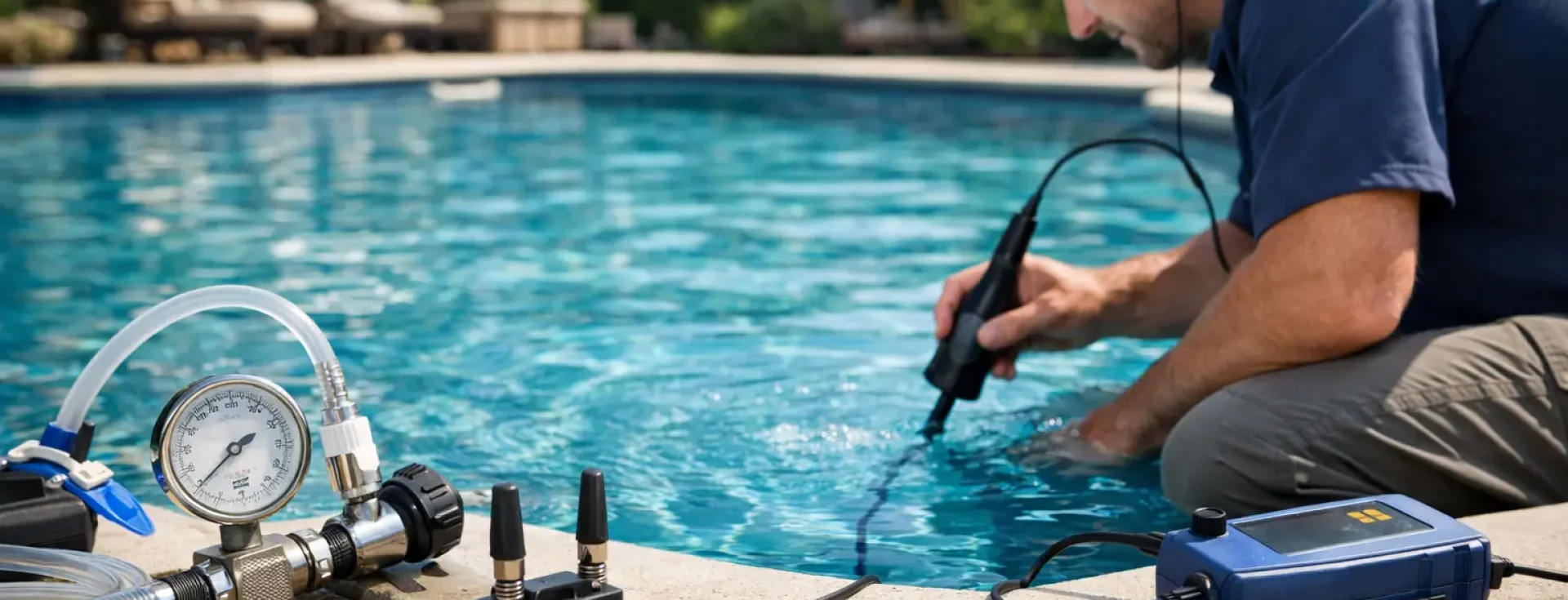
A pool that needs topping off every few days is not just losing water. It may be losing finish life, chemical balance, equipment efficiency, and in some cases, structural integrity. Effective pool leak detection methods help property owners and facility teams separate normal evaporation from a real system failure before the damage becomes expensive.
In premium residential and commercial settings, leak detection is not a cosmetic concern. It is an operational one. Water loss can affect surrounding decking, plant rooms, electrical systems, water bills, and the overall performance of pumps, filters, and treatment equipment. The earlier the source is identified, the easier it is to protect both the asset and the appearance of the installation.
Why accurate leak detection matters
A hidden leak rarely stays small for long. In a villa pool, it can undermine finishes, stain adjacent surfaces, and create avoidable maintenance costs. In hospitality, residential tower, or commercial environments, even a modest leak can disrupt water quality, increase utility consumption, and place unnecessary strain on mechanical systems.
The challenge is that not every drop in water level points to the same problem. Heat, wind, sun exposure, splash-out, and backwashing all contribute to water loss. That is why professional assessment matters. The goal is not simply to confirm that a leak exists, but to identify where it is occurring and how serious it is.
The first step in pool leak detection methods
The most reliable starting point is to distinguish evaporation from leakage. This sounds simple, but it is where many pool owners make the wrong call. Topping up the pool too often can hide the pattern. Ignoring it can allow damage to spread.
A practical first check is the bucket test. A bucket is filled with pool water and placed on a pool step so the water inside the bucket matches the pool water level outside it. After 24 to 48 hours, the two levels are compared. If the pool water drops more than the water inside the bucket, the loss is likely more than evaporation.
This method is useful, but it is only a screening tool. It does not tell you whether the leak is in the shell, fittings, plumbing, or equipment line. For premium pools and fountains, that level of precision is essential.
Visual inspection and surface-level clues
Some leaks reveal themselves through visible symptoms before testing equipment is ever used. Cracks in the pool shell, loose tiles, separated coping, wet spots near the pool, or unexplained algae growth around one area can all point to a leak path. Air bubbles returning through inlet lines may also suggest suction-side plumbing issues.
At the equipment pad, technicians look for damp valves, drips around pump seals, filter tank seepage, and pressure irregularities. In many cases, the problem is not inside the pool basin at all. A worn gasket, failing union, or leaking multiport valve can create steady water loss that is easy to miss during routine operation.
Visual inspection is fast and valuable, but it has limits. Many serious leaks are hidden behind finishes, below grade, or within underground plumbing. That is where more targeted pool leak detection methods become necessary.
Dye testing for pinpointing structural leaks
Dye testing is one of the most effective methods for confirming localized leaks in the pool structure. A technician releases a small amount of dye near suspected points such as cracks, light niches, return fittings, main drain areas, skimmer throats, and joints where materials meet. If there is an active leak, the dye is pulled toward the opening.
This technique is especially useful in still water and works well when the suspected leak is in the shell or around embedded fittings. It is precise, low impact, and often helps confirm areas that appear visually suspicious.
That said, dye testing depends on access and water conditions. If circulation is too strong or the leak is within buried pipework, the results may be limited. It is an excellent diagnostic tool, but not a complete solution on its own.
Pressure testing for plumbing lines
When the pool shell appears sound, plumbing becomes the next priority. Pressure testing isolates individual lines such as skimmers, returns, cleaners, main drains, and water features to determine whether they can hold pressure. If a line loses pressure during testing, there is a strong indication of a leak in that section.
This is one of the most important pool leak detection methods for larger installations because underground plumbing issues can waste substantial amounts of water while remaining completely invisible from the surface. In commercial properties and luxury residences with integrated spas, balance tanks, fountains, and water features, line testing helps narrow the issue quickly.
The trade-off is that pressure testing identifies the affected line, but not always the exact physical location of the break. Additional acoustic or tracing methods may be needed to complete the diagnosis.
Acoustic listening and electronic location tools
Professional leak detection often relies on acoustic equipment that detects the sound of water escaping under pressure. Specialized listening devices can help technicians trace hidden plumbing leaks beneath decking, landscaped areas, or technical rooms without unnecessary demolition.
Electronic tools may also be used to trace pipe routes and narrow excavation zones. For high-value properties, this matters. The goal is not just to find the leak, but to do so with precision and minimal disruption to finishes, hardscape, and surrounding design elements.
These methods are highly effective in experienced hands, but they are sensitive to background noise, pipe material, depth, and site conditions. That is why leak detection should be treated as a technical service rather than a trial-and-error maintenance task.
Leak detection around fittings and penetrations
Some of the most common leak points are the ones built into the pool itself. Skimmers, return fittings, underwater lights, main drains, vacuum points, and expansion joints all create transitions between materials. Over time, movement, aging sealants, or installation defects can compromise these areas.
Light niches are a frequent example. Water can migrate through conduit lines behind the light fitting and escape where it is not immediately visible. Skimmer throats can also separate slightly from the shell, especially if there has been movement or finish deterioration.
In these cases, the repair is often manageable once the source is accurately identified. The larger cost usually comes from delayed detection, not from the fitting itself.
When water loss is not a leak
Not every case of falling water level requires invasive testing. In hot climates, evaporation can be significant, especially with wind exposure, high water temperature, and long pump run times that increase surface movement. Splash-out from active use, infinity edge systems, and backwashing losses can also distort the picture.
This is why experienced evaluation matters. A pool that loses water after heavy usage may not have a structural problem. A pool that drops to the same level every time may indicate a leak at a particular fitting elevation. The pattern tells the story.
For facility managers and developers, this distinction is important because it protects maintenance budgets from unnecessary repair work while ensuring real faults are addressed quickly.
Choosing the right response
The best response depends on the pool type, the symptoms, and the installation complexity. A small residential pool with visible tile separation may only need dye testing and a targeted repair. A commercial property with concealed pipe networks, multiple circulation systems, and decorative water features may require a staged diagnostic process that includes pressure testing, acoustic tracing, and equipment inspection.
What should not happen is guesswork. Random sealing, repeated chemical balancing, or constant refilling does not solve the root issue. It usually increases long-term cost.
For premium aquatic environments, professional support is the standard. Aquatic Pools and Fountains works with property owners, developers, and facility teams that expect dependable diagnostics, quality equipment knowledge, and technically sound solutions across both residential and commercial installations.
Protecting the pool after detection
Finding the leak is only part of the job. The repair must match the system design, material condition, and operating demands of the installation. A quick patch may help in the short term, but if pressure, movement, or worn components are not addressed, the issue can return.
A quality repair strategy often includes checking surrounding fittings, reviewing hydraulic performance, and confirming that pumps, filters, valves, and treatment systems are operating within proper parameters. A leak can be the symptom of a broader maintenance issue, particularly in older or heavily used pools.
If your pool is losing water faster than normal, acting early protects more than the waterline. It protects the finish, the equipment, the surrounding property, and the standard of performance your installation was built to deliver.