
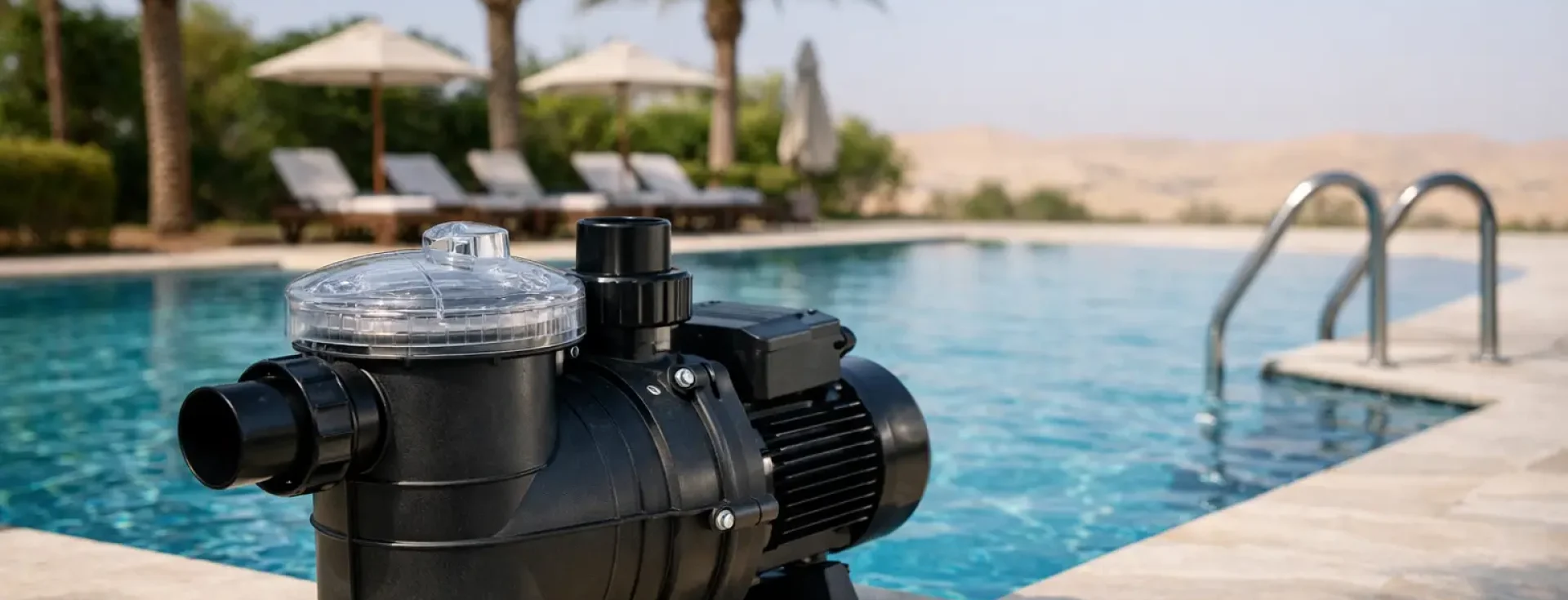
A pool can look perfectly finished while its circulation system works far below standard. Cloudy water, uneven chemical readings, weak return flow, and unnecessary operating costs often begin with one overlooked component: the pump. Selecting the right Astral pool pump gives a premium pool the consistent circulation needed to protect water quality, support filtration, and keep every visible finish performing as intended.
For villas, hotels, residential developments, and commercial facilities across Dubai and the UAE, pump selection should never be based on horsepower alone. The right model depends on pool volume, plumbing layout, filter capacity, operating schedule, water features, and the expected level of use. A properly specified system delivers quieter performance, more efficient filtration, and greater confidence in long-term maintenance.
Why an Astral Pool Pump Matters to Pool Performance
The pump is the working center of a pool circulation system. It pulls water through the skimmer and main drain, pushes it through the filter and treatment equipment, and returns clean, conditioned water to the pool. If water is not moving at the correct rate, even high-quality filters, heaters, chlorinators, and UV systems cannot perform at their full potential.
AstralPool is widely specified for professional pool installations because its equipment is designed for dependable daily operation. For premium residential and commercial environments, that reliability matters. A pool pump may operate for many hours each day, often in high ambient temperatures and with frequent demand from swimmers, cleaning systems, and water features.
A well-matched pump helps maintain proper turnover, meaning the complete pool volume passes through the filtration system within the required time. Residential pools may have more flexible operating requirements, while hotel pools, shared community pools, and high-traffic facilities generally require stricter circulation planning. The correct flow rate must also work with the installed filter. A pump that is too powerful for the filter can force water through too quickly, reducing filtration quality and placing unnecessary pressure on plumbing components.
Choosing the Right Astral Pool Pump
A premium pump installation begins with system data, not a product label. The first consideration is the pool’s water volume. Larger pools require more flow, but volume is only one part of the calculation. Pipe diameter, pipe length, bends, valves, elevation changes, filters, heaters, and sanitation equipment all create resistance, commonly called total dynamic head.
A pump must provide the required flow rate at the actual resistance of the system. This is why two pools with the same water volume may need different pumps. A compact villa pool with short, well-designed plumbing may perform efficiently with a lower-capacity unit. A larger pool with a distant equipment room, multiple water features, and a heat-cool pump may require a stronger model or a carefully engineered variable-speed solution.
Match Pump Output to Filter Capacity
Pump and filter selection should always be treated as one decision. The filter has a maximum design flow rate, and the pump must remain within that range under real operating conditions. Oversizing the pump is not a sign of quality. It can create high pressure, shorten equipment life, increase noise, and reduce the filter’s ability to capture fine debris.
For this reason, experienced technical support is valuable during both new installations and equipment replacement. Replacing an old pump with a larger model without reviewing the system can create more problems than it solves. A professional assessment considers existing plumbing, electrical supply, filter condition, and the pool’s current circulation performance before recommending a replacement.
Consider Single-Speed and Variable-Speed Operation
The best pump type depends on how the pool is used. A conventional single-speed pump can be a practical choice for straightforward pools with predictable schedules and limited hydraulic demand. It offers simple operation and can be suitable where the system was designed specifically around a fixed flow rate.
Variable-speed pumps offer greater operating flexibility. They can run at lower speeds for daily filtration, then increase output when vacuuming, operating a water feature, backwashing where applicable, or supporting higher bather loads. Lower-speed operation can reduce energy use and often produces a quieter pool environment, an important advantage for villas, hospitality terraces, and residential towers.
The trade-off is that variable-speed pumps require proper programming and commissioning. Running a pump too slowly can compromise circulation, while running it too fast removes the efficiency benefit. The settings should be based on the actual pool system, not a generic schedule.
Pool Features Change the Pump Requirement
A standard swimming pool and an architectural water environment do not place the same demands on equipment. Overflow pools, infinity edges, spa jets, cascades, deck jets, and decorative fountains may each require dedicated hydraulic planning. In many cases, these features should not simply be added to the main filtration pump without calculating their impact.
An infinity edge, for example, needs stable flow to maintain a clean, continuous water sheet into the balance tank. If the pump is undersized, the visual effect becomes inconsistent. If it is oversized, the edge may become noisy, water may move too aggressively, and energy consumption rises. Likewise, fountain pumps must be selected for the required display height, nozzle type, and wind exposure, not only the size of the water reservoir.
For high-visibility projects, the equipment room deserves the same attention as the pool finish. A technically correct pump configuration protects the visual standard guests and residents experience every day.
Installation Details That Protect Long-Term Reliability
Even a premium Astral pool pump needs correct installation to deliver its designed service life. The pump should be mounted on a stable, level base in a clean, ventilated equipment area. It should remain accessible for routine inspection, basket cleaning, servicing, and eventual replacement.
Proper pipe sizing is equally critical. Undersized suction piping can cause excessive resistance and increase the risk of cavitation, a damaging condition in which vapor bubbles form and collapse inside the pump. Cavitation can sound like gravel moving through the housing and may lead to vibration, reduced flow, and premature component wear.
The suction line must be airtight. Small air leaks around unions, lids, valves, or fittings can make priming difficult and cause inconsistent performance. Electrical installation should be completed by qualified professionals using the appropriate protection, grounding, and local compliance standards. In the UAE, where equipment rooms can experience high temperatures and dust exposure, ventilation and housekeeping are practical reliability measures, not optional extras.
Maintenance for Consistent Water Circulation
A pump does not require complex daily attention, but regular maintenance prevents avoidable failures. The strainer basket should be checked frequently, particularly after wind, landscaping work, or heavy use. A blocked basket restricts water flow, strains the motor, and weakens filtration.
Watch the pressure gauge on the filter as part of routine pool care. A rising pressure reading often signals that the filter needs cleaning or backwashing, depending on the filter type. Low return flow, air bubbles at the pool inlets, unusual noise, leaks around seals, or repeated pump priming issues should be addressed early. Waiting for a complete failure can interrupt pool operation and may cause secondary damage to other equipment.
Chemical balance also has a role in pump life. Water that is excessively corrosive or poorly balanced can affect seals, fittings, and metal components over time. A complete maintenance plan combines circulation checks, filtration service, water testing, cleaning, and inspection of connected equipment.
A Better Investment Than a Like-for-Like Replacement
When an existing pump fails, the quickest option is often to install the same model again. That may be appropriate if the pool has performed well and the original equipment remains correctly sized. But it is also the right moment to review whether the pool’s needs have changed.
Perhaps a heater, chiller, salt chlorinator, or water feature was added after the original installation. Perhaps the pool now operates longer hours, serves more residents, or has recurring clarity issues. A system review can reveal whether the issue is the pump itself, an undersized filter, restrictive plumbing, poor scheduling, or a combination of factors.
Aquatic Pools and Fountains supports premium pool projects with quality equipment, technical guidance, installation expertise, and ongoing maintenance support. For property owners and facility teams, that means pump selection can be approached as part of a complete circulation solution rather than an isolated purchase.
The best Astral pool pump is the one that delivers the required flow quietly, efficiently, and reliably within the limits of the full system. Start with accurate pool and plumbing information, then let professional sizing guide the decision. The result is cleaner water, protected equipment, and a pool experience that continues to reflect the standard of the property.