
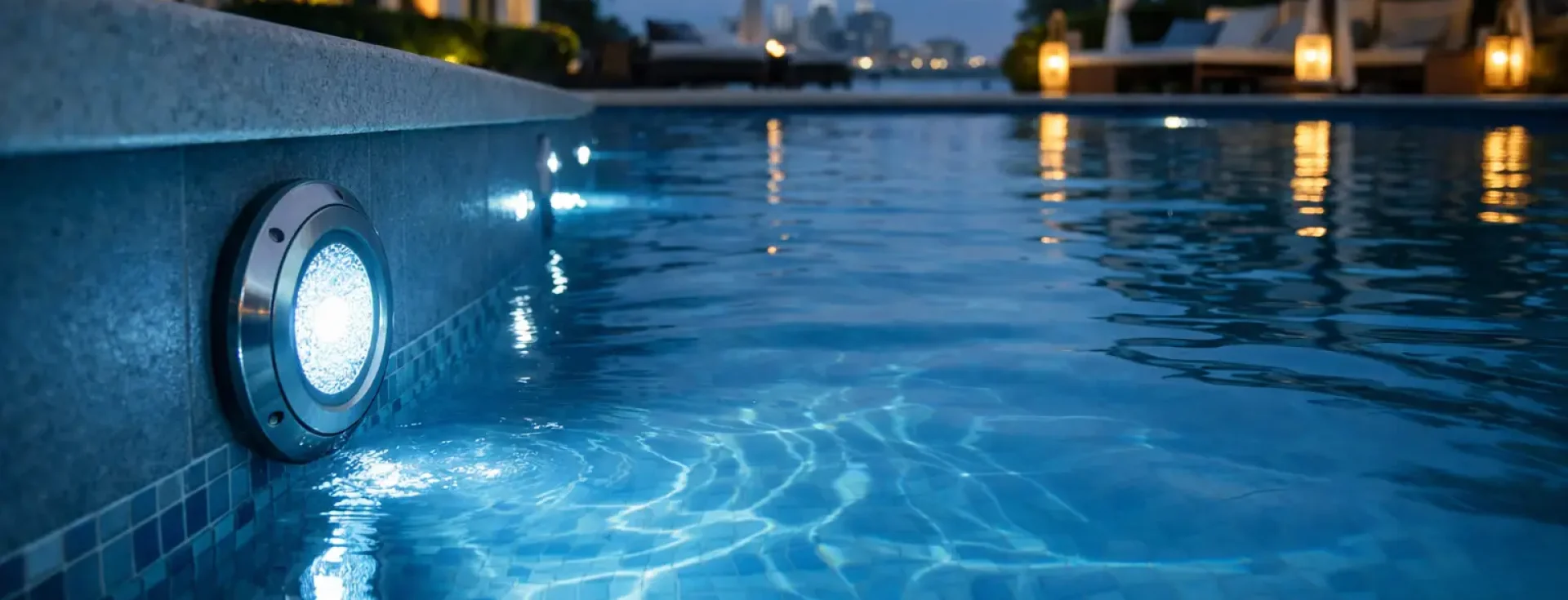
A pool can look exceptional in daylight and disappear completely after sunset. The right underwater pool lights change that equation, giving a villa, hotel deck, or commercial facility a polished nighttime presence while improving visibility for guests and swimmers. For premium UAE properties, lighting is not simply a finishing detail. It is a technical investment in safety, atmosphere, and the perceived value of the entire aquatic space.
A well-designed lighting plan makes water appear cleaner, deeper, and more inviting. A poorly selected system can create glare, uneven illumination, premature failures, and maintenance complications that are difficult to correct once the pool is finished. The best result comes from matching the light type, output, placement, controls, and installation method to the pool itself.
Why Underwater Pool Lights Matter After Dark
At night, a pool becomes a central visual feature rather than an amenity at the edge of the property. This is particularly true for luxury villas, hospitality projects, rooftop pools, and residential communities where outdoor areas remain active well into the evening. Clear, balanced pool lighting extends the usable hours of the space and gives landscaping, water features, and architecture a stronger visual connection.
Safety is equally important. Lighting should help users recognize steps, ledges, depth transitions, entry points, and the pool perimeter. It is not intended to make every section as bright as an indoor room. Excessive brightness can produce reflections and visual discomfort. The objective is controlled illumination that supports safe movement while preserving the calm, elegant character of the water.
For commercial properties, reliable lighting also supports presentation standards. A dark or partially lit pool can quickly affect guest perception, even when the water quality and surrounding finishes are excellent. Consistent illumination signals that the facility is professionally maintained and ready for use.
LED Pool Lighting Is the Premium Standard
Modern LED systems are the preferred option for most new installations and lighting upgrades. Compared with older incandescent or halogen pool lamps, LEDs consume substantially less electricity, run cooler, and typically offer a far longer operating life. This matters in the UAE, where pools often operate throughout much of the year and where access for replacement can involve draining water or coordinating specialist maintenance.
LED underwater lights are available in white and color-changing versions. White light remains the most timeless choice for projects seeking a crisp, refined look. It allows the true finish of mosaic, tile, or interior plaster to remain visible and suits formal villas, wellness facilities, lap pools, and upscale hospitality environments.
Color-changing RGB or RGBW lighting adds flexibility. A warm evening setting, an energetic social atmosphere, or a branded color scheme can be selected through a compatible controller. RGBW models include a dedicated white LED, which generally produces a cleaner white effect than RGB-only units. For projects where white light will be used frequently, that distinction is worth considering.
The best choice depends on how the pool will be used. A private villa may prioritize a restrained white setting with occasional color scenes for entertaining. A hotel, beach club, or event-focused venue may benefit more from programmable color control and preset scenes. In either case, reputable equipment, correct electrical components, and professional installation matter more than chasing the highest advertised brightness.
Selecting the Right Light Output and Beam Pattern
Pool size, shape, interior finish, and water depth all influence the number and positioning of fixtures. A compact plunge pool may need only one or two properly placed lights. A long lap pool, L-shaped pool, overflow pool, or large commercial installation requires a more detailed design to avoid dark zones.
Light output is commonly discussed in lumens, but lumen figures alone do not determine the final result. Beam angle, fixture orientation, water clarity, and surface color have a direct effect on perceived brightness. A narrow beam can create dramatic highlights but may leave unlit areas. A wider beam distributes light more evenly and is often better suited to family pools and guest facilities.
Interior finishes make a noticeable difference. Light-colored finishes reflect illumination and can make a pool appear bright with fewer fixtures. Dark blue, charcoal, black, and richly patterned mosaics absorb more light, often requiring more careful placement or increased output. Dark finishes can create a striking mirror-like effect, but they should never compromise the ability to see steps and changing depths.
As a general design principle, fixtures should direct light away from common viewing areas. When lights face the main terrace, seating zone, or pool entrance, glare can overwhelm the intended effect. Positioning them to throw light across the pool length, or toward a feature wall, usually creates a more comfortable and premium visual result.
Placement Should Be Planned Before Finishes Are Complete
Lighting is easier and more cost-effective to specify during construction than after the pool is tiled and commissioned. Conduits, niches, junction boxes, transformers, controllers, and cable routes all need coordinated planning. Retrofitting is possible, especially when replacing existing fixtures, but options can be limited by the original installation details.
Steps, tanning ledges, benches, and water features deserve special attention. These areas are often where guests enter or move through the pool, yet they can become visually lost if the lighting design focuses only on the main basin. Dedicated low-profile lights or carefully aimed fixtures can improve definition without cluttering the pool shell.
For overflow and infinity-edge pools, light placement must also respect the desired visual effect from key viewpoints. The waterline is a defining architectural feature. Lighting that creates harsh reflections or reveals unwanted equipment can distract from the edge’s clean appearance. A technical review before installation helps protect the design intent.
Electrical Safety Is Non-Negotiable
Underwater lighting must be designed as a complete protected system, not treated as a simple lamp replacement. Fixtures, cables, power supplies, transformers, junction components, grounding arrangements, and control equipment must be rated and installed for the application. The work should follow applicable local electrical and pool safety requirements.
Low-voltage lighting is widely used because it provides an additional level of protection in wet environments. However, low voltage does not remove the need for proper installation. Incorrect cable sizing, damaged seals, poor connections, or incompatible components can lead to flickering, water ingress, shortened fixture life, and avoidable electrical risk.
In Dubai and across the UAE, high ambient temperatures, strong sun exposure, and demanding operating schedules place additional pressure on equipment located in plant rooms and outdoor service areas. Premium-grade components should be selected for the environment, with adequate ventilation and weather protection where required. It is also wise to ensure that replacement lamps, drivers, and control parts remain available for future service.
Controls Create a Better Owner Experience
The most successful pool lighting systems are easy to operate. A property owner or facility team should not need to enter a plant room and manage several switches just to turn on the pool. Modern controls can allow lighting to be scheduled, dimmed, grouped, and synchronized with landscape lights or water features.
For residential projects, a straightforward controller with a few favorite scenes is often more valuable than an overly complicated automation system. For hotels and commercial facilities, centralized controls can support operating schedules, energy management, and a consistent visual standard across multiple pools or fountains.
Color-changing systems should be programmed with purpose. A soft blue, warm white, or subtle aqua setting can enhance everyday use. Fast-changing color cycles may suit a temporary celebration, but they can look less refined as a permanent operating mode. Premium lighting design favors control, consistency, and atmosphere over novelty.
Maintenance Protects Light Quality and Service Life
Even high-quality underwater pool lights require routine inspection. Water chemistry is especially relevant. Poorly balanced pH, excessive sanitizer levels, or prolonged chemical exposure can affect seals, housings, and stainless-steel components. Maintaining correct water balance protects the lighting system as well as tile, grilles, fittings, and circulation equipment.
During scheduled pool service, technicians should check for moisture behind lenses, reduced brightness, flickering, discoloration, and visible damage to cables or fixtures. Early action is usually simpler than waiting for a complete failure. If multiple lights dim at once, the issue may be related to the transformer, driver, controller, or wiring rather than each fixture individually.
For older pools with halogen lighting, an LED upgrade can reduce operating costs and improve the visual result. Compatibility should be assessed carefully, particularly where existing niches, transformers, and cable runs are involved. The most economical replacement is not always the best long-term solution if it creates performance or service limitations later.
A Lighting Plan Worth Building Around
Underwater lighting should support the pool’s architecture, not compete with it. The strongest installations balance white-light clarity, reliable equipment, thoughtful positioning, and controls that feel effortless for the user. Whether the project is a private villa pool, an apartment amenity deck, a hotel resort, or a commercial water feature, the lighting system should be specified with the same care as the pump, filter, and finish materials.
Aquatic Pools and Fountains can help property owners, developers, and facility teams select premium underwater pool lighting with the right technical configuration for their project. A professional assessment before purchase or installation can prevent costly compromises and ensure the pool remains a defining feature long after sunset.