
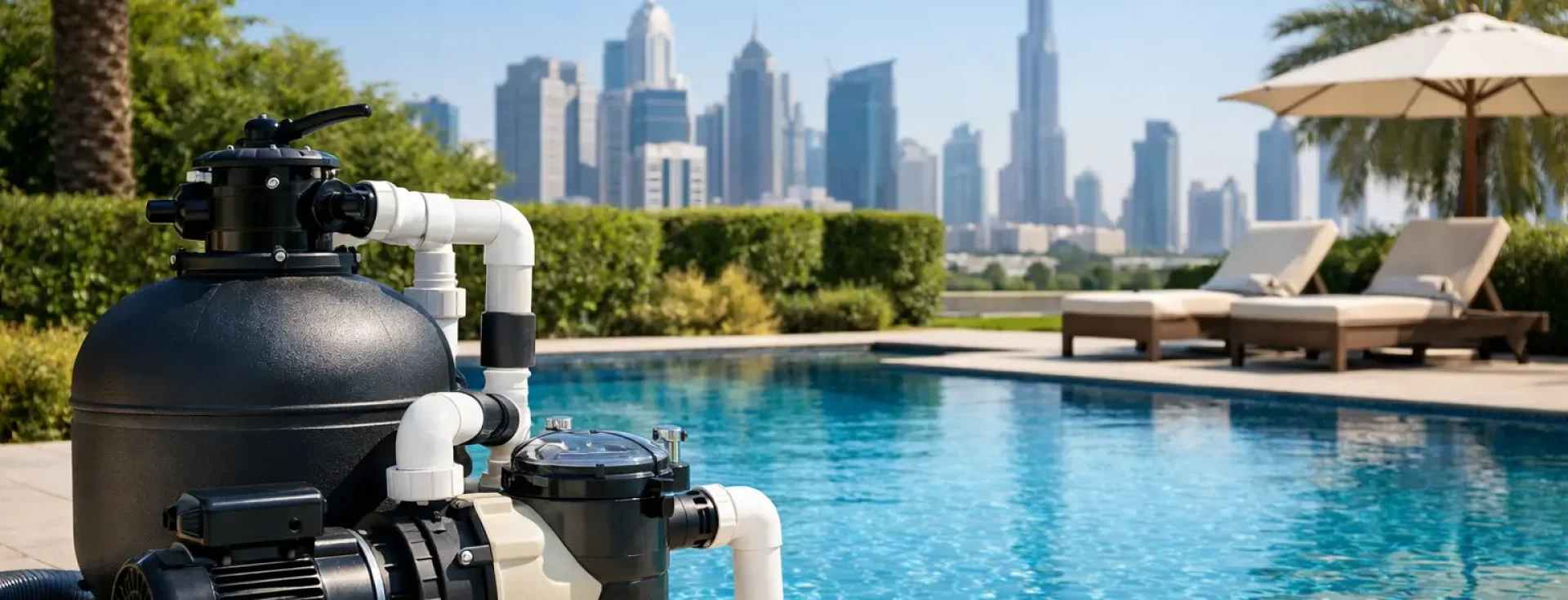
A premium pool can look immaculate at the surface while its circulation system works far beyond its intended capacity below it. In Dubai and across the UAE, swimming pool pumps must contend with high ambient temperatures, frequent use, fine airborne dust, and demanding expectations for water clarity. Choosing the right pump is therefore a technical decision that protects the appearance, operating cost, and long-term value of the entire installation.
For villa owners, hospitality operators, developers, and facility managers, the objective is not simply to move water. It is to maintain stable circulation through filtration, heating or cooling, disinfection, and water features without excessive noise, energy consumption, or avoidable service interruptions.
Why Swimming Pool Pumps Matter
The pool pump is the core of the circulation system. It draws water from skimmers and main drains, pushes it through the filter and treatment equipment, and returns clean water to the pool through the inlet fittings. When pump performance is correctly matched to the pool, filtration is more effective, chemicals distribute evenly, and the water retains the polished clarity expected in high-end residential and commercial environments.
An undersized pump may struggle to achieve the required turnover rate, particularly when the filter becomes partially loaded or the pool has a long pipe run. The result can be dull water, uneven chemical treatment, and more frequent cleaning requirements. An oversized pump creates a different problem: unnecessary power consumption, higher noise levels, excessive water velocity, and added strain on pipes, filters, valves, and heaters.
The best selection is based on the complete hydraulic system, not on a horsepower figure alone. Pool volume is a starting point, but it does not tell the full story.
Selecting the Right Pool Pump Capacity
Pump capacity is commonly assessed through flow rate, typically expressed in gallons per minute or cubic meters per hour. The required flow rate depends on how quickly the pool water should pass through the filtration system. Private pools may operate on a more relaxed turnover schedule than busy hotel pools, while a children’s pool, spa, or high-use community facility may require more intensive circulation.
A professional assessment considers pool volume alongside total dynamic head. This describes the resistance the pump must overcome as water travels through pipework, fittings, filters, heaters, chlorinators, UV systems, and decorative features. Every elbow, valve, narrow pipe section, and piece of equipment adds resistance.
For example, a pump that performs well for a compact villa pool may not be suitable for a rooftop installation with extended pipework or a hotel pool connected to multiple treatment systems. Similarly, a pool with a waterfall, deck jets, or fountain features may need dedicated circulation equipment rather than relying on the primary filtration pump. Separating these duties provides better control and avoids compromising filtration performance for visual effects.
The Filter Must Match the Pump
Pump and filter selection should always be treated as one decision. A pump can only perform correctly if the filter is rated for the intended flow rate. Pushing water too quickly through a filter can reduce filtration quality and increase pressure. A filter that is too large is not usually a concern for performance, but poor system design can still lead to inefficient operation and unnecessary installation cost.
At Aquatic Pools and Fountains, equipment selection can be coordinated around the full circulation layout, helping ensure the pump, filter, disinfection system, plumbing, and control equipment operate as a properly balanced system.
Variable-Speed Pumps for Efficient Pool Operation
For many premium residential and commercial properties, variable-speed swimming pool pumps offer a strong long-term advantage. Unlike single-speed models that operate at one fixed output, variable-speed pumps can be programmed to run at lower speeds for routine filtration and higher speeds when the system requires additional flow.
This flexibility is particularly valuable because a pool does not need maximum circulation every hour of the day. Lower-speed operation can reduce electricity use considerably, while also making the plant room quieter. For villa owners, that means a more peaceful outdoor environment. For hotels, apartment buildings, and commercial sites, it can support more controlled operating costs across a large number of service hours.
Variable-speed models are not automatically the right answer for every project. They typically carry a higher initial cost, and the benefits depend on proper programming and system design. However, for pools with long daily operating periods, multiple water-treatment components, or a focus on energy management, they are often the more intelligent investment.
Key Considerations for UAE Installations
The UAE climate places particular demands on pool equipment. Elevated temperatures can increase evaporation, chemical demand, and the need for reliable circulation. Fine dust can also enter the water and load the skimmer baskets and filtration system faster than in milder environments. A quality pump must be supported by suitable filtration, regular basket cleaning, and a maintenance plan that reflects actual site conditions.
When selecting a pump for a UAE property, evaluate these four practical factors:
- Equipment location: Pumps require ventilation, protection from direct weather exposure where possible, and sufficient access for inspection and servicing.
- Noise control: A quiet-running model and well-planned equipment-room layout are especially important near bedrooms, terraces, guest areas, and spa zones.
- Water treatment compatibility: The pump must work effectively with salt chlorination, UV, ozone, automated dosing, heaters, heat-cool pumps, and other installed equipment.
- Service access: Isolation valves, unions, clear pipe labeling, and accessible strainers make routine maintenance faster and reduce downtime.
Electrical protection is equally important. Professional installation should include appropriate cabling, earthing, control panels, and protection suited to the equipment load and site requirements. This is not an area for temporary fixes or improvised connections, particularly at commercial properties where reliability and safety standards are non-negotiable.
Installation Details That Influence Performance
Even a leading pump can underperform when installed poorly. Correct pipe sizing is essential because pipework that is too narrow increases resistance and forces the pump to work harder. Suction lines should be carefully planned to reduce air leaks and avoid restrictive layouts. Air entering through a poorly sealed lid, union, or suction connection can cause noisy operation, weak circulation, and difficulty maintaining prime.
The pump should normally be placed close to the pool equipment system, with a layout that allows easy removal of the basket lid and motor assembly. A clean, well-organized plant room is more than an aesthetic preference. It enables technicians to identify pressure changes, leaks, and service needs before they become costly issues.
For larger projects, separate pumps may be required for filtration, spas, water features, fountains, and booster functions. This approach adds equipment cost, but it gives operators more precise control. A decorative fountain can operate to its own schedule, for instance, without disrupting the circulation requirements of the main pool.
Maintenance That Protects Pump Life
A pool pump is designed for continuous duty, but it still requires consistent care. The most common preventable issues include blocked baskets, dirty filters, low water levels, air leaks, and running the pump dry. Each can reduce flow and place avoidable stress on the motor and mechanical seal.
Routine maintenance should include checking the pump basket, monitoring filter pressure, inspecting for leaks, and listening for unusual vibration or noise. A rising filter pressure often signals the need for cleaning or backwashing, while a noticeable drop in return flow may indicate a blockage, suction-side air leak, or developing mechanical issue.
Commercial facilities should maintain a planned service schedule rather than waiting for water quality to decline. Preventive inspections help preserve guest experience, protect costly equipment, and keep operations predictable. For residential clients, professional seasonal checks and equipment-room reviews provide the same reassurance, especially before periods of heavy pool use.
When to Replace a Pool Pump
A pump does not need to fail completely before replacement becomes the sensible option. Frequent tripping, persistent leaks, excessive noise, reduced flow, rising energy bills, or repeated motor repairs can all indicate that replacement will deliver better value than another short-term repair.
Replacement is also an opportunity to improve the entire system. A newer, correctly sized variable-speed pump may reduce operating cost and offer better control than an older fixed-speed unit. Before selecting a replacement, however, the existing pipework, filter capacity, treatment equipment, and required flow should be reviewed. Simply installing a more powerful model can repeat the original design problem.
A well-chosen pump works quietly in the background, protecting clear water, efficient filtration, and the refined pool environment your property is designed to deliver. The right equipment, installed with precision and maintained professionally, lets the pool remain a feature to enjoy rather than a system to worry about.