
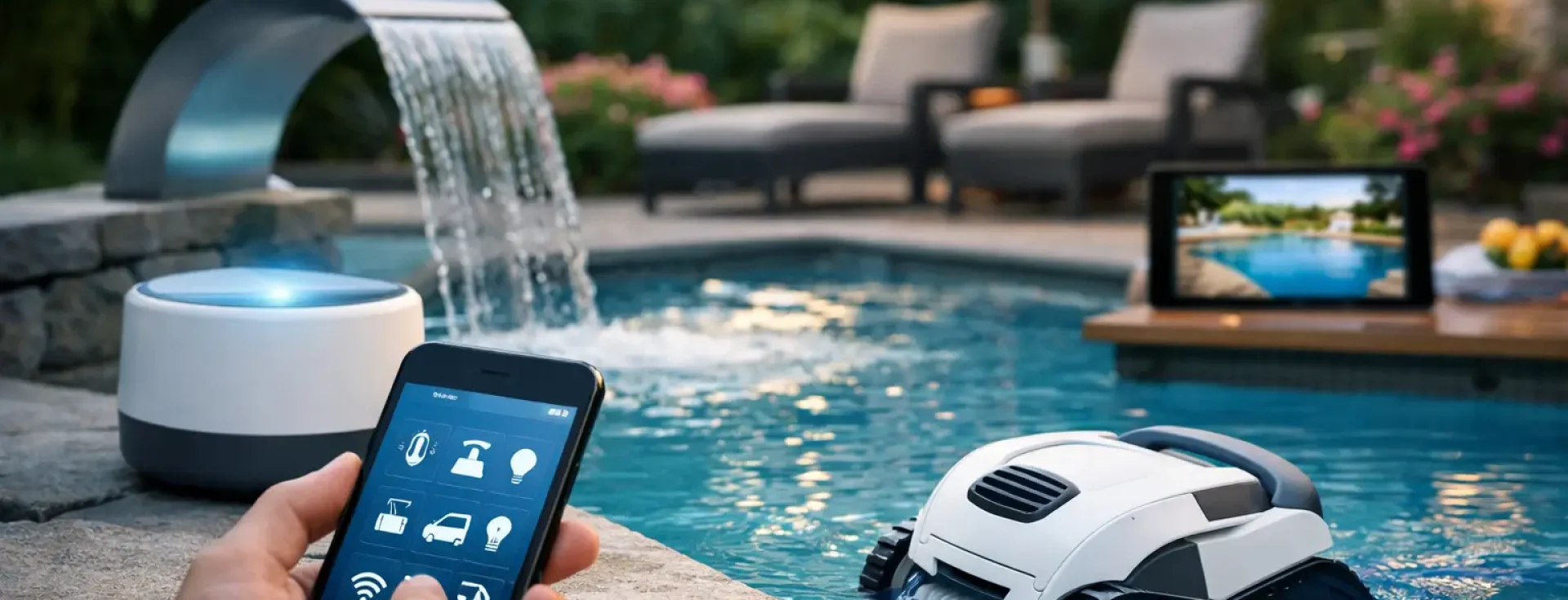
A luxury pool should not demand daily guesswork from a villa owner or constant manual intervention from a facilities team. The most valuable smart pool automation trends are changing that expectation: connected equipment now brings circulation, water treatment, temperature, lighting, and alerts into one controlled operating plan. For premium properties in Dubai and across the UAE, the result is not simply greater convenience. It is more consistent water quality, better equipment protection, and a pool environment that remains ready for use.
Automation is not a single device added to an existing plant room. It is a coordinated approach to pumps, filters, heaters, heat-cool pumps, disinfection systems, lighting, sensors, and control interfaces. The quality of the design matters as much as the technology itself. A poorly specified system can create confusion and maintenance issues, while a professionally selected system gives owners and operators meaningful visibility over a valuable asset.
Smart Pool Automation Trends for Premium Properties
The strongest trend is the move from isolated controls to integrated systems. In older installations, the pump timer, pool lights, heating controls, and chemical dosing equipment often operate independently. Each component may be capable, but there is little coordination between them. Modern automation platforms bring these functions into one interface, whether accessed from a wall-mounted controller, a dedicated screen, or a mobile device.
For homeowners, this makes it easier to set a preferred pool temperature before a weekend gathering, schedule lighting scenes, or verify that filtration is running as planned. For hotels, residential towers, and commercial facilities, centralized control supports more disciplined operation across one pool or several aquatic features. A facility manager can identify an abnormal alert earlier, confirm operating status without entering every plant room, and provide service teams with clearer information when attention is required.
The practical benefit is control with purpose. Premium automation should reduce unnecessary manual adjustments without removing professional oversight where it matters.
Variable-Speed Pumps Are Becoming the Foundation
A smart control system is only as effective as the equipment it manages. Variable-speed pool pumps have become central to energy-conscious pool design because they can operate at different speeds according to the task. Filtration does not always need maximum pump output, and water features, vacuuming, backwashing, and high-bather-load periods may require different operating conditions.
Automation allows pump schedules to match actual pool use. A villa pool may run a lower-speed filtration cycle during quiet daytime hours and increase circulation before expected use. A hospitality pool may follow schedules aligned with opening times, cleaning requirements, and water-quality targets. This targeted operation can reduce energy consumption and wear compared with a pump that runs at one fixed speed for long periods.
Savings will depend on the pool size, hydraulic design, operating hours, equipment condition, and local electricity costs. The goal is not to run a pump as slowly as possible. It is to maintain sufficient turnover, circulation, and treatment performance while avoiding wasteful operation. Proper flow calculations and equipment selection remain essential.
Water Quality Monitoring Is More Precise
Manual water testing remains valuable, particularly as a verification step and during service visits. However, connected sensors and automated dosing systems are increasingly used to maintain more stable water conditions between checks. These systems can monitor key parameters and activate chemical dosing equipment according to programmed targets.
For commercial pools, this supports more consistent compliance-oriented operations and helps teams react before a minor imbalance becomes a guest complaint or pool closure. For luxury residences, it reduces the frustration of arriving at a pool with cloudy water, poor sanitizer levels, or an uncomfortable chemical odor.
Automation does not eliminate the need for trained maintenance. Sensors require calibration, probes need care, chemical storage must meet safety standards, and dosing equipment must be installed correctly. In the UAE climate, high temperatures, dust exposure, evaporation, and heavy seasonal use can place additional demands on pool water management. The best installations combine automated monitoring with a reliable maintenance schedule and professional testing.
Climate-Responsive Heating and Cooling Controls
Pool comfort in the UAE is not limited to heating. During long periods of high ambient temperature, water can become warmer than many swimmers prefer. Heat-cool pumps, integrated with automation, allow operators to set defined temperature ranges rather than managing equipment through repeated manual changes.
This is particularly useful for villas with frequent outdoor entertaining, wellness-focused residential developments, and hotel pools where guest comfort directly affects the property experience. Automation can schedule heating or cooling around expected use and help prevent equipment from operating when a cover is open, circulation is insufficient, or target conditions have already been reached.
There are limits. A temperature controller cannot compensate for inadequate equipment capacity, excessive heat gain from design conditions, or poor hydraulic flow. Pool covers, shade planning, insulation, and correctly sized heat-cool equipment all influence results. Automation improves management, but it cannot correct fundamental design errors after installation.
Lighting and Water Features Are Part of the Control Strategy
Smart lighting is moving beyond a basic on-off timer. Premium LED pool lights can be scheduled around evening use, adjusted for selected colors, and coordinated with landscape lighting or decorative fountains. For a villa, a simple lighting scene can make the pool area ready for a dinner event without a series of switches and manual checks. In a hotel or corporate setting, programmed scenes support a polished visual standard every night.
Fountains and water features also benefit from intelligent scheduling. Running them only when the space is occupied or when visual impact is required can reduce unnecessary equipment operation. At the same time, a fountain control plan must account for water-level protection, filtration needs, and the performance requirements of pumps and nozzles. Appearance and mechanical reliability need to be treated as one decision.
Remote Alerts Improve Service Response
One of the most useful developments in automation is exception-based notification. Instead of asking an owner or facility manager to monitor every operating detail, a well-configured system can flag conditions that require attention. These may include equipment communication faults, unusual temperature readings, low water level conditions, dosing alerts, or pump-related warnings.
The value is speed and context. A notification is not a repair diagnosis, and it should not encourage untrained users to adjust electrical or chemical equipment. It does, however, help the right person respond sooner with a clearer starting point. For property managers responsible for several pools, this visibility can make maintenance planning more efficient and reduce avoidable downtime.
Connectivity should be treated realistically. Remote systems depend on a stable network, compatible equipment, secure credentials, and ongoing software support. For commercial assets, access permissions should be clearly assigned so that staff can view operational status without unintentionally changing critical settings. A local manual control option remains important if network access is interrupted.
What to Specify Before Investing in Automation
The right automation package depends on the pool’s purpose, existing equipment, and maintenance model. A compact residential pool may need scheduled filtration, heat-cool control, lighting, and a clear mobile interface. A large development or hospitality property may require automated water treatment, multiple pump control, detailed alarms, access levels, and integration across pools, spas, fountains, or balance tanks.
Before selecting equipment, owners and project teams should establish four practical requirements:
- Which systems need automated control, including filtration, disinfection, temperature, lighting, water features, and covers.
- Whether the existing pumps, heaters, lights, and dosing equipment are compatible with the proposed controller.
- Who will receive alerts, make operational changes, and provide technical maintenance after handover.
- What level of control is genuinely useful, rather than adding features that will rarely be used.
Compatibility deserves special attention in refurbishment projects. Retrofitting can be highly effective, but older equipment may need interface modules, electrical upgrades, or replacement to deliver reliable communication. In some cases, replacing an inefficient pump or outdated dosing unit before adding a controller produces a better long-term outcome than attempting to automate every existing component.
Aquatic Pools and Fountains approaches automation as part of a complete equipment and service strategy. From pumps, filters, lighting, and disinfection systems to heat-cool pumps, testing equipment, and technical support, the objective is to specify durable solutions that suit the property rather than sell a one-size-fits-all control panel.
The most successful smart pool installations are not the ones with the most buttons. They are the ones that make daily operation quieter, water quality more dependable, energy use more intentional, and service decisions easier to make. Start with a professional review of the pool’s hydraulics, treatment equipment, and operating priorities, then build automation around the standards your property needs to maintain.