
Circulation Is the System Behind Clear Water
A pool can look clean at the surface while algae, fine debris, and poorly distributed chemicals build up below it. In the UAE, where heat, dust, heavy bather use, and evaporation place constant pressure on pool systems, a well-designed circulation plan is not optional. This pool water circulation guide explains how water should move through a pool, what affects performance, and when professional adjustment is the right investment.
Circulation is the process of drawing water from the pool, passing it through filtration and treatment equipment, then returning it evenly to the basin. When each component is correctly sized and configured, the result is clearer water, more consistent sanitation, less strain on equipment, and a more refined swimming experience.
How Pool Water Circulation Works
The circulation cycle begins at the skimmers and main drain. Skimmers remove floating debris such as leaves, insects, oils, and windblown dust before those contaminants sink or dissolve. The main drain draws water from the lower section of the pool, helping reduce stagnant zones and improving circulation across the full water depth.
From there, the pump pulls water through the plumbing and pushes it to the filter. The filter captures particles that are too small for the skimmer basket, while disinfection equipment and chemical dosing systems treat the water before it returns to the pool through the return inlets.
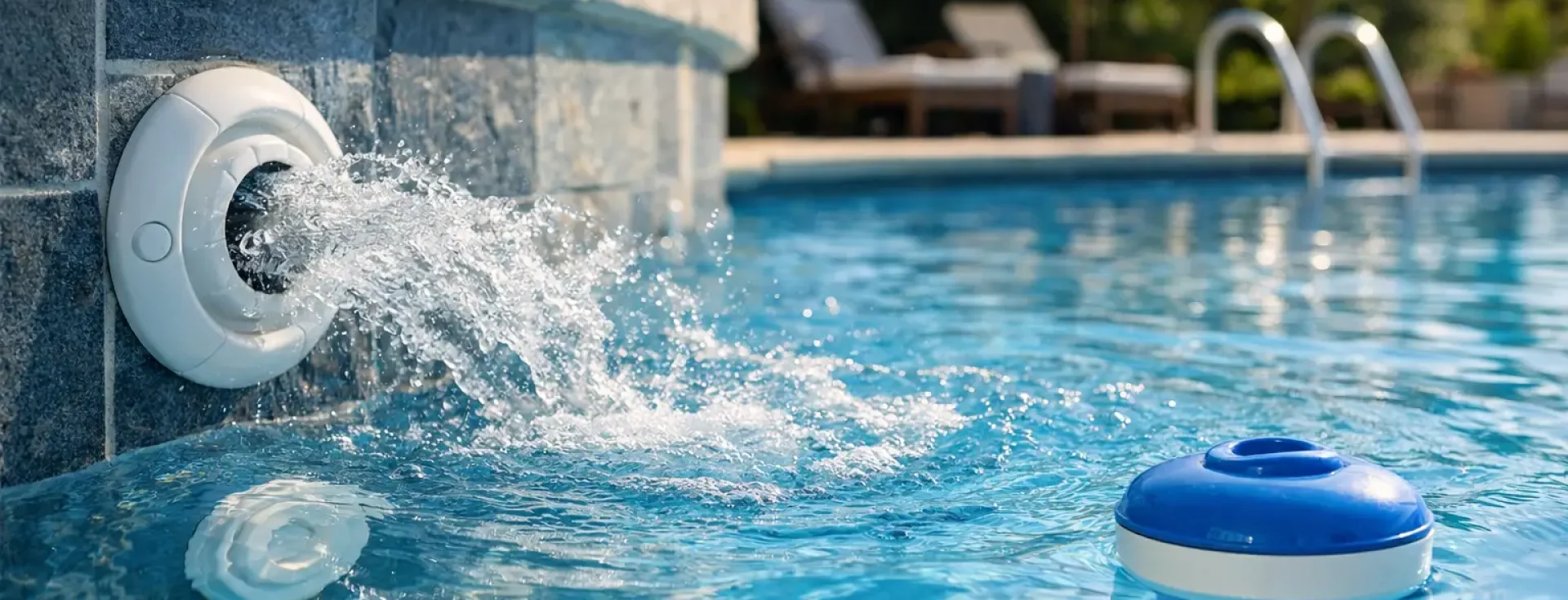
The return inlets are often underestimated. Their direction determines whether treated water reaches corners, steps, ledges, and other areas where circulation can slow down. Ideally, they should create a gentle, continuous current that carries surface debris toward the skimmers without creating uncomfortable turbulence for swimmers.
A circulation system is only as effective as its weakest component. A premium pump cannot compensate for a clogged filter, undersized plumbing, poorly aimed return fittings, or a pool design with unaddressed dead spots.
Pump Runtime: How Long Should It Run?
For most residential pools, the goal is to turn over the full water volume at least once every day. Turnover means that an amount of water equal to the pool’s total capacity has passed through the circulation and filtration system. Commercial pools, hotel pools, and high-use facilities usually require faster turnover rates based on their operating conditions and local requirements.
The exact runtime depends on pool volume, pump flow rate, filter condition, plumbing layout, bather load, and water temperature. In a hot climate, many villa pools benefit from operating the circulation system for eight to 12 hours daily, often split between daytime and evening periods. Properties with intense sun exposure, frequent use, or nearby landscaping may need longer cycles.
Running a pump around the clock is not automatically the premium solution. It can raise energy costs and add unnecessary operating hours if the system is oversized or poorly programmed. Conversely, reducing runtime too aggressively can lead to uneven sanitizer levels, cloudy water, algae growth, and higher chemical demand. A variable-speed pump is often the most efficient option because it can run longer at lower speeds for everyday filtration, then increase output for cleaning, heating, water features, or heavy use.
The Equipment That Protects Water Quality
The Pump Must Match the Pool
The pump is the working heart of the system, but bigger is not always better. An oversized pump can force water through the filter too quickly, increase noise, waste electricity, and put excess pressure on pipework and fittings. An undersized unit may struggle to achieve the required turnover, especially when the pool has long plumbing runs, elevated equipment rooms, heat-cool pumps, fountains, or multiple water features.
Correct pump selection starts with hydraulic design rather than guesswork. A technical assessment should consider water volume, pipe diameter, total dynamic head, feature load, and the desired filtration rate. This is particularly relevant for luxury projects where infinity edges, spa zones, deck jets, and decorative fountains may operate alongside the main pool system.
Filtration Determines What Stays Out
A filter keeps suspended particles from returning to the pool. Sand filters are widely used because they are reliable, durable, and straightforward to maintain. Glass media can improve fine-particle capture and may offer a strong upgrade path for premium installations. Cartridge filters can provide excellent filtration with lower water use, although they require regular manual cleaning and are not the right fit for every high-demand commercial application.
Whatever filter type is installed, pressure is a key performance indicator. Rising pressure usually means the filter is collecting debris and needs cleaning, backwashing, or servicing. Cleaning too frequently can be as inefficient as waiting too long, so operators should use the manufacturer’s recommended pressure range and establish a consistent maintenance record.
Return Inlets Need Deliberate Positioning
Returns should not simply push water toward the center of the pool. They should be positioned and angled to sweep the water body, support skimming action, and prevent stagnant areas. Steps, tanning ledges, recessed corners, and deep ends commonly need extra attention.
If one area repeatedly develops algae, feels colder than the rest of the pool, or collects fine debris, it may indicate poor return flow rather than a chemical problem. A professional can evaluate the inlet direction, pump output, valve positions, and hydraulic balance before recommending modifications.
Common Signs of Poor Pool Circulation
Water quality issues are often treated with additional chemicals when the real cause is insufficient movement. Watch for recurring cloudiness even after cleaning the filter, algae in corners or on steps, weak skimmer suction, uneven water temperature, or sanitizer readings that vary sharply between different parts of the pool.
Air bubbles at the return inlets can point to a suction-side air leak, low water level, blocked skimmer basket, or pump lid seal issue. A noisy pump, fluctuating filter pressure, or visible leaks around equipment also deserve prompt attention. Small faults can develop into pump damage, water loss, or equipment-room problems if they are left unresolved.
For commercial properties, poor circulation can also affect guest confidence. A hotel or residential tower pool is a visible amenity, and water that appears dull, foamy, or inconsistent reflects directly on the standard of property management.
A Practical Pool Water Circulation Guide for Daily Operation
Start with the basics: keep the water level around the middle of the skimmer opening, empty skimmer and pump baskets regularly, and confirm that valves are in their intended operating positions. A blocked basket restricts flow quickly, especially after windy conditions or landscaping work.
Check that return inlets are producing a consistent stream and that the water surface has gentle movement toward the skimmers. Then review the pump schedule. If the pool is used heavily, experiences extreme heat, or receives significant debris, increase runtime gradually and observe whether clarity and chemical stability improve.
Chemical testing should support the circulation program, not replace it. Sanitizer, pH, alkalinity, calcium hardness, and stabilizer levels must be balanced, but chemicals cannot perform evenly if water is not reaching every part of the basin. Automated dosing and salt chlorination systems can provide greater consistency, particularly for properties where daily manual checks are not practical.
A weekly visual inspection of the equipment area is also worthwhile. Look for leaks, unusual vibration, corrosion, and changes in pressure readings. Keep equipment access clear and protect controls from moisture and excessive heat. In premium installations, preventive service is far less disruptive and less expensive than responding to a failed pump or contaminated pool.
When a Professional Assessment Adds Value
A circulation review is especially valuable after a renovation, when adding a heat-cool pump or water feature, or when recurring water problems persist despite routine maintenance. It is also sensible when a property has inherited equipment with no clear sizing records or service history.
Aquatic Pools and Fountains can assess the complete system, from pump and filter capacity to plumbing flow, valves, return fittings, disinfection equipment, and operational schedules. For villa owners, developers, and facility managers, this coordinated approach helps protect both the visual standard of the pool and the long-term reliability of the equipment.
Clear water is not created by one product or one chemical adjustment. It comes from water that is continuously collected, filtered, treated, and returned with purpose. Give the circulation system the same attention as the pool finish and lighting, and it will quietly preserve the quality your property is meant to represent.