
A polished pool can lose its appeal quickly when sand collects in corners, fine dust settles on the floor, or leaves remain trapped along the waterline. This automatic cleaner review is designed for villa owners, facility managers, hospitality operators, and developers who want dependable cleaning performance without assigning daily manual vacuuming to their maintenance team.
Automatic pool cleaners are not interchangeable. The right choice depends on the pool’s finish, dimensions, circulation equipment, debris load, operating schedule, and the standard expected by residents or guests. A cleaner that performs well in a compact residential pool may be the wrong investment for a large commercial pool with heavy bather use. Premium results come from matching the equipment to the installation, not simply choosing the most expensive model.
Automatic Cleaner Review: The Three Main Types
The market is generally divided into robotic, suction-side, and pressure-side pool cleaners. Each has a clear role, and each comes with practical trade-offs.
Robotic pool cleaners
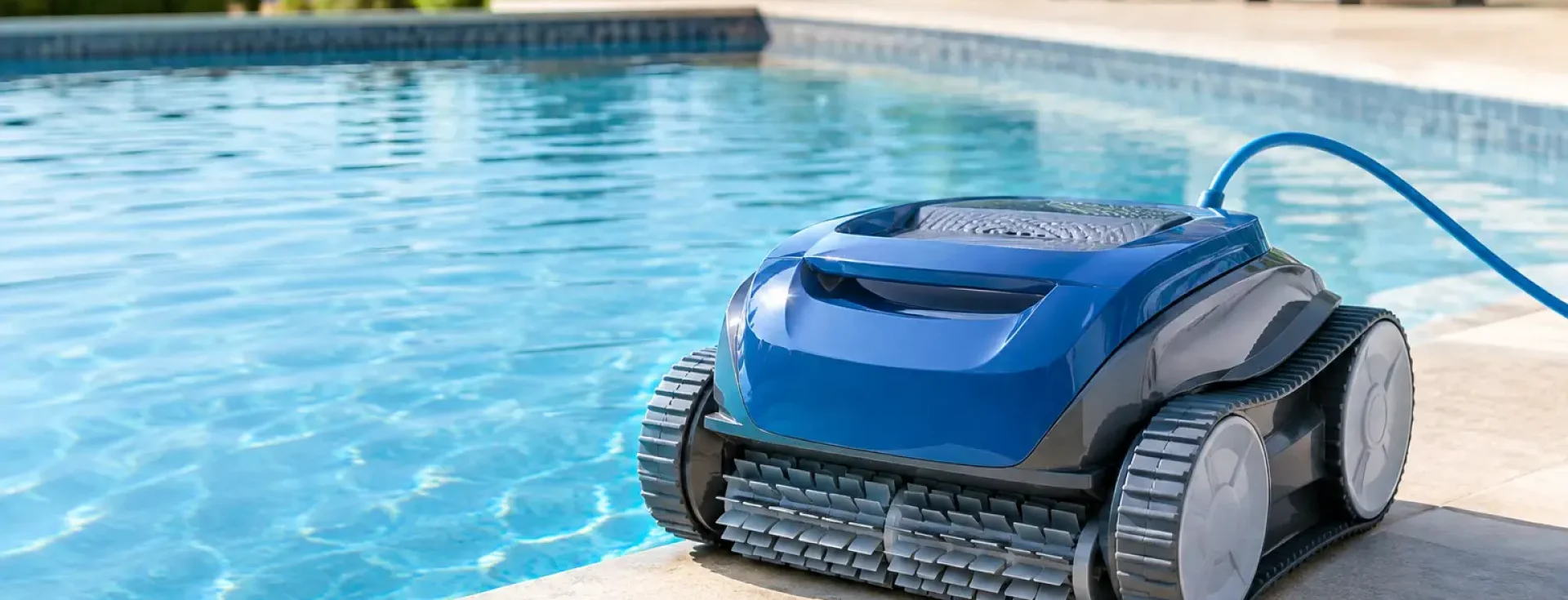
Robotic cleaners are usually the strongest option for owners seeking independent, thorough cleaning. They operate from their own low-voltage power supply, move across the pool floor and walls using internal motors, and capture debris in an onboard filter basket or cartridge. Most premium units use programmed cleaning patterns and active brushing to lift fine dust, algae film, and embedded debris from tile, mosaic, fiberglass, and other common pool finishes.
For luxury villas, boutique hotels, and high-visibility residential properties, a robotic cleaner offers a particularly polished result. It does not rely on the pool pump for movement, so it can be used without placing additional demand on the main filtration system. This can be valuable where efficient circulation, controlled energy use, and reliable equipment life are priorities.
The trade-off is upfront cost and the need for basic handling. The unit must be placed in the pool, removed after the cycle, and its filters cleaned. For most premium properties, that routine is minor compared with the labor saved and the consistent finish achieved. Models with caddies, programmable timers, app controls, and waterline cleaning add convenience, but these features should support a genuine operational need rather than inflate the specification.
Suction-side pool cleaners
Suction-side cleaners connect to a dedicated suction point or skimmer line and use the pool pump’s suction to travel around the pool. They are a practical choice for straightforward residential pools with modest debris levels and a correctly sized filtration system. Their simpler mechanical design can make them cost-effective, especially where the pool already has compatible plumbing.
However, their performance depends heavily on pump flow, hose setup, and filtration condition. If the pump is undersized, the filter is dirty, or the plumbing has air leaks, the cleaner may move slowly or fail to cover the pool evenly. Because debris is pulled through the pool’s filtration system, baskets and filters may need more frequent attention.
A suction-side cleaner can be an excellent solution for a small to medium pool that receives mostly fine dust and light organic debris. It is less suitable for pools surrounded by mature landscaping, heavy sand exposure, or frequent large debris, where blockage and filtration load become more likely.
Pressure-side pool cleaners
Pressure-side cleaners use water pressure from a return line, sometimes supported by a booster pump. They sweep debris into an attached bag, which helps reduce the amount of material entering the main pool filter. This makes them useful for pools that receive leaves, seed pods, and other larger debris.
For outdoor UAE properties, pressure-side equipment can be worth considering where windblown debris is a regular issue. It is also a practical option for larger pools where a dedicated line is already part of the design. The main consideration is installation. A booster-pump model requires compatible plumbing, electrical provision, and professional setup to deliver the correct pressure.
While pressure-side cleaners are durable and capable, they are usually less refined than a high-end robotic model when the goal is intensive brushing, wall coverage, and fine-particle collection. Their value is strongest when debris management is the primary concern.
What Separates a Premium Cleaner From a Basic One
An automatic cleaner should do more than travel around the pool. Its real value lies in how consistently it covers surfaces, collects debris, and reduces manual intervention. The most important performance feature is active brushing. Brushes loosen fine dust, algae film, and stubborn dirt before the cleaner collects it. This is especially relevant for pools with tile lines, textured finishes, or frequent use.
Filtration quality is equally important. Fine dust is common in outdoor pools, particularly in dry and windy conditions. A cleaner with only a coarse debris bag may collect leaves but leave a visible layer of fine sediment behind. Premium robotic cleaners often provide interchangeable or ultra-fine filter options, allowing the operator to match filtration to conditions.
Coverage should be evaluated with care. Floor-only cleaning may be sufficient for a lightly used private pool, but walls and waterlines are where oils, sunscreen residue, airborne contaminants, and early algae growth tend to accumulate. In a hotel, residential tower, or luxury villa, waterline cleaning supports the visual standard guests and residents notice immediately.
Cable management, anti-tangle systems, durable tracks, and easy-access filter baskets may seem like secondary details, but they affect daily usability. Equipment that is difficult to lift, clean, or store often ends up being used less frequently. The best cleaner is one your team can operate correctly every time.
Match the Cleaner to the Pool Environment
Pool size is only one part of the decision. A long lap pool, freeform villa pool, overflow pool, shallow decorative pool, and high-traffic communal pool place different demands on cleaning equipment. A cleaner must also be compatible with the pool surface and safe around steps, ledges, drains, and irregular geometry.
For a residential pool used mainly on weekends, a robotic cleaner with a scheduled cycle may provide all the coverage required. For a villa with landscaping, regular entertaining, and an exposed outdoor setting, larger filter capacity and active wall brushing become more valuable. In commercial properties, a cleaner should be chosen as part of a broader maintenance plan that includes correct circulation, water balancing, manual detail cleaning, and periodic equipment inspection.
It is also wise to separate cleaning from water quality. An automatic cleaner removes visible debris and surface contaminants, but it does not replace filtration, chemical treatment, disinfection, or professional water testing. Clear water is not always balanced water. A premium pool requires both physical cleaning and controlled water chemistry.
Installation and Operating Considerations
Robotic units generally require the least alteration to existing plumbing, but they need a safe nearby electrical connection and proper storage. Suction-side and pressure-side cleaners demand more attention during installation because hose length, vacuum settings, return pressure, and line configuration directly affect performance.
Before purchasing, confirm the pool’s pump capacity, filter type, plumbing layout, and available access points. For pressure-side systems, establish whether a dedicated cleaner line and booster pump are required. For robotic models, check cable length, maximum pool dimensions, lifting weight, and whether the unit is rated for the pool’s shape and finish.
For commercial properties, consider service continuity as well. A cleaner with readily available consumables, replacement parts, and local technical support will protect the investment over time. Brushes, tracks, filter cartridges, bags, and cables are wear items. Choosing equipment from an established manufacturer with dependable parts support is often more cost-effective than buying a lower-priced unit that becomes difficult to maintain.
Which Automatic Cleaner Is the Best Choice?
There is no single best automatic cleaner for every pool. A premium robotic cleaner is usually the leading choice for detailed cleaning, fine filtration, wall coverage, and reduced dependence on the main pump. A suction-side cleaner remains a sensible, economical option for simple pools with compatible circulation systems and light debris. A pressure-side cleaner is highly effective where larger outdoor debris is the dominant challenge.
For many premium residential and commercial installations, the decision should begin with an on-site assessment rather than a product catalog. The pool’s dimensions, water features, circulation equipment, surface material, and maintenance routine should guide the specification. Aquatic Pools and Fountains can help property owners and project teams select cleaning equipment that complements the wider pool system and supports lasting performance.
A well-chosen automatic cleaner protects more than appearance. It helps preserve circulation efficiency, reduces unnecessary manual labor, and keeps the pool ready for the people who expect it to look exceptional every day.