
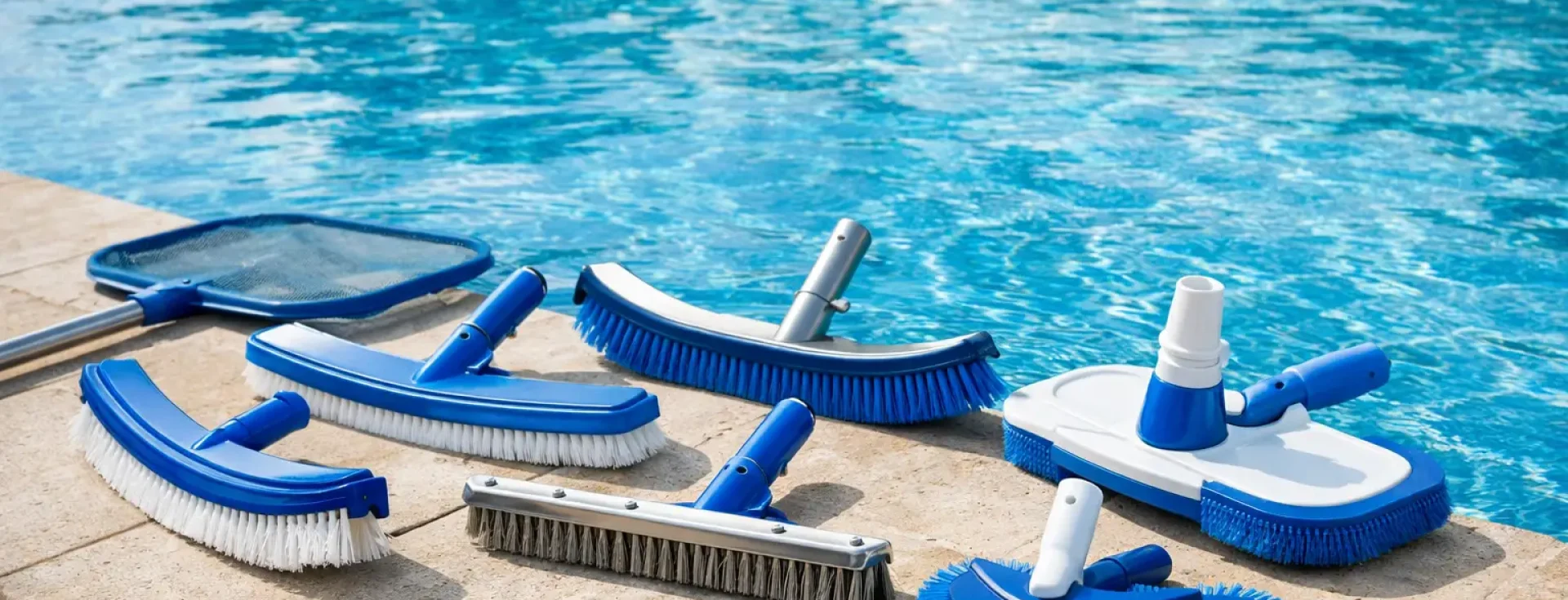
A pool can look perfectly balanced at the waterline and still hide early algae film, calcium buildup, and fine debris on its walls and floor. That is why choosing the best pool cleaning brushes is not a minor accessory decision – it directly affects water quality, surface protection, and how much time your maintenance team spends correcting preventable issues.
For villa pools, hospitality environments, and high-visibility commercial properties, the right brush needs to do more than scrub. It must match the pool finish, hold up under frequent use, and clean efficiently without damaging expensive surfaces. A brush that is too soft leaves scale behind. One that is too aggressive can mark vinyl, wear coatings, or scratch delicate finishes.
What makes the best pool cleaning brushes?
The best-performing brushes combine three things: the right bristle material, a stable brush body, and proper width for the pool layout. This sounds simple, but performance changes significantly depending on whether you are maintaining plaster, concrete, fiberglass, vinyl liner, ceramic tile, or mosaic finishes.
Nylon bristles are the safest all-around choice for routine maintenance. They are dependable on most pool surfaces and work well for weekly brushing of walls, steps, corners, and shallow-floor areas. For premium residential pools and many commercial applications, a high-grade nylon brush delivers the best balance between cleaning power and finish protection.
Stainless steel bristles are more aggressive and are generally used on hard surfaces such as concrete or plaster when algae adhesion or stubborn deposits require more force. They are effective, but they are not universal. On vinyl liners, fiberglass, and some decorative finishes, steel can be too harsh.
There are also combination brushes that use both nylon and stainless steel. These are practical for operators managing heavy-duty cleaning on durable surfaces, especially where brushing needs to remove difficult buildup without moving straight to chemical correction.
Best pool cleaning brushes by surface type
Nylon brushes for vinyl and fiberglass
If your pool has a vinyl liner or fiberglass shell, nylon is the correct starting point. These surfaces need regular brushing, but they also require a more controlled contact pressure. A curved nylon wall brush is especially effective because it keeps better contact along transitions where the wall meets the floor.
For homeowners and facility teams who want dependable routine cleaning without surface risk, this is often the smartest choice. It may take slightly more passes on stubborn spots than a steel brush, but that trade-off is worth it when finish preservation matters.
Stainless steel brushes for plaster and concrete
Plaster and concrete pools usually tolerate firmer brushing, and in many cases they need it. If algae starts anchoring into microscopic surface texture or scale begins forming near the tile line, a stainless steel brush can restore control faster than a soft brush.
That said, even on plaster, overly aggressive brushing is not always better. Newer plaster surfaces, specialty finishes, and areas with visible wear may call for a gentler approach. In those cases, a mixed-bristle brush or stiff nylon model is often the better fit.
Tile-line brushes for scale and residue
A standard wall brush is not always ideal at the waterline. Tile, grout lines, and decorative bands often collect calcium residue, sunscreen film, and mineral deposits that need more focused contact. A narrower tile brush with dense bristles helps target these areas without wasting effort across the full wall span.
This matters in luxury settings where visual finish is part of the property value. The waterline is the first thing guests, buyers, and residents notice.
10 best pool cleaning brushes to consider
1. Curved nylon wall brush
This is the leading choice for general-purpose brushing. The curved ends help maintain edge contact and reduce missed debris lines in corners. It is suitable for weekly maintenance on most residential pools.
2. Straight heavy-duty nylon brush
A straight brush gives a firm, even push across flat wall sections and floors. For operators who prefer simple control and consistent pressure, it is a reliable option.
3. Stainless steel algae brush
Designed for concrete and plaster pools, this brush is best for persistent algae or rougher surface cleaning. It is effective, but should only be used where the finish can safely handle it.
4. Combination bristle brush
This style blends nylon with steel bristles for stronger cleaning while staying more controlled than full stainless steel. It is useful for commercial pools with recurring heavy-load maintenance.
5. Waterline tile brush
A compact tile brush is ideal for cleaning the scum line, mineral residue, and decorative edge details. It adds precision where a full-size wall brush feels oversized.
6. Corner brush
Corners, step edges, and ladder areas often trap debris and early algae growth. A dedicated corner brush improves access and reduces blind spots in regular maintenance.
7. Vacuum-handle compatible wall brush
Some brushes are designed with stronger reinforcement around the handle mount, which matters in larger pools where cleaning teams apply more force. This small design detail improves longevity.
8. Wide commercial-grade brush
For hotels, apartment towers, and large private pools, a wider brush covers more area in less time. The key is choosing one with a rigid body so it does not flex excessively during use.
9. Flexible-body brush for curved pools
Freeform pools and custom designs benefit from a brush that follows surface contours. A flexible body improves contact in rounded walls and custom water-feature transitions.
10. Brush with replaceable pad or bristle sections
For high-use environments, serviceability matters. A brush with replaceable wear components can be more economical over time than replacing the full unit repeatedly.
How to choose the best pool cleaning brushes for your property
The right choice depends on three practical factors: surface material, cleaning frequency, and pool usage intensity. A private villa pool with weekly care has different requirements than a hospitality pool with constant bather load and stricter appearance standards.
If your priority is finish protection, start with premium nylon. If your challenge is persistent algae on plaster, consider stainless steel or mixed bristles. If appearance at the tile line is the issue, add a narrower detail brush instead of expecting one tool to handle every task.
Brush width also matters. Wider brushes reduce labor time in large pools, but they can become awkward around steps, spas, and tight corners. Many professional maintenance teams use more than one brush because a single model rarely performs equally well across all areas.
Handle compatibility should not be overlooked. A high-quality brush paired with a weak pole connection becomes a maintenance problem quickly. Look for durable mounting hardware and a stable frame, especially in commercial settings where equipment sees repeated use.
Common mistakes when buying pool brushes
One of the most common mistakes is choosing the stiffest brush available under the assumption that stronger always means better. In reality, over-aggressive brushing can shorten the life of liners, coatings, and decorative finishes.
Another mistake is treating all debris as the same problem. Fine dust, algae film, calcium scale, and oily residue do not respond equally to one brush type. The best pool cleaning brushes are selected based on the deposit you are trying to remove, not just the pool size.
Low-grade plastic bodies are another weak point. In hot climates and frequent-use environments, inferior brush heads can warp, crack, or lose bristle retention faster than expected. For premium pools, durable materials are worth the investment because replacement cycles and inconsistent cleaning cost more over time.
Why brush quality matters in premium pool maintenance
In high-end residential and commercial environments, pool maintenance is not just about cleanliness. It is about asset protection, guest impression, and operational consistency. A poor brush can leave behind film that increases chemical demand, contributes to staining, or allows algae to gain a foothold.
A better brush supports a better maintenance system. It helps reduce corrective treatments, protects surface finishes, and makes routine cleaning more efficient. For property owners and facility managers, that translates into lower disruption and stronger long-term presentation.
For buyers sourcing equipment at a higher standard, Aquatic Pools and Fountains supports this process with premium pool maintenance products, technical guidance, and solutions suited to both elegant residential installations and demanding commercial environments.
When to replace a pool cleaning brush
A brush should be replaced when bristles become bent, uneven, or noticeably worn down. At that stage, cleaning pressure becomes inconsistent and operators often compensate by scrubbing harder, which reduces efficiency and can strain surface finishes.
You should also replace a brush if the body begins to flex excessively, the mounting connection loosens, or corrosion appears on metal components. These signs are easy to ignore, but they usually lead to poor cleaning coverage and wasted labor.
The best brush is the one that matches the pool surface, performs consistently, and stands up to the maintenance schedule you actually have – not the one that looks strongest on the shelf. If you are selecting for a luxury villa, residential tower, hotel, or commercial asset, a surface-specific, durable brush is a smarter investment than a generic one-size-fits-all option.