
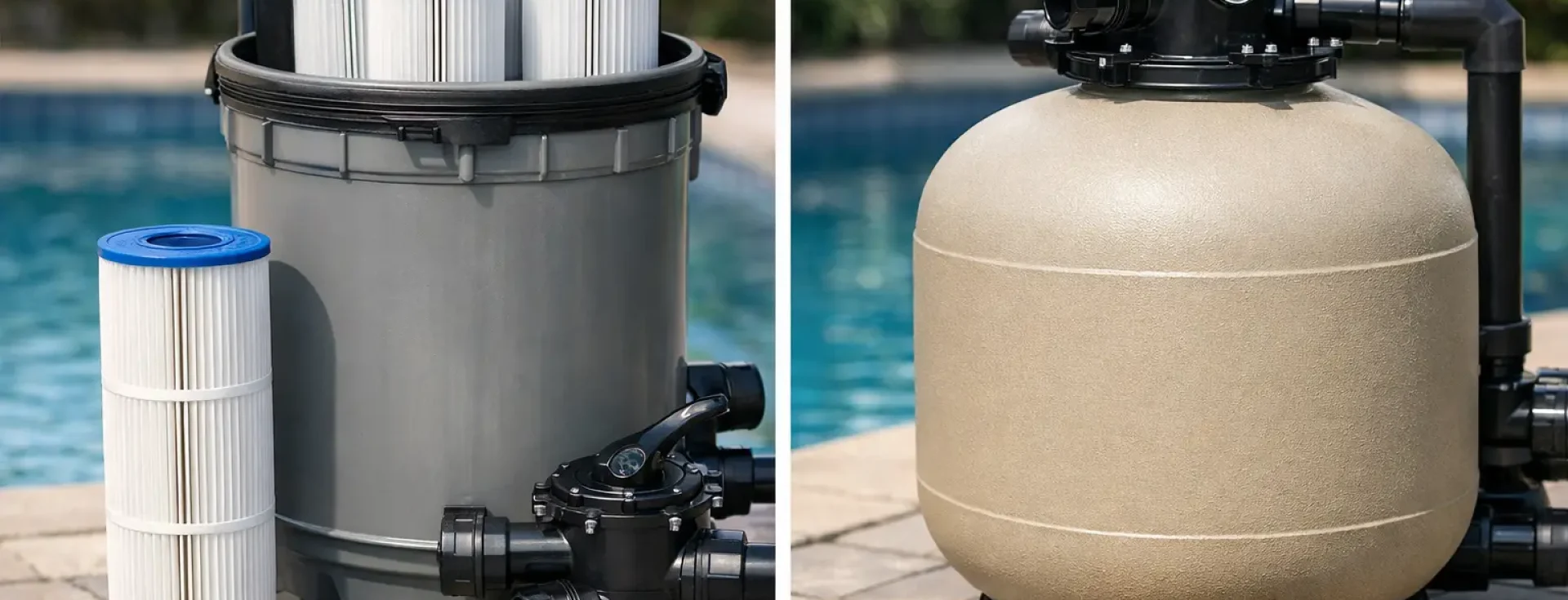
When a pool starts looking dull, the issue is often not the pump or the chemistry – it is the filter doing less than the property demands. In the cartridge filter vs sand filter decision, the right choice affects water clarity, maintenance time, operating cost, and the overall standard of your pool environment.
For villa owners, hospitality operators, and facility managers, this is not a small equipment detail. A filter has to match the size of the pool, the bather load, the maintenance schedule, and the performance level expected from the property. A residential pool built for quiet family use does not have the same filtration demands as a hotel pool, a residential tower amenity deck, or a high-visibility commercial installation.
Cartridge Filter vs Sand Filter: The Core Difference
A cartridge filter captures debris through a pleated fabric element inside the filter tank. Water passes through the cartridge, dirt is trapped in the media, and clean water returns to the pool. When the cartridge becomes loaded, it must be removed and cleaned, and eventually replaced.
A sand filter uses specially graded filter sand inside a tank. Water moves through the sand bed, which traps debris before the water returns to circulation. As dirt builds up, the system is cleaned by backwashing, which reverses water flow and flushes the trapped contaminants to waste.
That basic difference shapes everything else. Cartridge systems generally offer finer filtration and lower water waste. Sand systems are usually simpler to manage for larger pools and are often favored where maintenance teams want fast cleaning cycles without opening the filter body.
Water Clarity and Filtration Performance
If your priority is sharper water clarity, cartridge filters usually have the edge. They tend to capture finer particles than standard sand filters, which can help produce a cleaner, more polished look in the water. For premium residential pools and luxury properties where appearance matters as much as function, that can be a decisive advantage.
Sand filters still perform well, especially when properly sized and maintained. They are dependable workhorses and widely used across residential and commercial installations. But in a direct comparison, standard sand media is generally less precise than cartridge media when it comes to very fine particles.
That said, filtration is never just about the filter tank. Circulation design, pump sizing, turnover rate, water balance, and maintenance discipline all influence the final result. A premium filter installed on a poorly designed system will not deliver premium performance.
Maintenance: Hands-On Cleaning vs Backwashing
This is where the cartridge filter vs sand filter comparison becomes practical.
A cartridge filter does not require backwashing in normal operation. That means less water loss, which is attractive for owners who want efficient pool management. Cleaning, however, is more hands-on. The system must be shut down, the tank opened, the cartridge removed, and the element washed thoroughly. In higher-use pools, that process can become frequent.
A sand filter is easier to clean in day-to-day operation. Backwashing is straightforward and fast, which is why many commercial operators appreciate it. The trade-off is water consumption. Every backwash cycle sends water out of the system, and that means refilling, rebalancing, and managing waste.
For a private villa pool with moderate use, cartridge maintenance may be perfectly reasonable. For a busy commercial pool where speed and operational efficiency matter, sand can feel more practical.
Operating Costs and Long-Term Value
Upfront cost is only part of the equation. The better question is what the filter will cost to own over time.
Cartridge filters may reduce water waste because they do not rely on regular backwashing. In areas where water conservation and efficient system design matter, that can be valuable. They also often operate with lower resistance, which can support efficient circulation when the system is correctly engineered.
On the other hand, cartridge elements are consumable components. They need periodic replacement, and the quality of the replacement media matters. If the pool sees heavy use, replacement intervals may be shorter.
Sand filters typically have lower ongoing media replacement frequency. The sand can last for years before it needs changing, depending on operating conditions and maintenance quality. But water loss from backwashing adds cost over time, along with the chemical adjustments needed after each cleaning cycle.
So which is more economical? It depends on usage. A lightly to moderately used residential pool may benefit from the efficiency and water clarity of a cartridge system. A larger pool with frequent contamination loads may justify the simplicity and durability of a sand filter.
Cartridge Filter vs Sand Filter for Residential Pools
For high-end residential pools, cartridge filters are often a strong fit. They support excellent water clarity, avoid regular backwashing, and align well with owners who want a cleaner, more refined finish in the pool. They are especially appealing where aesthetics, efficiency, and quieter operation are priorities.
They do require proper maintenance. If the cartridge is neglected, performance drops. For homeowners who rely on professional pool service, this is usually manageable. For owners who want the lowest possible hands-on servicing, the cleaning process may feel less convenient than a backwash valve.
Sand filters also work well in residential settings, particularly for larger family pools, outdoor pools exposed to dust, or homes where simplicity matters most. In environments with windblown debris or heavy seasonal use, sand filters can be very forgiving.
Which Option Suits Commercial and High-Demand Properties?
For hotels, apartment towers, health clubs, and large real estate assets, the decision is often driven by maintenance logistics and usage intensity rather than filtration theory alone.
Sand filters are frequently selected for commercial applications because they are durable, familiar to service teams, and easy to clean quickly. When a facility team needs predictable maintenance routines and reliable performance across heavy bather loads, sand remains a proven solution.
Cartridge systems can still be used in commercial or semi-commercial settings, especially where water savings and fine filtration are priorities. But they need a maintenance plan that matches the demand. On a busy property, that may mean keeping spare cartridges, scheduling more frequent cleaning, and ensuring technicians are equipped to service the system properly.
In premium installations, the best answer is often the one that fits the property’s operational model, not just the one with the strongest specification sheet.
Space, Plumbing, and System Design Considerations
Filter selection should never be made in isolation. Tank size, plant room layout, plumbing configuration, pump performance, and service access all matter.
Cartridge filters can be attractive where water discharge from backwashing is inconvenient or restricted. They may also suit projects where minimizing water loss is part of the design strategy. But they need enough service clearance for cartridge removal and cleaning.
Sand filters are often favored where robust, simple infrastructure is preferred and backwash drainage is already integrated into the system. They can be particularly effective in large equipment rooms serving commercial pools or multi-unit developments.
This is why experienced technical guidance matters. A filter that looks right on paper may be the wrong choice if the installation conditions, maintenance resources, or water treatment strategy are not aligned.
How to Choose Between Cartridge and Sand
If your priority is premium water clarity, lower water waste, and a refined residential pool setup, a cartridge filter is often the stronger option. If your priority is easy routine cleaning, proven durability, and practical operation for larger or busier pools, a sand filter may be the better investment.
There is no universal winner in the cartridge filter vs sand filter debate. The right answer depends on pool size, expected usage, debris load, available maintenance support, and the performance standard the property must maintain.
For buyers investing in premium pool infrastructure, the smartest approach is to evaluate filtration as part of the full circulation system, not as a standalone product. That is where specification quality, correct sizing, and professional support make the difference between acceptable performance and consistently excellent results.
Aquatic Pools and Fountains works with property owners, developers, and commercial clients who need filtration systems that match both technical demands and presentation standards. When the equipment is selected correctly from the start, the pool stays clearer, maintenance becomes more predictable, and the installation performs the way a premium property should.
A filter should do more than keep water moving – it should support the level of quality your property is expected to present every day.