A swimming pool cover is not a minor accessory for a premium property. It is a practical part of protecting the water, controlling operating costs, maintaining a polished pool environment, and, in the right specification, improving safety. For villa owners, hospitality operators, and facility managers, the right cover should suit the pool’s shape, usage pattern, surrounding landscape, and the standard expected of the entire installation.
A poorly matched cover can be inconvenient to use, look out of place, or deteriorate quickly under intense sun and frequent handling. A professionally selected system, by contrast, supports cleaner water, more efficient heating or cooling, and a better-maintained pool area between uses.
Why a Swimming Pool Cover Is a Smart Investment
Evaporation is one of the largest sources of water and heat loss in an uncovered pool. In hot, dry climates, water can disappear quickly, while wind carries away heat and introduces dust, leaves, and other debris. A quality cover creates a physical barrier that reduces this exposure and helps stabilize the pool environment.
The benefits extend beyond water conservation. Less debris entering the water means reduced strain on filtration equipment and less frequent cleaning. Reduced evaporation can also lower chemical consumption, because fewer treated water volumes need to be replaced. For heated pools, a thermal cover helps retain warmth overnight and may reduce the workload on the heating system. For temperature-controlled pools, it can help preserve the desired water condition for longer.
The exact return depends on how the pool is used. A pool that is covered every evening or during long periods of vacancy will see more measurable operational benefits than one used continuously throughout the day. Still, even busy residential or commercial pools benefit from protection during closing hours, maintenance periods, and seasonal low-use intervals.
Selecting the Right Swimming Pool Cover Type
There is no single cover that is ideal for every pool. The best choice depends on whether the main priority is energy efficiency, debris control, safety, presentation, or ease of daily operation.
Thermal and Solar Covers
Thermal covers are designed to limit heat loss and evaporation. They are particularly valuable for heated pools, indoor pools, and properties where guests or residents expect reliable water temperatures. Solar-style covers may also capture solar energy to contribute modest warmth during sunny conditions.
These covers are often lighter than safety systems and can be practical for regular use. However, they should not be assumed to provide child or fall protection. Their performance also depends on proper fit, material quality, and storage. Leaving a cover exposed, folded carelessly, or dragged across rough surfaces can shorten its lifespan.
Safety Covers
A safety cover is engineered to provide a stronger protective barrier over the pool. It can be an important consideration for family villas, schools, residential communities, and hospitality properties where access control is a serious concern. Depending on the system, it may be tensioned, anchored, or integrated into a track-based mechanism.
Safety requirements must be evaluated carefully. Not every cover marketed as strong or durable meets the same load-bearing standard, and local regulations, pool layout, and expected users all matter. A professional assessment is especially valuable where the pool includes raised edges, irregular shapes, adjacent water features, or high-traffic surroundings.
Automatic Covers
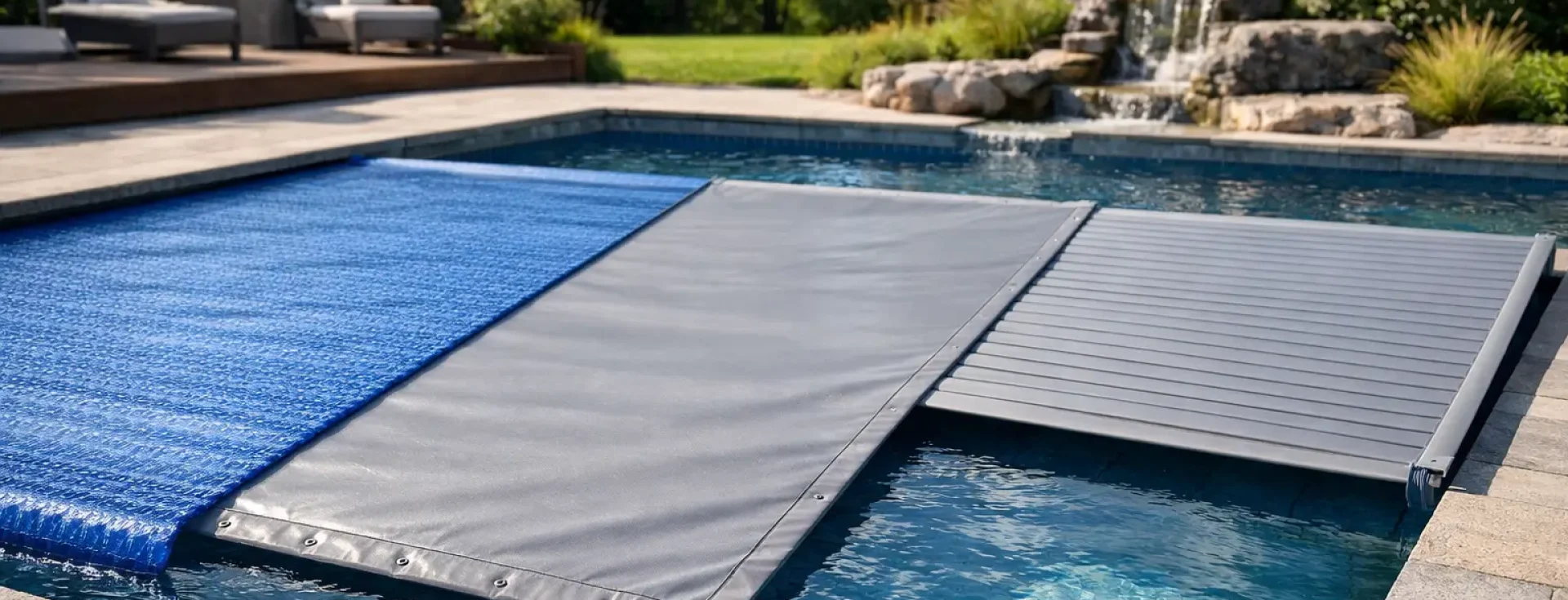
Automatic pool cover systems offer the highest level of convenience. At the touch of a control, the cover extends or retracts across the pool, encouraging consistent daily use. This makes them well suited to luxury villas, hotels, wellness facilities, and developments where presentation and operating efficiency must work together.
The mechanism can be installed in a recessed housing, beneath a deck, or in another purpose-designed location depending on the project. Early planning is essential. Retrofitting is possible in many cases, but a new-build pool provides the greatest freedom to conceal equipment, coordinate finishes, and maintain the clean architectural lines expected in premium spaces.
Automatic systems require correctly specified motors, shafts, tracks, electrical components, and controls. Convenience should never come at the expense of service access. The mechanism needs room for inspection, cleaning, and maintenance throughout its operating life.
Winter, Debris, and Custom Covers
For pools that close for extended periods, a heavier debris or seasonal cover may be the appropriate solution. These covers are designed primarily to keep out leaves, dust, and windblown material while protecting the interior finish and reducing cleaning before reopening.
Custom covers are often necessary for freeform pools, overflow pools, pools with integrated spas, or projects with unusual dimensions. A made-to-measure solution delivers better coverage and a more refined appearance than a generic option. Accurate site measurement is the foundation of this process, particularly where coping profiles, ladders, handrails, or water features interrupt the pool perimeter.
Material Quality Matters in High-Exposure Environments
A pool cover faces constant exposure to sunlight, heat, treated water, moisture, and mechanical stress. Materials that appear similar at installation can perform very differently after months of ultraviolet exposure and repeated opening cycles. Premium-grade fabric, reinforced seams, stable fastening points, and corrosion-resistant hardware are not optional details for demanding properties.
The pool’s water treatment method should also be considered. Chlorine, saltwater chlorination, and other disinfection systems each create different operating conditions. Components such as rollers, anchors, guide tracks, and fasteners should be chosen to resist corrosion and remain reliable in the pool environment.
Color is another practical decision. Darker covers can absorb more heat, while lighter tones may better suit a particular design palette or reduce surface temperature. Appearance matters in a luxury setting, but it should be balanced with cleaning requirements, heat behavior, and the visibility of dust or debris.
Installation Should Be Planned Around the Pool, Not Added as an Afterthought
The cover system must work with the pool structure, deck finish, drainage, and surrounding equipment. A cover that conflicts with coping, furniture placement, overflow channels, or access routes becomes less likely to be used correctly. That undermines the entire investment.
For automatic systems, installers must account for power supply, drainage around the cover housing, roller alignment, and safe control placement. For manual covers, the reel location should allow easy operation without obstructing the deck or compromising the visual layout. Commercial installations may also need operational procedures so staff understand when and how the cover should be deployed.
At Aquatic Pools and Fountains, cover selection can be coordinated with pool equipment, water treatment, heating and cooling systems, and maintenance requirements. This full-scope approach helps ensure the cover supports the wider installation rather than functioning as an isolated add-on.
Maintenance That Protects Cover Performance
A cover does not require complicated care, but routine attention prevents avoidable damage. Rinse off dust, chemical residue, and organic debris as needed, particularly after heavy winds or landscaping work. Allow the cover to dry when possible before extended storage, as trapped moisture can encourage staining or material deterioration.
Mechanical systems should be inspected periodically for track cleanliness, smooth roller movement, proper tension, and signs of wear. Small issues such as a misaligned guide or worn strap are easier and less expensive to address before they affect the motor or damage the cover fabric.
Never force a cover over sharp objects, accumulated debris, or obstructions in the pool. Remove floating items first and keep the water level within the operating range recommended for the system. This is particularly important with automatic covers, where uneven resistance can place unnecessary stress on moving components.
Make the Cover Part of Your Pool Operating Strategy
The strongest results come when a cover is used as part of a disciplined pool care plan. Covering the pool at closing time, after cleaning, and during periods of low use helps protect water quality and reduces the burden on equipment. For managed properties, clear staff procedures make this consistency easier to achieve.
A premium pool deserves equipment that performs quietly in the background while preserving the experience above the waterline. Selecting the right cover, installing it with precision, and maintaining it professionally gives owners and operators one less variable to manage – and more confidence that the pool will remain clean, efficient, and ready to enjoy.