
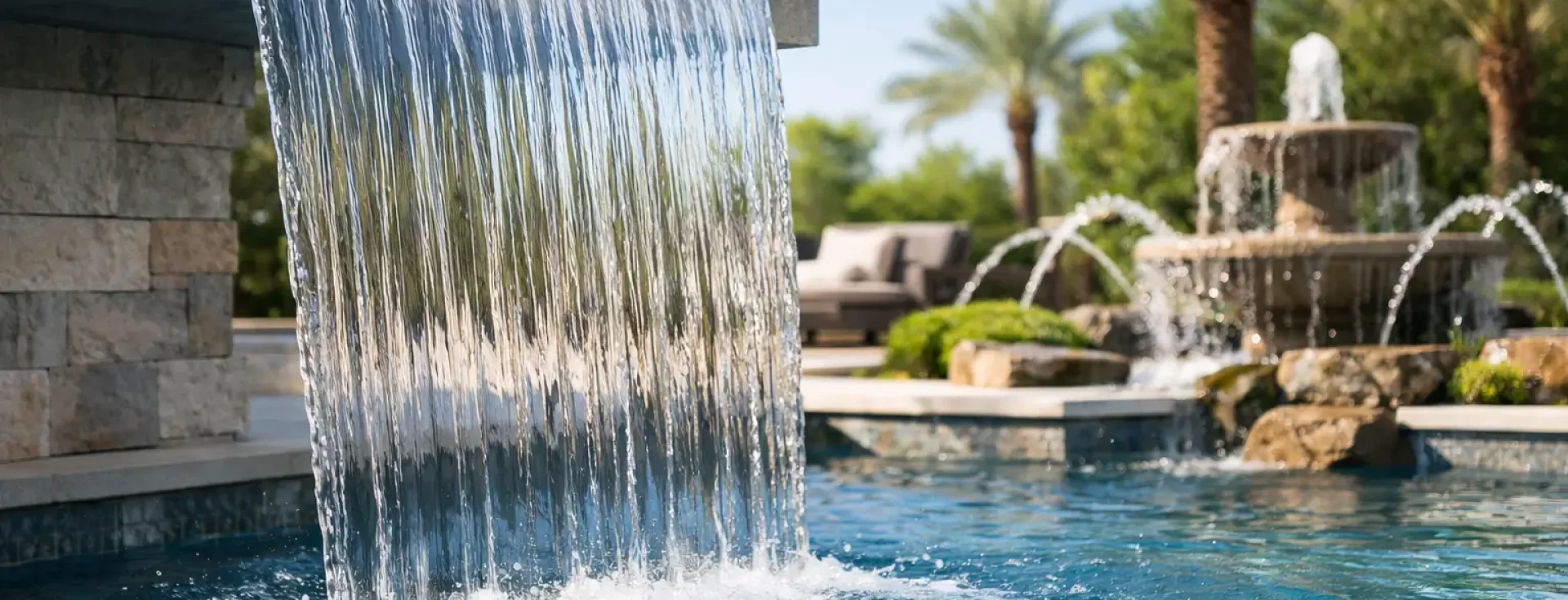
A curtain waterfall changes the entire feel of a pool or fountain the moment water begins to fall in one clean, continuous sheet. For luxury villas, hospitality spaces, residential towers, and commercial landscapes, it is not just a decorative detail. It is a statement feature that adds motion, sound, visual depth, and a more refined finish to the overall aquatic design.
In premium projects, details matter. The wrong water feature can look dated, create splash issues, or demand more maintenance than expected. A well-specified curtain waterfall does the opposite. It delivers a controlled, elegant water effect while supporting the architectural language of the space, whether the project is modern, minimal, bold, or resort-inspired.
What a curtain waterfall adds to a project
A curtain waterfall is designed to release water in a smooth, even veil rather than in broken streams or irregular spill patterns. That visual consistency is what gives it its premium appeal. In a pool, it can create a dramatic edge feature or a striking wall installation. In fountains, it can become the main attraction or complement lighting, stone, tile, and structural finishes.
The effect is both aesthetic and sensory. Visually, it introduces movement without cluttering the design. Acoustically, it can soften surrounding noise and create a more private, relaxing atmosphere. In high-end residential settings, that often means a more immersive outdoor living experience. In hospitality and commercial properties, it means stronger visual impact and a more polished guest environment.
Not every project needs the same waterfall profile. The height of the drop, the width of the blade, the pump sizing, and the catch basin or receiving surface all shape the final result. A narrow indoor feature for a lobby wall requires a different technical approach than a broad outdoor curtain waterfall integrated into a large swimming pool.
Where a curtain waterfall works best
This feature is highly versatile, but it performs best when it is matched carefully to the surrounding architecture and hydraulic system. In villa pools, it is often installed on feature walls, raised bond beams, or custom cladded structures where the water sheet becomes a focal point from both the pool and seating area. The clean line of falling water pairs especially well with contemporary materials like porcelain, natural stone, textured concrete, and glass mosaic finishes.
For hotels and residential developments, a curtain waterfall can help define arrival spaces, podium amenities, spa environments, and landscaped recreation areas. In these settings, visual effect must be balanced with durability and service access. A feature that looks impressive on opening day but becomes difficult to maintain is not a premium solution.
Indoor applications also deserve attention. In enclosed spaces, sound levels, humidity, overspray, and lighting become more critical. The same feature that performs beautifully outdoors may need different flow calibration and basin detailing indoors. That is why product selection and installation quality matter as much as design intent.
Design decisions that affect performance
A curtain waterfall looks simple, but achieving a smooth water sheet requires precision. The water blade or weir must be manufactured to tight standards so the flow remains even across the full width. Any inconsistency in the lip, internal chamber, or supply pressure can interrupt the effect and turn a clean curtain into uneven strands.
Pump selection is equally important. Undersized pumps often create weak flow or inconsistent pressure. Oversized systems can produce excessive splash, noise, and water loss. The right setup depends on the width of the waterfall, installation height, pipe routing, and the desired visual intensity. Some clients want a soft, elegant veil. Others prefer a heavier, more dramatic sheet of water. Both are achievable, but the hydraulic design must match the goal.
Material choice also affects long-term results. Stainless steel components are popular for their clean finish and durability, especially in modern projects. In chemically treated pool environments or exposed exterior settings, corrosion resistance should never be treated as optional. If the feature is being integrated into a chlorinated or saline system, every component needs to be selected with that environment in mind.
Lighting can elevate the feature further, particularly in evening settings. Integrated LED lighting can transform a curtain waterfall into a standout nighttime element, but only when the installation is properly sealed, correctly aligned, and supported by reliable electrical planning. The visual result should feel precise, not improvised.
Curtain waterfall integration with pools and fountains
For swimming pools, integration should begin early in the design process. Retrofitting is possible, but it usually brings more structural, hydraulic, and finishing constraints. When planned from the start, the waterfall can be aligned with coping details, pool balance systems, circulation planning, and surrounding hardscape. The result is cleaner and more efficient.
In fountain applications, the curtain waterfall often works best as part of a coordinated composition. It may be paired with underwater lights, laminar jets, nozzles, bubbling effects, or reflective surfaces. The key is restraint. A premium fountain does not need every effect at once. It needs the right combination of effects, each performing exactly as intended.
There is also a practical side to this decision. A visually ambitious feature with poor service access can become expensive to operate and frustrating to maintain. Access panels, isolation valves, filtration support, and pump room planning should never be left as afterthoughts. Sophisticated water features still need sensible engineering behind them.
Common challenges and how to avoid them
The most common problems with a curtain waterfall are uneven flow, splash outside the intended zone, pump mismatch, and scale buildup along the blade. None of these issues are unusual, but they are easier to prevent than to correct later.
Uneven flow usually points to poor product quality, installation misalignment, or unstable water delivery. Splash problems often come from excessive drop height, wind exposure, or an incorrect receiving surface. In the UAE, wind and evaporation are practical concerns, especially for exposed outdoor installations. This does not mean a curtain waterfall is the wrong choice. It means the feature needs to be designed for the site rather than copied from a concept image.
Water quality management also plays a direct role. Mineral deposits, debris, and chemical imbalance can affect both appearance and performance. If the blade opening begins to clog or scale forms along visible edges, the water sheet loses its sharp, elegant finish. Regular inspection and correct water treatment protect the feature and reduce long-term service issues.
Why professional installation matters
A premium water feature is only as good as its execution. Even high-quality waterfall blades and branded hydraulic components can underperform if pipework is poorly configured, levels are off, or structural tolerances are ignored. This is why experienced technical support matters from product selection through final commissioning.
For developers, facility teams, and private owners, working with a supplier that understands both equipment and installation reduces risk. It also shortens the path between design intent and real-world performance. Aquatic Pools and Fountains supports this process with high-quality water feature equipment, technical guidance, installation expertise, and maintenance support tailored to demanding residential and commercial environments.
That combination matters because a curtain waterfall is not purchased for appearance alone. It is expected to operate reliably, look sharp over time, and complement the value of the wider property.
Choosing the right curtain waterfall for your space
The right specification starts with a few practical questions. How wide should the water sheet be? How visible is the feature from key viewing angles? Is the goal a calm background effect or a bold architectural statement? Will it operate daily, seasonally, or as part of a programmed fountain sequence?
Budget matters too, but premium buyers usually benefit more from value-based decisions than lowest-cost sourcing. A cheaper unit that creates maintenance issues, inconsistent flow, or premature corrosion is rarely cost-effective. For villas and luxury developments, the finish quality and reliability of the feature need to match the standard of the property itself.
It also helps to think beyond the waterfall in isolation. The surrounding pool equipment, filtration support, lighting design, control systems, and access planning should all work together. When those pieces are aligned, the feature feels effortless. When they are not, even a visually attractive installation can become operationally difficult.
A curtain waterfall is at its best when it looks clean, performs quietly and consistently, and feels fully integrated into the architecture. If that is the result you want, the specification should be treated with the same care as the rest of the project.