
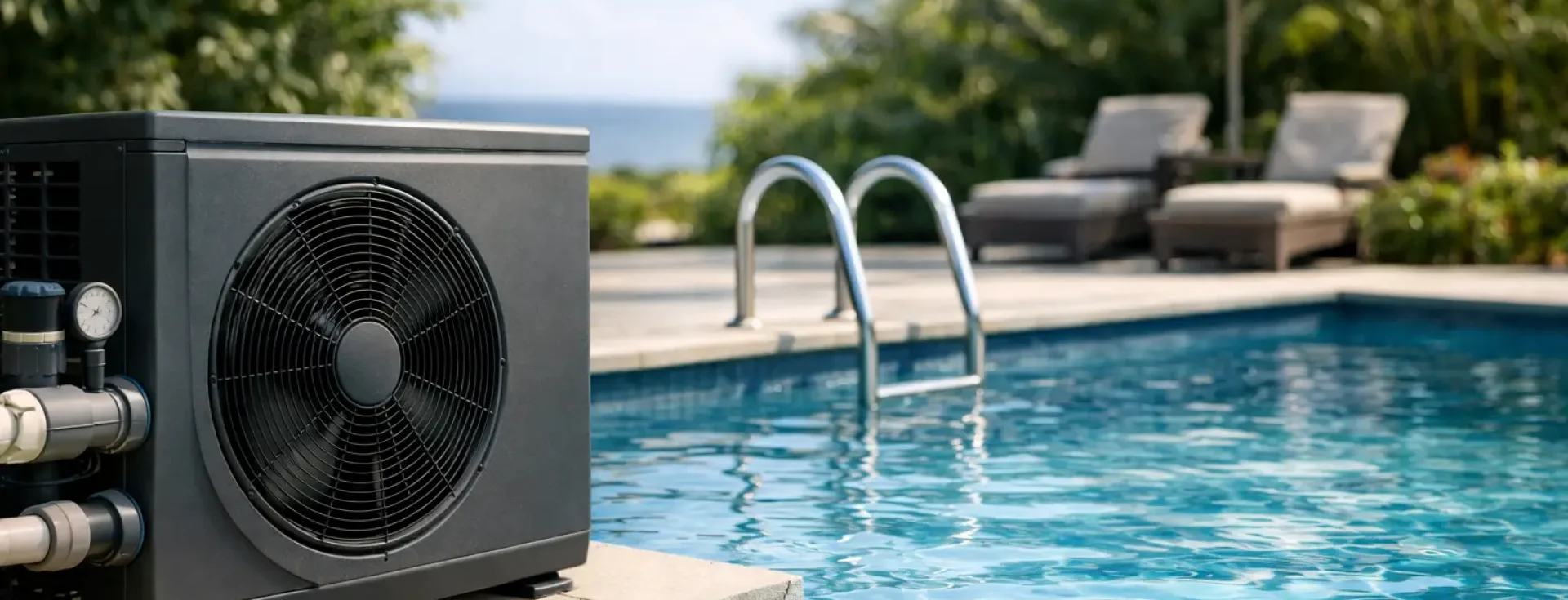
A pool that is too warm in August and too cold in January is not a luxury feature – it is an underused asset. This heat cool pump guide is written for property owners, developers, and facility teams who want precise water temperature control without compromising efficiency, appearance, or long-term operating performance.
In premium residential and commercial environments, water temperature is not a minor detail. It affects guest comfort, swim time, energy consumption, and the overall value of the installation. A well-selected heat-cool pump gives you year-round flexibility by heating when temperatures drop and cooling when summer conditions make the water uncomfortable. For villas, hotels, residential towers, and wellness facilities, that flexibility matters.
What a heat cool pump actually does
A heat-cool pump transfers heat rather than generating it in the same way a conventional electric heater does. In heating mode, it extracts heat from the air and moves it into the pool water. In cooling mode, it removes excess heat from the water and releases it back into the air. The result is stable, controlled pool temperature across changing seasons.
That makes this equipment especially valuable in climates with long hot periods and mild winters. In the UAE, pools can become excessively warm during peak summer, particularly in smaller pools, rooftop pools, and installations with heavy sun exposure. During cooler months, the same pool may need efficient heating to remain inviting. A heat-cool pump addresses both conditions with one system.
Why this heat cool pump guide matters for premium pools
For high-end properties, comfort expectations are higher and downtime is less acceptable. Guests do not want to enter water that feels overheated after a full day of sun. Homeowners do not invest in elegant outdoor spaces to use them only for part of the year. Developers and facility managers need systems that support consistent user experience while keeping operating costs under control.
A heat-cool pump is often the right answer when the brief includes efficiency, automation, and year-round usability. It is not always the lowest-cost equipment at the point of purchase, but it can be the smarter long-term choice. The value comes from better temperature management, lower running costs than direct electric resistance heating, and the ability to respond to real seasonal conditions instead of just one side of the problem.
How to choose the right heat-cool pump
The biggest mistake buyers make is assuming pool size alone determines the right unit. Capacity matters, but so do exposure, wind, desired temperature, usage pattern, and filtration schedule. A shaded indoor pool behaves very differently from an outdoor infinity pool facing direct afternoon sun.
Start with pool volume, but do not stop there. The correct specification depends on how quickly you want the pool to reach target temperature, whether the pool is used daily or occasionally, and whether it is covered when not in use. A pool cover can significantly reduce heat loss and improve system efficiency. Without one, even a well-sized unit can work harder than necessary.
Ambient conditions also shape performance. Heat pumps operate most efficiently within certain air temperature ranges. In hot climates, cooling capability becomes just as relevant as heating output. That is why selecting a model built for local environmental demands is critical. A premium system should be matched to the site, not pulled from a generic sizing chart.
Key features worth paying for
Not every unit on the market is suited to a luxury residential or commercial installation. Build quality, control quality, and after-sales support matter as much as headline performance figures.
A titanium heat exchanger is one of the first things to look for, especially in pools with treated water or salt systems. It offers strong corrosion resistance and better long-term durability. An inverter compressor is also valuable because it adjusts output based on demand instead of running at a fixed rate all the time. That usually means quieter operation, tighter temperature control, and improved efficiency.
Control systems deserve close attention. A modern heat-cool pump should integrate easily with the pool plant room setup and allow straightforward temperature scheduling. In many projects, remote monitoring or smart control capability is a practical advantage rather than a novelty. Facility managers want visibility. Homeowners want convenience. Both benefit from intuitive controls.
Acoustic performance is another consideration that should not be overlooked. On villa properties, poor unit placement or a noisy machine can affect the outdoor experience. In hospitality settings, it can interfere with guest comfort. Quiet operation, correct installation, and proper airflow planning all contribute to a more refined result.
Installation factors that affect performance
Even the best equipment underperforms when installation is treated as an afterthought. Airflow clearance, hydraulic design, electrical supply, drainage, and service access all influence how well the system works over time.
Heat-cool pumps need enough open air around them to exchange heat efficiently. If the unit is boxed into a tight corner or placed too close to walls, performance can drop and component stress can increase. Pipe runs should be designed to limit unnecessary pressure loss, and the system should be integrated correctly with the filtration circuit and any automation controls.
Placement also matters for usability and aesthetics. Premium projects require technical function without visual compromise. A well-planned installation keeps the system accessible for service while protecting the look and feel of the pool environment. That balance is easier to achieve when equipment selection and site planning happen together.
Operating cost, efficiency, and real-world expectations
One reason heat-cool pumps are popular is energy efficiency. Because they move heat rather than create it directly, they can deliver more heating output per unit of electricity consumed than traditional electric heaters. That said, actual efficiency depends on operating conditions, water temperature targets, and whether the pool is protected against heat gain and heat loss.
Cooling also has practical limits. If a pool is exposed to intense sun all day and left uncovered, the system may need more time to maintain a lower temperature. That does not mean the unit is undersized or ineffective. It means the full operating environment must be considered. The best results come when the equipment, pool cover strategy, run times, and automation settings work together.
For commercial buyers, lifecycle value is usually a stronger metric than simple upfront price. A cheaper unit that struggles in peak conditions, consumes more power, or requires more frequent replacement is rarely the better investment. Reliable performance, spare parts availability, and technical support are all part of the real cost equation.
Heat cool pump guide for residential vs commercial projects
Residential buyers usually prioritize comfort, quiet performance, and ease of control. They want a pool that is ready when they want to swim and that supports the quality standard of the property. In these projects, compact design, low noise, and strong aesthetics often carry as much weight as efficiency figures.
Commercial projects are more demanding. Hotels, residential developments, wellness areas, and managed facilities often require longer operating hours, more precise temperature consistency, and stronger service planning. Equipment must support higher usage expectations and fit into broader maintenance programs. Downtime has reputational and operational cost, so reliability becomes non-negotiable.
This is where expert specification matters. A unit that suits a private villa may not be appropriate for a hospitality pool with continuous guest use. Commercial applications often need more detailed capacity planning, better controls integration, and a stronger maintenance framework from day one.
When a heat-cool pump is the right choice
If your pool becomes uncomfortably warm in summer, too cool in winter, or expensive to manage with conventional heating alone, a heat-cool pump is worth serious consideration. It is particularly well suited to projects that value year-round use, stable comfort, and efficient operation.
It may be less suitable where site constraints prevent correct airflow, where the installation is poorly insulated and uncovered, or where the expectation is instant dramatic temperature change in all weather conditions. Like any technical system, performance depends on proper design and realistic operating strategy.
For buyers who want a dependable, premium-standard result, equipment selection should never happen in isolation. The right supplier will assess the pool environment, recommend the appropriate capacity and control setup, and support the installation with technical precision. That is the level of planning serious properties require.
Aquatic Pools and Fountains supports that process with premium equipment, technical guidance, and installation insight tailored to both luxury residential and demanding commercial projects.
The right pool temperature should feel effortless to the user, even though it is carefully engineered behind the scenes. Choose a system that is sized correctly, installed properly, and built for the way your property is actually used, and your pool becomes more than a feature – it becomes consistently usable, efficient, and worthy of the setting around it.