A hotel pool can look immaculate at sunrise and still carry hidden operating risks below the deck. Noisy pumps, inconsistent water balance, weak circulation, and dated controls quickly affect guest confidence, operating costs, and maintenance schedules. Hotel pool equipment modernization replaces these weak points with efficient, dependable systems designed to keep a high-visibility amenity ready every day.
For hospitality properties in Dubai and across the UAE, modernization is rarely about replacing one pump or adding a new light. It is an opportunity to review the full water-treatment and circulation environment: how water moves, how it is filtered and disinfected, how equipment handles heat, and how quickly a facilities team can identify an issue. The right scope depends on the pool’s age, bather load, plant-room condition, operating hours, and the standards the property intends to deliver.
Why Hotel Pool Equipment Modernization Matters
A pool is part of the guest experience, but it is also a technical asset with demanding daily requirements. Hotels face higher and less predictable bather loads than private residences. Sunscreen, body oils, dust, and changing water temperatures place continuous pressure on filtration and sanitation systems. When older equipment cannot manage that demand efficiently, the property may see cloudy water, frequent chemical corrections, equipment failures, elevated utility consumption, and avoidable closures.
Modern equipment helps hospitality operators improve consistency. Variable-speed pumps can match flow to actual operating requirements instead of running at a single high speed throughout the day. Efficient filtration systems capture fine debris more effectively when specified correctly. Automated dosing and monitoring equipment provide faster visibility into water conditions, helping the team respond before small imbalances become guest-facing problems.
The commercial value is equally clear. A well-maintained, visually polished pool supports room rates, guest reviews, memberships, events, and the overall reputation of the property. A dated plant room, by contrast, often creates a cycle of reactive repairs that consumes budget without delivering long-term reliability.
Start With a Technical Assessment, Not a Product List
The best hotel pool equipment modernization projects begin with a site assessment. Selecting premium equipment without understanding hydraulic capacity, pipework condition, electrical supply, and existing water chemistry can lead to undersized or mismatched components. A quality pump cannot compensate for an inadequate filter, poor suction design, or a control strategy that does not reflect the hotel’s real usage pattern.
A professional assessment should review circulation flow rates, turnover expectations, pump performance, filter condition, valve operation, pipe sizing, drain and skimmer functionality, chemical storage arrangements, and the condition of electrical panels. It should also consider whether the existing plant room has adequate ventilation, access for servicing, and space for future equipment upgrades.
For a large resort pool, the priority may be handling sustained peak occupancy with redundancy built into critical systems. For a boutique hotel rooftop pool, quiet operation, compact equipment, and energy management may carry more weight. Indoor pools require additional attention to humidity, water temperature, and air quality. There is no one-size-fits-all specification, even within the same hotel portfolio.
Identify the Cost of Keeping Old Equipment
Replacement is not always immediately necessary. Some established systems can continue to perform well with targeted repairs, new seals, upgraded controls, or improved filtration media. However, facility managers should compare the apparent savings of repair with the ongoing cost of inefficiency, chemical overuse, unplanned downtime, and repeated service calls.
Equipment that requires constant manual intervention is often signaling that the pool has outgrown its original configuration. Modernization should be evaluated as an operational investment, not simply as a capital expense. The objective is dependable water quality and lower lifecycle cost, not the latest technology for its own sake.
The Core Equipment That Delivers the Greatest Impact
Pumps, filters, disinfection systems, heating and cooling equipment, and automation form the backbone of a high-performance hotel pool. These categories should be planned together because each affects the performance of the others.
Variable-Speed Pumps and Efficient Circulation
Traditional single-speed pumps often operate at full output regardless of whether the pool is busy or lightly used. Variable-speed pumps allow operators to adjust circulation to demand, reducing unnecessary electricity consumption while maintaining required water movement. They can also reduce noise, which is particularly valuable for pools near guest rooms, spa areas, or premium lounge spaces.
The trade-off is that programming must be correct. Running a pump too slowly to save energy can compromise filtration and sanitation. Flow rates should be set according to the pool design, required turnover, disinfection method, and peak bather load. Professional commissioning is essential.
Filtration Upgrades for Clearer Water
Filtration is where appearance and performance meet. Aging sand filters, damaged laterals, incorrect media depth, or poor backwash operation can leave fine particles in circulation and make water look dull even when chemical readings appear acceptable.
Depending on the existing system and project requirements, an upgrade may involve new commercial filters, improved filter media, automated backwash arrangements, or refinements to valves and pressure monitoring. The right solution should balance water clarity, water consumption, maintenance access, and plant-room capacity. In water-conscious hospitality operations, backwash efficiency deserves close attention.
Automated Dosing and Water Testing
Manual testing remains valuable, but it should not be the only defense against changing water conditions in a busy hotel environment. Automated controllers monitor key parameters and regulate chemical dosing with greater consistency. This supports safer, more stable water while reducing the risk of overcorrection caused by delayed readings or manual guesswork.
A properly designed disinfection strategy may combine automated chemical dosing with supplementary treatment such as UV or salt chlorination, where suitable for the pool design and local requirements. Each approach has operating considerations. UV can support improved water quality, but it does not replace residual sanitizer. Salt systems can offer a more comfortable water feel, yet they require compatible materials and careful balance management to protect equipment.
Heat-Cool Pumps and Guest Comfort
Water temperature is a service standard, especially in luxury hospitality settings. Heat-cool pumps provide a practical way to manage seasonal conditions and maintain a comfortable pool environment. They are particularly valuable where the property operates outdoor pools for extended hours or wants to protect guest comfort during cooler periods.
Capacity selection matters. An undersized unit may struggle to maintain set temperatures, while an oversized system can create unnecessary capital cost and inefficient cycling. Factors such as pool volume, exposure to wind, shading, operating schedule, and the presence of a pool cover should inform the specification.
Modern Controls Improve Daily Operations
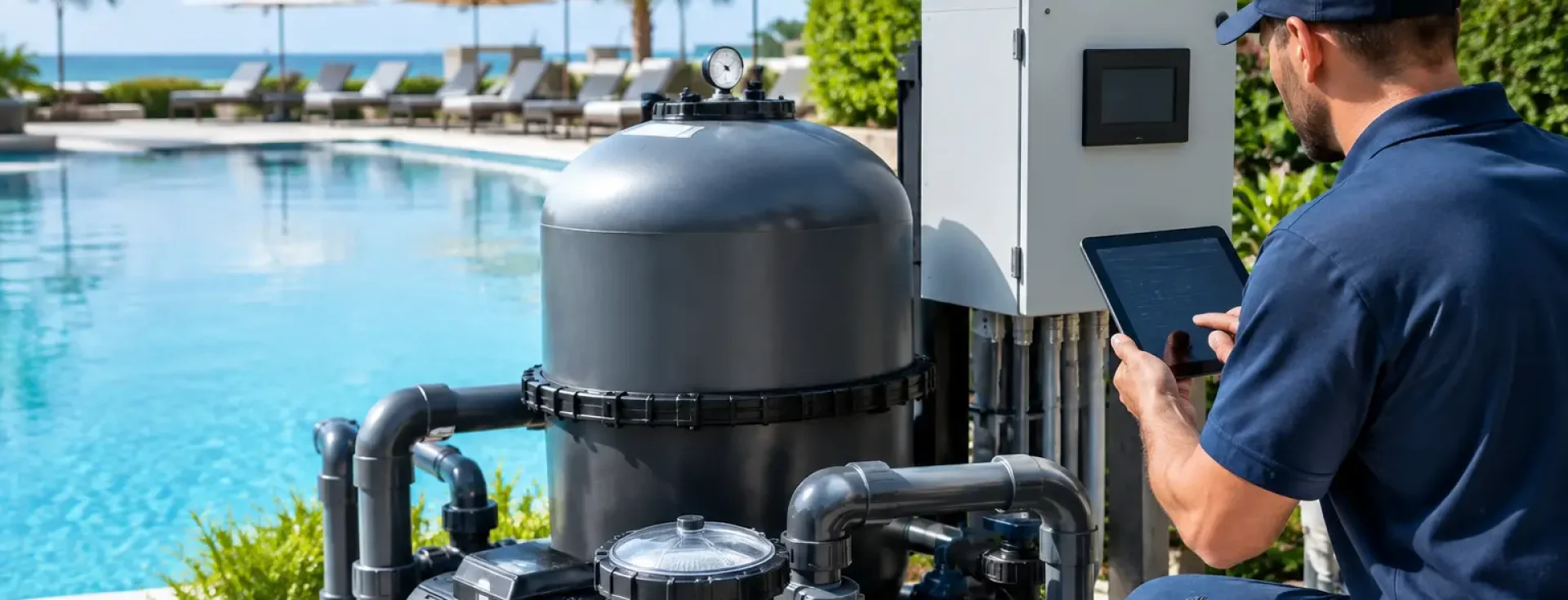
The strongest hotel pool modernization projects make the plant room easier to manage, not more complicated. Centralized controls can display pump status, filter pressure, temperature, dosing activity, alarms, and operating schedules in one location. This gives facilities teams clearer oversight and enables earlier intervention when performance changes.
Automation also supports practical scheduling. Circulation, lighting, water features, and heating can be aligned with guest hours, cleaning windows, and lower-demand periods. For properties with multiple pools, fountains, spas, or water features, coordinated control can reduce the risk of overlooked equipment and inconsistent presentation.
Technology should remain serviceable. A sophisticated control package is only valuable when hotel staff understand it and technicians can maintain it. Select commercial-grade equipment with accessible support, clear documentation, and components available for the local market.
Do Not Overlook Lighting, Safety, and Surround Equipment
A modernization program should extend beyond the plant room where necessary. LED pool lighting improves visual impact, supports atmosphere after sunset, and typically reduces energy demand compared with older lighting systems. The upgrade must include proper niche condition, cabling, transformers, and electrical protection, not just a new fixture.
Safety equipment deserves the same level of attention. Drain covers, handrails, depth markers, ladders, rescue equipment, anti-slip solutions, and poolside signage should be assessed as part of the wider project. These details protect guests and help preserve the polished, professional standard expected in a hotel setting.
For premium properties, decorative water features can also be incorporated thoughtfully. A fountain, cascade, or feature jet should be designed with reliable pumps, appropriate filtration, correct waterproofing interfaces, and maintainable controls. Visual elegance is strongest when the technical foundation is equally refined.
Plan Installation Around Hotel Operations
Hotel pool upgrades require disciplined planning because work often takes place near occupied guest areas. A successful installation schedule considers access routes, noise restrictions, storage, shutdown duration, chemical handling, commissioning, and reopening procedures. In some cases, work can be phased to reduce disruption. In others, a planned temporary closure is the safer and more efficient choice.
The lowest initial quote is not always the best value. Commercial pool equipment must withstand continuous duty, heat, humidity, and frequent servicing. Selecting proven products from leading global brands, supported by qualified installation and maintenance teams, protects the investment long after commissioning.
Aquatic Pools and Fountains supports hospitality operators with premium pool equipment, technical guidance, installation, and ongoing maintenance tailored to the demands of commercial aquatic environments. From pumps and filtration to disinfection, heat-cool systems, lighting, fittings, and water testing, the focus is on equipment that performs reliably and presents the property at its best.
A hotel pool should never become a recurring maintenance concern hidden behind closed plant-room doors. With the right assessment and properly specified equipment, it becomes a controlled, efficient amenity that gives guests every reason to stay longer by the water.