A pool can be the centerpiece of a villa, hotel courtyard, or residential community, but its value depends on disciplined operation. Knowing how to improve pool safety means looking beyond a single fence or warning sign. It requires a coordinated standard for access control, water quality, equipment performance, visibility, and everyday supervision.
For premium properties, safety should also preserve the clean lines and refined finish of the aquatic environment. The right equipment and professional installation can protect guests and residents without making the pool area feel restrictive or cluttered.
How to Improve Pool Safety With Physical Protection
A secure pool perimeter is the first line of defense, particularly where children, visitors, or service staff may access the property. Use a durable barrier designed for the pool environment, with self-closing, self-latching gates that cannot be easily opened by a child. The latch should be positioned out of reach and inspected regularly, since a gate that fails to close fully offers only the appearance of protection.
Barrier design should suit the property. A private villa may use frameless glass fencing to maintain open views, while a hotel, school, or residential tower may require a more substantial access-controlled enclosure. What matters is that the system has no easy gaps, climbable features, or unsecured entry points. Furniture, planters, and decorative elements should not be placed where they create a path over or around the barrier.
Pool covers add another layer of protection when the pool is not in use. A properly specified safety cover can reduce accidental access, limit debris, and support more efficient maintenance. Not every cover is rated to bear weight, however, so owners should select a genuine safety solution rather than treating a basic thermal or debris cover as a protective barrier.
Keep Water Clear, Balanced, and Safe
Clear water is not just an aesthetic standard. It is a safety requirement. Swimmers must be able to see the pool floor, steps, drains, and anyone who may be in distress. Cloudiness can indicate filtration problems, poor circulation, imbalanced chemistry, or contamination. Closing the pool until visibility is restored is the responsible decision.
Consistent testing and treatment also protect users from irritation, illness, and chemical exposure. Maintain sanitizer, pH, alkalinity, calcium hardness, and stabilizer levels within the appropriate range for the system in use. The exact treatment routine depends on bather load, water temperature, pool volume, and whether the installation uses chlorine, salt chlorination, ultraviolet treatment, ozone, or another disinfection approach.
High-use commercial pools often need more frequent testing than private residential pools, especially during peak occupancy. In warm climates, heat and intense sunlight can increase sanitizer demand and accelerate algae growth. Automated dosing and water-testing systems can improve consistency, but they still require calibrated sensors, chemical replenishment, and trained oversight.
Store chemicals in a dry, ventilated, locked area away from direct sunlight, moisture, and incompatible products. Never mix chemicals, transfer them into unmarked containers, or allow untrained staff to handle dosing. Safe water management is precise work, not a task for guesswork.
Inspect Equipment Before It Becomes a Hazard
A pool’s circulation and electrical systems work quietly in the background, but a minor fault can quickly become a major safety concern. Pumps, filters, valves, skimmers, drains, heaters, heat-cool pumps, and disinfection equipment should be inspected on a planned schedule. Leaks, unusual vibration, reduced flow, pressure changes, or repeated tripping are signs that require professional attention.
Drain and suction safety deserves particular focus. Missing, damaged, or improperly fitted drain covers can create an entrapment hazard. Use compliant, securely fastened covers suited to the flow rate and design of the system. If a cover is cracked, loose, or aged, restrict use until it is replaced. Commercial properties should maintain clear inspection records and ensure their plant-room teams understand emergency shutdown procedures.
Electrical safety must be treated with the same discipline. Pool lights, underwater junctions, bonding, grounding, control panels, and outdoor outlets should be installed and serviced by qualified professionals. Water and compromised electrical components are never a minor issue. If lights flicker, a breaker trips, or equipment shows corrosion or moisture intrusion, turn off the affected circuit and arrange an inspection.
Make Entry, Exit, and Movement Safer
Many pool injuries occur around the water rather than in it. Slippery decks, poorly marked depth changes, unstable ladders, and inadequate lighting can turn a relaxed setting into a liability. Specify slip-resistant materials for wet zones, keep drainage clear, and repair loose tiles or uneven paving promptly.
Steps should have visible edges and secure handrails where appropriate. Ladders must be firmly anchored, corrosion-resistant, and comfortable to grip. For older guests, young children, and people with limited mobility, gradual entry steps, handrails, and accessible pool lifts can make a meaningful difference. These features are especially valuable in hospitality and multi-residential environments where operators cannot predict every guest’s needs.
Lighting supports safe movement after sunset and improves surveillance. Illuminate walkways, entry points, depth transitions, and the pool interior without creating harsh glare across the water. Aesthetic lighting can be highly effective, but it should never compromise visibility. Keep light lenses clean and replace damaged fittings immediately.
Establish Clear Rules and Active Supervision
Even the best-built pool needs responsible behavior. Post concise rules where users naturally enter the pool area. Rules should address adult supervision of children, no diving in shallow water, no running, no glass near the pool, and restrictions on swimming during storms or equipment faults. For commercial sites, rules should be visible, professionally presented, and supported by staff who can enforce them calmly.
Children should always have close, capable adult supervision. A lifeguard, caretaker, or family member cannot effectively supervise while reading, taking calls, or leaving the area for even a brief period. For properties with regular guests or multiple families, establish clear responsibility rather than assuming someone else is watching.
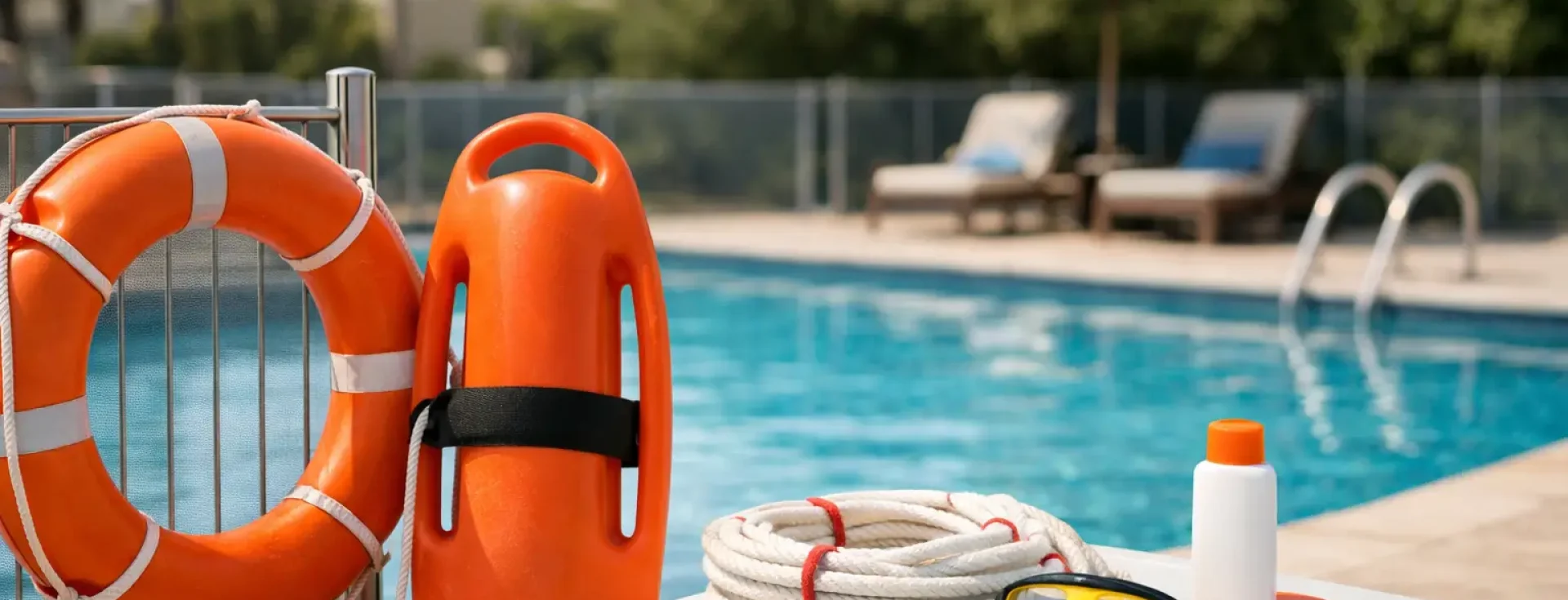
Emergency readiness should be practical, not decorative. Keep a properly stocked first-aid kit, rescue ring or reaching pole, and emergency contact information close to the pool. Staff at hotels, clubs, and managed communities should receive CPR and rescue-response training appropriate to their responsibilities. Residential owners should also consider basic CPR training for household members and frequent caregivers.
Use Maintenance as a Safety System
Professional maintenance is one of the most effective ways to prevent safety issues that are easy to miss during casual cleaning. A qualified technician can assess circulation performance, inspect fittings, test water balance, identify early corrosion, verify lighting operation, and review the condition of safety accessories. This protects the investment in the pool while reducing disruptions for residents and guests.
The right maintenance plan depends on the property. A lightly used villa pool may need a different service frequency than a hotel pool, a residential tower amenity, or a pool exposed to heavy landscaping debris. The standard should be based on actual usage, equipment complexity, and environmental conditions, not simply the lowest maintenance cost.
At Aquatic Pools and Fountains, premium pool safety is approached as part of complete system performance: reliable equipment, quality accessories, technically precise installation, and ongoing service support. When components are selected to work together, the result is safer operation and a pool environment that continues to look exceptional.
A safer pool is built through daily habits and professional attention, not one-time upgrades. Start with the issue that presents the greatest immediate risk at your property, correct it properly, and make routine inspection part of the standard your residents and guests can rely on.