
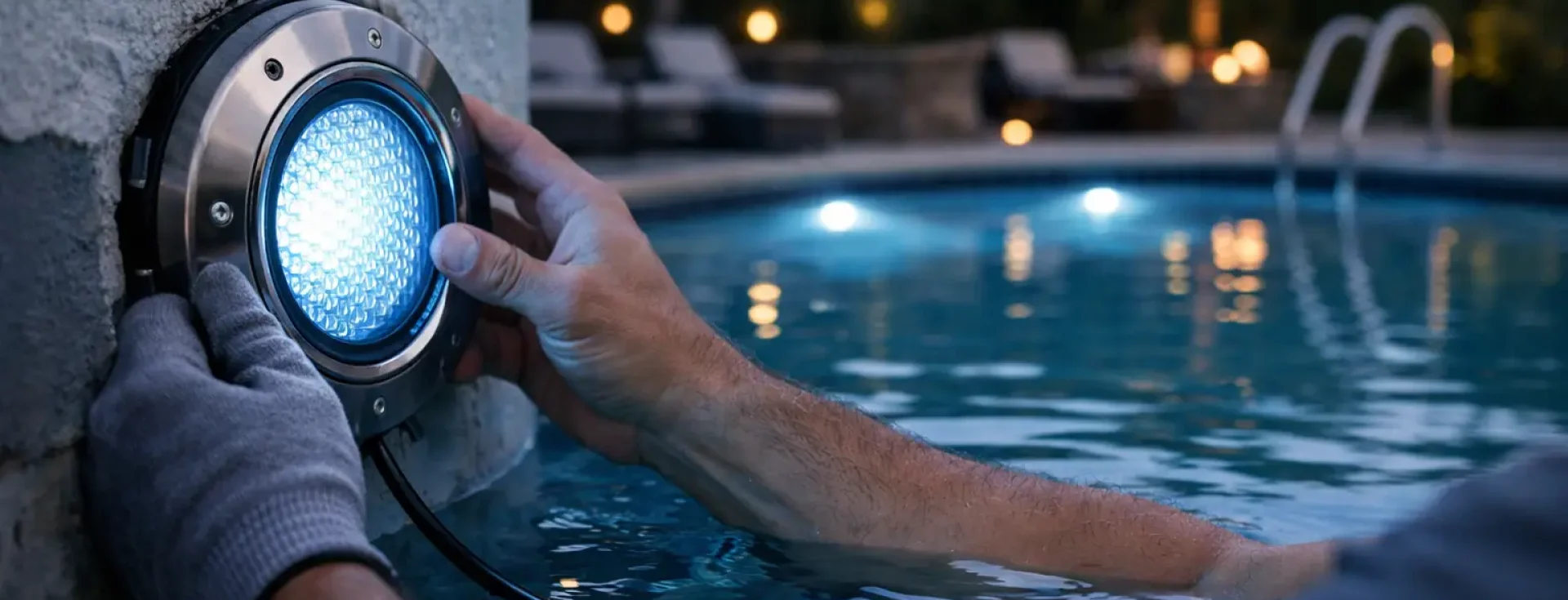
A pool that looks impressive in daylight can feel unfinished after sunset if the lighting is poorly planned or incorrectly installed. If you are researching how to install pool lights, the real priority is not just appearance – it is safety, waterproof integrity, electrical compliance, and long-term performance.
For villa pools, hospitality projects, and commercial properties, lighting has a direct impact on ambiance, visibility, and asset value. The right installation creates a refined visual finish and dependable operation. A rushed installation can lead to water ingress, fixture failure, cable damage, and serious electrical risk.
How to install pool lights starts with the right plan
Before any fixture is placed into a niche or any cable is pulled through conduit, you need to confirm the type of pool light being installed. That usually means choosing between low-voltage LED lights, which are now the preferred option for most premium pools, and older halogen systems, which consume more power and require more frequent maintenance.
LED pool lights are the standard for modern residential and commercial projects because they offer longer life, lower energy use, and better color control. They also produce a cleaner architectural effect when properly positioned. That said, even the best fixture will underperform if the niche placement, transformer sizing, or sealing details are wrong.
The planning stage should cover fixture quantity, beam spread, wall placement, cable route, conduit condition, transformer location, and switching method. In a compact residential pool, fewer well-positioned lights often create a better effect than too many fixtures. In larger commercial pools, symmetry, brightness levels, and maintenance access become more important.
Choose fixtures rated for the pool environment
Not every outdoor light belongs in a pool. The fixture must be specifically rated for underwater use and compatible with the pool structure, whether that is concrete, tiled, fiberglass, or vinyl-lined construction. Nicheless lights, standard niche-mounted lights, and surface-mounted options each have different installation requirements.
Material quality matters. A premium installation should use corrosion-resistant housings, reliable gaskets, UV-stable cable insulation, and trusted electrical components. In hot climates, including the UAE, heat exposure and water chemistry place additional stress on equipment, so durability should never be treated as a minor detail.
This is also the point where compatibility needs to be checked. The light voltage must match the transformer output, the niche size must match the fixture body, and the cable length must be sufficient to reach the junction point without splicing in an improper location. A professional installer verifies all of this before work begins, not after the wall is sealed.
Prepare the niche, conduit, and power source
If this is a new-build pool, the installation is more straightforward because the niches and conduits can be built into the structure at the correct stage. In retrofit projects, the work depends heavily on the existing setup. Sometimes the old niche and conduit can be reused. Sometimes they cannot, especially if there is water intrusion, cable deterioration, or noncompliant electrical work already in place.
The niche must be securely fitted and aligned so the finished light sits flush and clean against the wall. Conduit routing should allow the cable to run continuously from the fixture to the junction box or transformer area. That path needs to remain watertight and free from sharp bends that can damage the cable or make future servicing difficult.
At the power side, the system should include the correct transformer for low-voltage lights and appropriate protection devices as required by local code. Grounding, bonding, and residual-current protection are not optional details. They are part of a safe pool lighting system.
How to install pool lights without compromising safety
The biggest mistake in pool lighting installation is treating it like ordinary landscape lighting. It is not. Water and electricity demand a much stricter standard, and installation should only proceed with the circuit fully isolated and the correct electrical design confirmed.
Once the niche and conduit are ready, the light cable is pulled through to the junction or transformer location. This should be done carefully to avoid abrasions to the cable jacket. If the fixture is designed with excess service cable, that slack is usually coiled behind the light inside the niche so the fixture can be brought to deck level later for maintenance.
The sealing points must be handled precisely. Gaskets, face rings, conduit seals, and fixture housing components all need to be fitted exactly as specified by the manufacturer. Over-tightening can distort seals. Under-tightening can allow water ingress. Both lead to avoidable failures.
After the fixture is seated, the electrical connection at the dry-side termination point should be completed according to the product specification and local electrical regulations. For premium projects, this is where disciplined workmanship separates a clean, reliable installation from one that becomes a maintenance issue six months later.
Test before final handover
A pool light should never be considered installed simply because it turns on. Proper testing includes electrical verification, waterproof integrity, fixture stability, and visual performance in the water.
Start by confirming voltage at the fixture and checking that the transformer and switching system operate correctly. Then inspect for any sign of moisture where it does not belong. If the niche, conduit, or fixture body has a sealing problem, it is better to identify it immediately than after the pool is fully in use.
Visual testing is just as important. At night, the beam spread should look balanced, without harsh glare toward seating areas or dead zones inside the pool. In hospitality and high-end residential settings, lighting is part of the design language. A technically correct installation still needs to look elegant.
New installation vs. retrofit work
If you are installing lights in a newly constructed pool, you have more control over layout and infrastructure. The conduits, niches, cable paths, and control systems can all be planned in advance. That usually results in a better finish and lower long-term maintenance costs.
Retrofitting an older pool is more complex. Existing niches may be outdated, cable routes may be restricted, and the previous transformer may not be compatible with modern LED fixtures. In some projects, a nicheless LED retrofit is the most efficient option. In others, a full upgrade is the better long-term investment.
This is where experience matters. A quick replacement may seem cost-effective, but if it leaves old electrical weaknesses in place, it can become the more expensive choice over time. High-value properties benefit from a full technical assessment before any retrofit begins.
Common mistakes that shorten pool light life
Poor product selection is one of the most common issues. Low-grade fixtures often fail early, especially in demanding environments where heat, chemicals, and operating hours are high. Another frequent problem is incorrect transformer sizing, which can reduce light performance or damage the fixture.
Improper sealing is equally serious. A small weakness in the gasket or conduit connection can lead to water intrusion, corrosion, and repeated service calls. Cable handling is another overlooked point. If the insulation is damaged during installation, the system may work initially and still fail prematurely.
There is also the issue of placement. Lights installed at the wrong height or facing the wrong direction can create glare, uneven illumination, or an underwhelming nighttime effect. Good pool lighting is both technical and architectural.
When professional installation is the right decision
Property owners often ask whether pool lights can be installed as a DIY project. In most cases, especially for in-ground pools and premium finished environments, professional installation is the right choice. The work combines underwater fixture integration, code-sensitive electrical connections, waterproofing, and final visual alignment.
For luxury villas, apartment amenities, hotels, and commercial pools, the standard should be higher than basic functionality. The expectation is safe operation, polished aesthetics, reliable components, and service support when needed. That is exactly why many clients prefer to work with experienced specialists such as Aquatic Pools and Fountains for both supply and installation guidance.
The value is not just in fitting the light. It is in selecting the correct fixture, matching the electrical system, protecting the pool finish, and delivering an installation that performs season after season.
Final considerations before you proceed
If you want to know how to install pool lights the right way, think beyond the fixture itself. Focus on voltage compatibility, waterproof sealing, proper placement, and the quality of the supporting electrical work. A pool light is a visual feature, but its success depends on technical discipline behind the wall.
When the installation is planned with care and executed to a premium standard, the result is immediate. The water looks more inviting, the architecture feels more complete, and the pool becomes usable and impressive long after sunset. That is the difference between adding lights and installing them properly.