
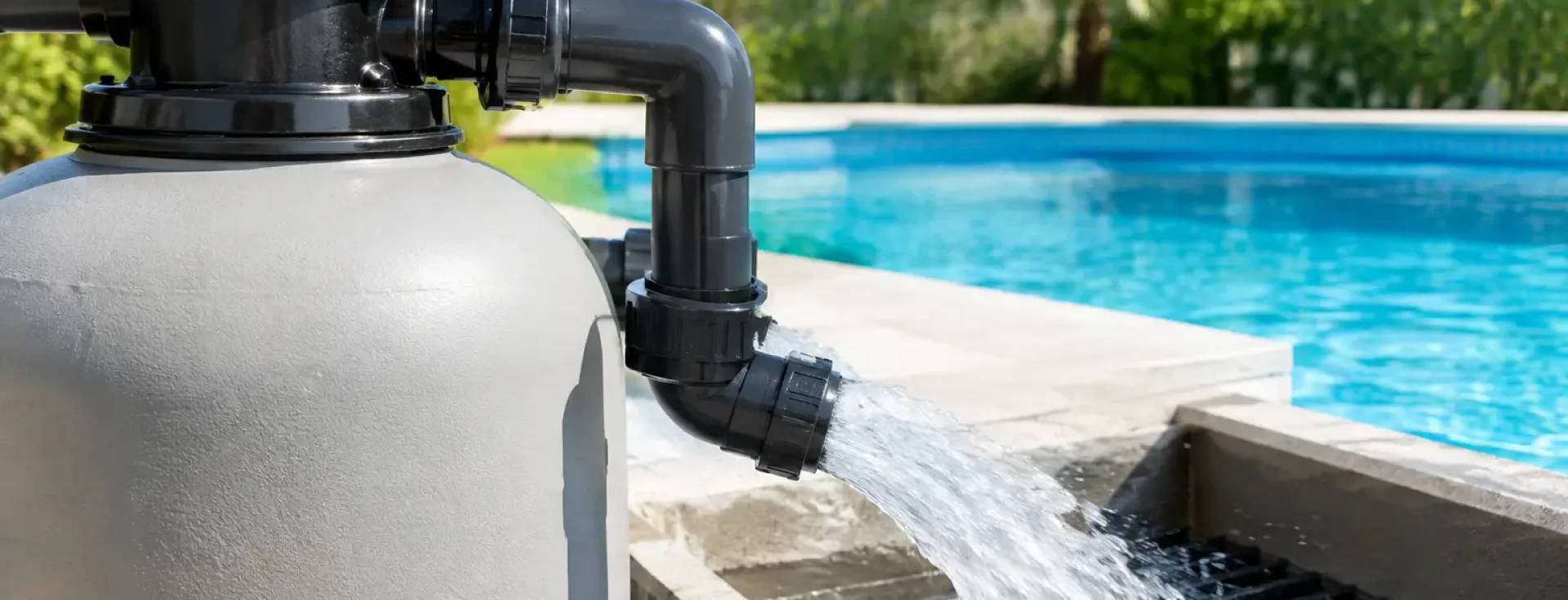
A pool can look perfectly blue while its filter is working far harder than it should. Reduced return flow, a rising pressure gauge, cloudy water after heavy use, or debris that reappears soon after vacuuming are all signs that the filter needs attention. The pool backwash process is the controlled cleaning cycle that flushes trapped dirt from compatible filters and restores efficient circulation without dismantling the entire system.
For villas, hospitality properties, residential developments, and commercial facilities, backwashing is not simply a routine valve adjustment. Done correctly, it protects expensive pumps, preserves water clarity, and helps the complete filtration system perform to premium standards. Done too often or with the wrong settings, it wastes treated water, disrupts chemical balance, and can reduce filtration performance.
What Backwashing Does Inside a Pool Filter
During normal filtration, pool water travels through the filter media and leaves dirt, leaves, fine particles, sunscreen residue, and other contaminants behind. Over time, this buildup restricts water flow. The pressure on the filter gauge increases because the pump must work harder to push water through the media.
Backwashing reverses that flow. Water enters the filter from the opposite direction, lifts the trapped debris from the media, and sends the dirty water out through a waste line. Once the discharge runs clear, the filter is rinsed and returned to normal filtration.
This process applies to sand filters and diatomaceous earth, or DE, filters. Cartridge filters operate differently. They should be removed and cleaned according to the manufacturer’s instructions rather than backwashed. Attempting to backwash a cartridge filter can damage the equipment or simply fail to clean it properly.
When the Pool Backwash Process Is Necessary
The filter pressure gauge is the most reliable guide. Record the clean operating pressure after installing a clean filter, starting the system, and allowing circulation to stabilize. In many systems, backwashing becomes necessary when pressure rises approximately 8 to 10 psi above that baseline. The precise threshold depends on the filter model, pump capacity, plumbing layout, and manufacturer guidance.
Visual conditions matter too. Weak water flow from return inlets, poor skimmer pull, persistent cloudiness, and a noticeable reduction in vacuum performance can point to a loaded filter. After a dust storm, a high-bather-load weekend, landscaping work near the pool, or algae treatment, the filter may need cleaning sooner than usual.
Backwashing on a fixed weekly schedule is not always best. A filter with a moderate layer of trapped material can capture fine debris more effectively than a freshly cleaned filter. Excessive backwashing removes that useful filtration layer, consumes water, and requires additional chemical balancing. Premium pool care is based on measured system performance, not guesswork.
How to Backwash a Sand or DE Filter
Before changing any multiport valve setting, turn the pump off. Moving the handle while the pump is running can damage the valve gasket, create leaks, and place unnecessary stress on the system.
1. Prepare the waste discharge
Confirm that the waste line is connected, unobstructed, and directed to an approved drainage point. Backwash water contains concentrated debris and treatment chemicals. It should never be discharged where it can flood landscaping, neighboring property, or equipment areas. Local drainage requirements and property policies should always be followed.
If the pool has an automatic water leveler, check that it will not continuously refill the pool while water is being discharged. For larger commercial installations, a technician may need to coordinate the process with the balance tank, drainage system, and water treatment controls.
2. Set the valve to Backwash
With the pump off, press down the multiport valve handle and move it to the Backwash position. On systems with a push-pull valve, follow the equipment manufacturer’s operating sequence. Never force a stiff valve handle. Resistance may indicate a worn gasket, damaged valve assembly, or internal debris that needs service.
3. Run the pump and watch the sight glass
Start the pump and allow the system to backwash. Most residential sand filters need roughly two to three minutes, but the sight glass provides the better indicator. At first, the water in the sight glass may appear cloudy or discolored. Continue until it runs clear.
Do not extend the cycle simply because the timer has not reached a familiar number. Over-backwashing wastes substantial water, particularly on large pools. If the water does not clear within a reasonable period, there may be an algae issue, damaged filter media, a valve problem, or unusually heavy contamination that requires a more complete service response.
4. Rinse the filter before returning to service
Turn the pump off again. Move the valve to Rinse, then restart the pump for approximately 20 to 30 seconds. Rinsing settles the sand bed and flushes remaining debris from the valve and plumbing to waste. Skipping this step can send a small burst of dirty water back into the pool when filtration resumes.
Turn the pump off once more and return the valve to Filter. This stop-start sequence is essential for protecting the valve and maintaining a dependable seal.
5. Restore water level and test balance
Backwashing lowers the pool water level. Refill with fresh water until the level is near the middle of the skimmer opening, then restart normal circulation. Test and adjust the water chemistry because fresh fill water can affect pH, alkalinity, sanitizer demand, calcium hardness, and total dissolved solids.
For DE filters, add the correct amount of DE media through the skimmer after the backwash and rinse cycle, following the filter manufacturer’s stated quantity. Running a DE filter without replacing the media compromises filtration and can allow fine contaminants back into the water.
Common Mistakes That Reduce Filter Performance
The most common mistake is using backwash as a cure for every water-quality issue. A dirty filter may contribute to cloudy water, but poor sanitation, imbalanced chemistry, inadequate circulation time, or early algae growth can produce the same result. Backwashing alone will not correct those underlying conditions.
Another issue is ignoring the pressure gauge. A faulty, stuck, or unreadable gauge turns filter maintenance into guesswork. Replacing a low-cost gauge promptly can prevent pump strain and unnecessary water loss. It is also wise to inspect the multiport valve for leaks around the handle or waste line after each service cycle.
For sand filters, replacing sand too frequently is not usually necessary. Quality filter sand often remains effective for several years, depending on water conditions and maintenance practices. However, channeling, hardened media, persistent cloudy water despite correct chemistry, or sand returning to the pool may signal a need for inspection. DE grids, manifolds, laterals, seals, and valve spiders also require periodic professional assessment.
Protecting Premium Pool Systems in Hot Conditions
High ambient temperatures, fine airborne dust, frequent pool use, and extended pump run times can place exceptional demand on filtration equipment. Properties in Dubai and across the UAE often require closer monitoring than pools in milder climates, especially during peak summer use. A properly sized pump and filter, combined with correct turnover time, makes the backwash cycle more effective and less frequent.
Aquatic Pools and Fountains supports residential and commercial clients with filtration equipment, replacement media, valves, pumps, water-testing solutions, and technical maintenance for high-performance pool environments. The objective is not merely to clear a pressure reading, but to keep the entire circulation and treatment system operating with reliability, efficiency, and a refined finish.
A clean, correctly managed filter is one of the quiet foundations of an exceptional pool. Keep a record of clean pressure, watch how quickly it rises, and treat unusual changes as an early service signal rather than a minor inconvenience.