
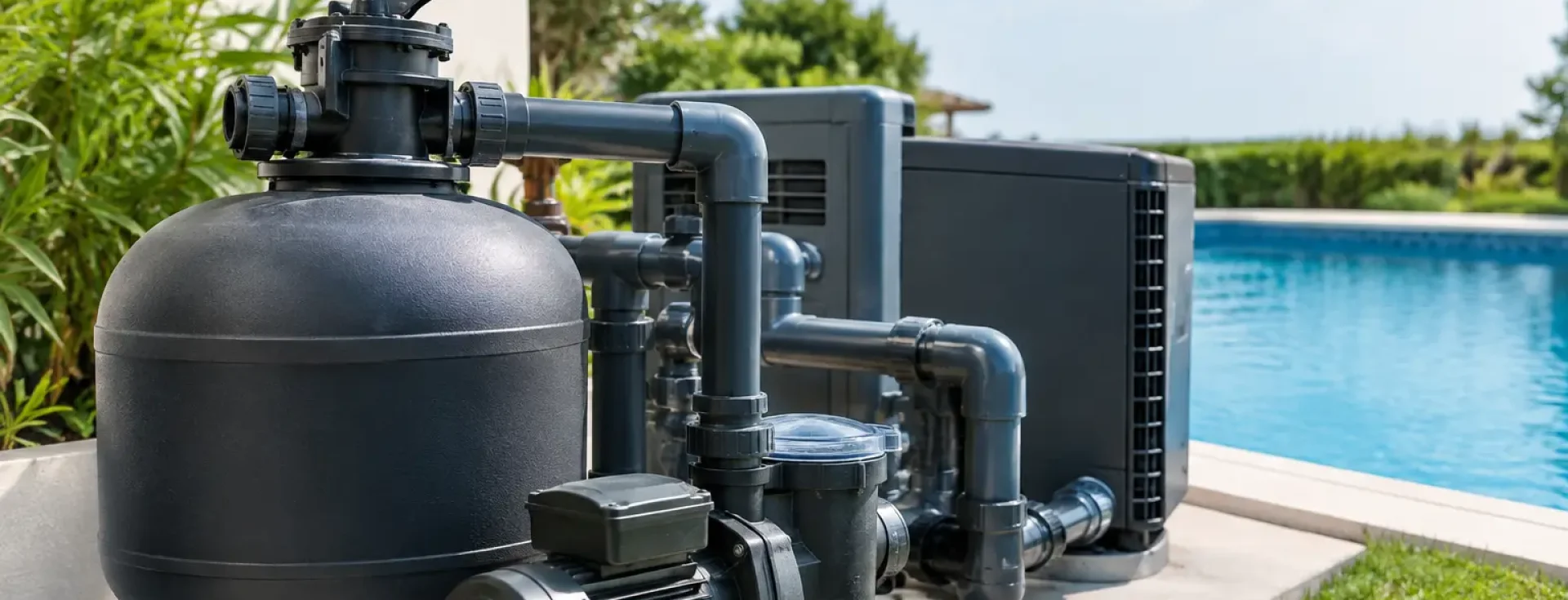
A premium pool can look exceptional on opening day and still disappoint within months if the water does not move correctly. Pool circulation system design determines how effectively water reaches the filter, receives treatment, returns to the basin, and stays clear from one end of the pool to the other. For villas, hospitality properties, residential towers, and commercial facilities, this is the engineering behind water that looks polished and performs reliably.
The right design is not simply a matter of selecting a pump and filter. It requires accurate hydraulic calculations, suitable equipment sizing, thoughtful pipe routing, correct placement of suction and return points, and a maintenance strategy that protects the investment over time. In the UAE, where high ambient temperatures, heavy pool use, and demanding aesthetic standards are common, precision from the start makes a measurable difference.
Start With the Pool’s Real Operating Demands
Every circulation system should be designed around the specific pool rather than a standard equipment schedule. Pool volume is the starting point, but it is only one part of the calculation. A compact private pool, a hotel leisure pool, an infinity-edge feature, and a high-use community pool can have similar volumes while needing very different circulation approaches.
The required turnover rate establishes how long it takes for the system to circulate the full pool volume through filtration. Faster turnover is not always better. Oversizing a pump can create unnecessary energy use, excess noise, high flow resistance, and poor filter performance. Undersizing it can leave dead zones, reduce water clarity, and make chemical control more difficult. The correct target depends on pool type, bather load, local operating requirements, water features, and the chosen treatment system.
A residential villa pool may prioritize quiet operation, discreet equipment placement, and energy efficiency. A hotel pool must be prepared for extended daily use, changing bather loads, and rapid recovery after peak periods. Commercial and shared-residential pools often need greater redundancy and easier service access because downtime affects many users. The strongest design balances these conditions before equipment is selected.
Pool Circulation System Design Begins With Hydraulics
Hydraulics is the practical science of moving water through the system with the right flow rate and the least unnecessary resistance. Pipe diameter, pipe length, bends, valves, elevation changes, fittings, and equipment all create friction loss. If these factors are ignored, a pump that looks suitable on paper may fail to deliver its intended flow once installed.
A professional design calculates total dynamic head, which combines the resistance created by the entire circulation path. This figure helps determine the pump duty point: the flow rate the pump can actually provide at the system’s operating pressure. Selecting a pump solely by its maximum advertised flow can lead to disappointing results, especially where the plant room is distant from the pool or includes multiple water features.
Pipework deserves the same attention as the pump. Undersized lines increase water velocity and friction, which raises energy demand and can create audible noise. Excessively large pipework may add cost without meaningful benefit. The right diameter is based on design flow, acceptable velocity, distance, and future operational needs. Clean routing with fewer sharp changes in direction supports efficient operation and makes future maintenance more straightforward.
Suction Points Must Protect Both Performance and Safety
Water must be collected consistently from the pool surface and lower areas of the basin. Skimmers or overflow gutters remove floating debris, oils, and contaminants before they settle. Main drains support deeper water movement and help prevent stagnant areas, but they must be specified and installed with appropriate anti-entrapment protection.
The number and location of suction outlets should suit the pool shape, depth profile, and circulation pattern. A long rectangular pool may perform well with a straightforward arrangement, while a freeform pool, vanishing-edge pool, or pool with integrated spa zones requires more detailed planning. Safety fittings, compliant drain covers, balanced suction lines, and accessible valves are essential parts of a premium installation, not optional additions.
Return Inlets Create the Water Movement You Can See
Return inlets should guide filtered, treated water across the pool rather than simply push it back into the nearest area. Correct placement creates a circulation path that carries debris toward skimmers or overflow channels and distributes sanitizer more evenly.
Inlets are commonly positioned to encourage surface movement, although the exact configuration depends on the pool geometry and depth. Steps, tanning ledges, swim-out areas, corners, and attached spas can interrupt water movement. These spaces may require dedicated returns or adjusted inlet direction. When a pool has an infinity edge, water feature, or fountain element, those flows must be considered as part of the complete hydraulic system rather than treated as separate decorative components.
Select Equipment as a Matched System
A circulation plant works best when its components are selected to operate together. The pump, filter, valves, heater or heat-cool pump, sanitizer, automation controls, and pipework should all support the required flow and pressure range.
Variable-speed pumps are often the preferred choice for premium residential and commercial pools. They allow the system to run at lower speeds during normal filtration, reducing electricity consumption and operating noise. Higher speeds can be programmed for backwashing, vacuuming, water features, peak bather periods, or rapid circulation after treatment adjustments. The investment is especially worthwhile where pools operate for long daily hours, though the final decision should reflect the property’s usage pattern and equipment budget.
Filter selection also depends on operating priorities. Sand and glass-media filters are widely used for their dependable performance, familiar maintenance requirements, and suitability for a broad range of pool sizes. Cartridge filters can be effective where water conservation and compact installation are priorities, but they require regular cleaning and sufficient access for cartridge removal. For commercial applications, filter sizing must account for sustained demand and maintenance intervals, not only ideal conditions.
Treatment equipment must be integrated with circulation capacity. Salt chlorination, UV systems, ozone, dosing systems, and traditional chemical treatment each have different installation requirements. They can improve water quality and reduce manual intervention, but none can compensate for inadequate filtration or poorly distributed flow. Treatment is most effective when the circulation design delivers water through the equipment at the correct rate and returns it evenly to the pool.
Design the Plant Room for Service, Not Just Installation
An equipment room that is difficult to access will eventually cost more to maintain. Premium system design includes adequate working space around pumps and filters, clear labeling, reliable drainage, ventilation, appropriate electrical protection, and a logical arrangement of valves and unions.
Technicians should be able to isolate a pump, remove a filter lid, inspect strainers, service dosing equipment, and identify pipe runs without dismantling unrelated components. This is particularly valuable for hotels, apartment developments, and commercial properties where scheduled maintenance must be completed efficiently and with minimal disruption.
Plant room conditions in Dubai and the wider UAE also require consideration. High temperatures can affect equipment performance and shorten the life of poorly protected electrical components. Proper ventilation, durable materials, quality fittings, and a clean layout help preserve reliability. Where equipment is located outdoors, weather-resistant enclosures and thoughtful shading can provide additional protection without restricting service access.
Build Efficiency Into Everyday Operation
Energy efficiency is not one product feature. It is the result of correct sizing, low-resistance plumbing, suitable filtration, smart controls, and disciplined maintenance. A variable-speed pump running at an optimized low speed can consume significantly less power than a single-speed pump operating unnecessarily at full output. However, the system must still achieve the flow needed for filtration, sanitation, and any active water features.
Automation gives property owners and facility teams greater control over this balance. Timed schedules can coordinate filtration, heating or cooling, lighting, dosing, and feature pumps. Monitoring systems can also flag abnormal pressure, low flow, or treatment issues before they become visible water-quality problems. For a luxury property, this supports a consistently refined pool environment. For a commercial facility, it supports predictable operations and clearer maintenance planning.
Regular maintenance remains essential. Pump baskets, skimmer baskets, filter pressure, water balance, valves, and dosing equipment should be checked on a planned schedule. A system that was designed correctly can still lose efficiency when filters are neglected, air enters suction lines, or equipment settings are changed without reviewing the overall flow requirement.
Aquatic Pools and Fountains approaches each project as a complete aquatic system, combining quality equipment with technical guidance, installation support, and maintenance expertise. Whether the requirement is a private villa pool, a resort feature, or a demanding commercial installation, the objective is the same: dependable circulation that protects water quality, equipment life, and the visual standard of the property.
The most valuable circulation systems are rarely the most visible. When design, equipment, and maintenance work together, the result is simply clear, inviting water that performs exactly as the property demands.