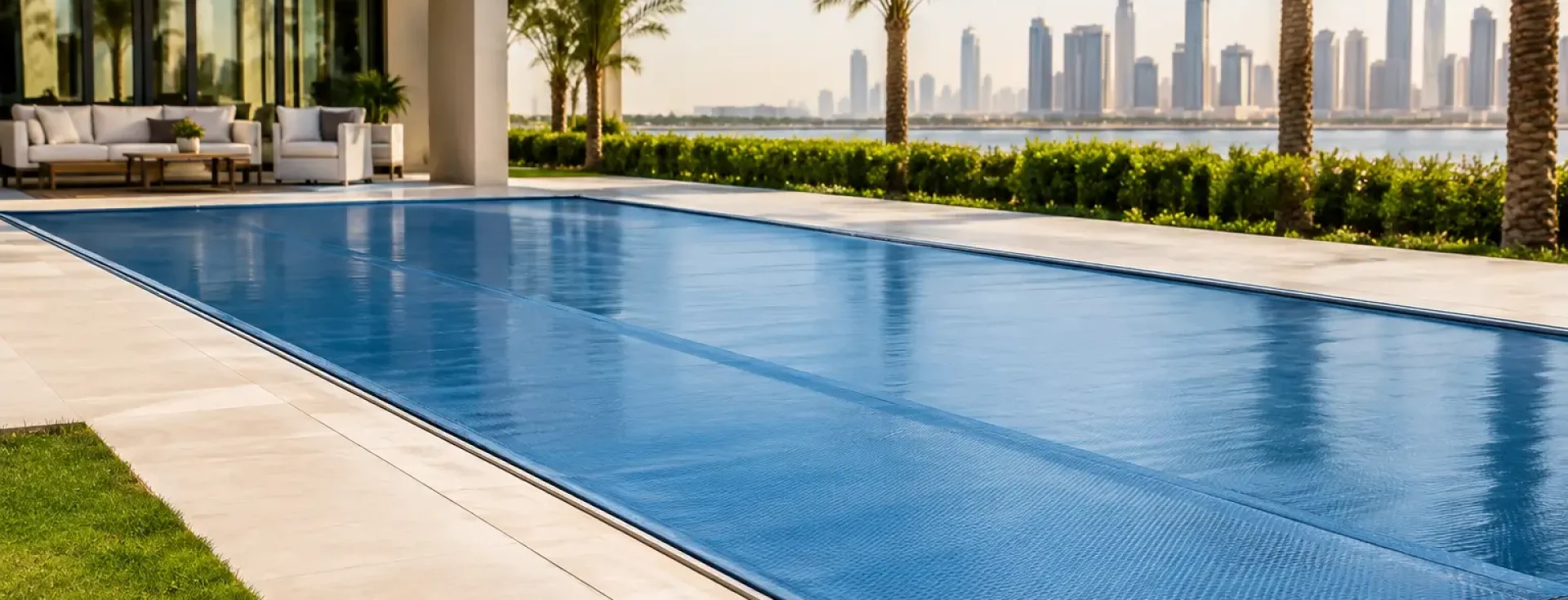
A pool can lose a surprising amount of water overnight in Dubai’s dry climate. Add wind-blown dust, intense sunlight, and constant cooling or heating demands, and the cost of leaving water exposed becomes clear. Premium pool covers provide a practical layer of protection while preserving the polished appearance and operating efficiency expected from high-value residential and commercial pools.
For villa owners, hospitality operators, facility managers, and developers, the right cover is not an afterthought. It is part of a well-planned aquatic system. The best choice depends on how the pool is used, who has access to it, the desired visual finish, and whether safety, energy conservation, or debris control is the leading priority.
Why Pool Covers Matter in the UAE
An uncovered pool is continuously exposed to evaporation, airborne debris, ultraviolet radiation, and temperature fluctuations. In the UAE, these factors can place extra pressure on filtration, chemical balance, heating, and cooling equipment. A properly selected cover reduces that exposure and helps keep the water in more stable condition between maintenance visits.
Water conservation is one of the strongest reasons to install a cover. Evaporation is a daily operating cost, particularly for large pools and facilities with extended open hours. By limiting the surface area exposed to air and sun, a cover can significantly reduce water loss. This also means fewer top-ups and less disruption to the pool’s chemical balance.
Covers can also reduce heat loss overnight and help retain warmth in heated pools. For pools using heat pumps, this improves efficiency because the system does not need to work as hard to restore the target temperature each morning. In cooled pools, the same principle applies: less exposure can help manage the operating load during hotter periods.
The benefit is not only technical. A clean, protected pool is easier to present to residents, guests, buyers, and visitors. That matters in luxury villas, boutique hotels, residential communities, spas, and corporate properties where every visible detail supports the value of the space.
Choosing the Right Type of Pool Cover
There is no single cover that suits every pool. A cover designed mainly to limit evaporation may not deliver the access control or structural strength required for a family villa or public-facing facility. Selection should begin with the pool’s operational needs, not simply its dimensions.
Solar and Thermal Covers
Solar and thermal covers are designed to retain heat and reduce evaporation. They are typically lightweight and practical for pools that are used frequently, especially when water temperature is a priority. These covers can help lower energy demand, but they are not a substitute for a certified safety barrier.
For residential pools, they can be an effective option when the main objective is to maintain comfortable water temperature and reduce chemical consumption. For hospitality and commercial projects, they may work well where staff can remove and store the cover efficiently as part of daily operating procedures.
Automatic Pool Covers
Automatic covers offer a premium, streamlined solution for properties where convenience and aesthetics are central to the design brief. With a motorized mechanism, the cover can open or close at the touch of a control, reducing manual handling and encouraging consistent use.
These systems are particularly suited to luxury villas, high-end residences, and commercial settings where the pool must look refined when not in use. The installation must be coordinated carefully with the pool structure, deck finish, drainage, electrical supply, and equipment layout. Retrofitting is possible in some cases, but integrating the system during construction usually provides the cleanest result.
Safety Covers
Safety covers are intended to create a protective barrier over the pool when it is closed. They are especially relevant for homes with children or pets, as well as shared residential and hospitality environments where access must be controlled outside operating hours.
Not every cover marketed as protective has the same performance standard. Load capacity, anchoring method, edge detailing, and installation quality all matter. Property owners should confirm that the selected system is appropriate for the expected use and complies with applicable safety requirements. A cover must be fitted precisely to perform as intended.
Winter and Debris Covers
Debris covers are designed to keep leaves, sand, dust, and other contaminants out of the pool. Although the UAE does not face a traditional cold winter, many owners close or reduce pool use during travel periods, renovations, or seasonal changes. A durable debris cover can protect the water and reduce the cleanup required before reopening.
For outdoor pools near landscaped areas or active construction zones, this type of cover can also reduce the burden on skimmers, pumps, and filters. It will not eliminate maintenance, but it can make routine cleaning substantially more manageable.
What Premium Pool Covers Should Deliver
A premium cover should fit the pool accurately, operate reliably, and support the wider performance of the aquatic installation. Material quality matters because constant sun exposure, high temperatures, chemicals, and repeated handling can quickly affect inferior products.
Look for UV-resistant materials, durable stitching or reinforced seams where applicable, dependable rollers or automatic mechanisms, and hardware designed for outdoor use. The cover should also complement the pool’s surroundings. In a luxury landscape, visible tracks, storage systems, and cover boxes need thoughtful planning so they do not compromise the deck, garden, or architectural lines.
For commercial properties, operational practicality is equally important. A cover that requires complex handling may be used inconsistently by busy teams. Staff should be able to deploy, secure, remove, and store it safely. Where a large pool is involved, a motorized system or properly specified roller can make daily operation far more efficient.
Installation Is Part of the Investment
Even a high-quality cover can underperform if it is poorly measured or installed without attention to the pool environment. Steps, ladders, overflow edges, raised spa areas, irregular curves, water features, and surrounding deck levels all influence the final specification.
An experienced pool professional will assess more than the waterline. They will consider how the cover interacts with coping, drainage channels, filtration access, lighting, handrails, and pool equipment. For automatic systems, they will also evaluate electrical requirements, housing placement, control access, and future maintenance needs.
This detailed approach is particularly valuable for custom pools, where standard sizes rarely provide an acceptable fit. A tailored solution may require a larger upfront investment, but it can deliver better protection, a cleaner appearance, and a longer service life.
Maintenance Keeps the Cover Performing
Pool covers need routine care just like pumps, filters, and water treatment systems. Dirt and standing water should not be allowed to build up on the surface. Covers should be cleaned using methods suitable for their material, and moving parts should be inspected periodically for wear, tension, alignment, and corrosion.
It is also wise to inspect anchors, straps, rails, rollers, and electrical components before periods of heavy use. Small issues, such as a damaged edge or a misaligned mechanism, can become more costly if ignored. Regular professional pool maintenance provides an opportunity to identify these concerns before they affect pool safety or daily operation.
A Smarter Finish for High-Value Pools
The right pool cover protects more than water. It supports energy efficiency, reduces exposure to debris, helps manage maintenance demands, and strengthens the safety strategy around the pool. It can also preserve the elegant, orderly appearance that premium residential and commercial properties require.
Aquatic Pools and Fountains can help property owners and project teams specify a cover solution that works with the pool’s design, equipment, usage pattern, and performance expectations. When the cover is selected as part of the overall system rather than added at the end, it becomes a dependable asset that quietly protects the investment every day.