
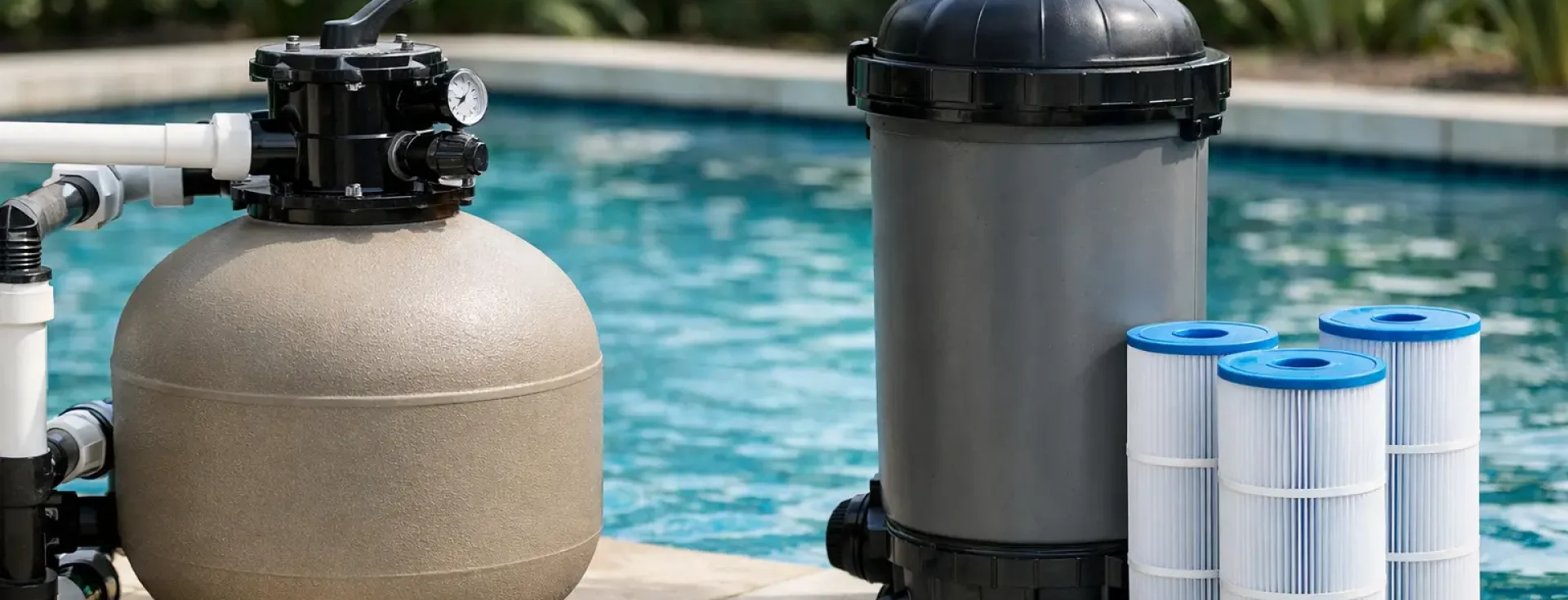
A pool that looks polished in the morning and turns hazy by afternoon has a filtration problem, not simply a chemical problem. The phrase pool filter vs cartridge can be confusing because a cartridge is itself a type of pool filter. In most purchasing discussions, the real choice is between a sand filter and a cartridge filter, with diatomaceous earth (DE) filtration occasionally considered for specialist applications.
For villa pools, hospitality facilities, residential developments, and commercial properties, this decision affects water clarity, operating costs, plant-room space, maintenance routines, and the long-term presentation of the entire aquatic environment. A premium pool finish deserves filtration equipment selected for its real operating demands, not only its initial price.
Pool Filter vs Cartridge: Clarifying the Choice
Every filtration system has the same essential job: circulate pool water through a filter, capture suspended debris and fine particles, then return clean water to the pool. The difference is the material doing the filtering and the way it is cleaned.
A sand filter uses a bed of specially graded filter media. Water passes through the media, where dirt and debris are trapped. When pressure rises, the operator backwashes the filter, sending accumulated debris to waste before rinsing and returning the valve to normal filtration.
A cartridge filter contains one or more pleated filter elements. Water flows through the pleats, which provide a large surface area for particle capture. Rather than backwashing, the filter is opened periodically and the cartridges are rinsed with a hose. In some cases, they also require a dedicated cleaning solution to remove oils, scale, and stubborn residue.
DE filters use fine diatomaceous earth powder on internal grids and can achieve exceptionally fine filtration. They are effective but demand more careful handling, regular attention, and compliant disposal practices. For many residential and commercial projects, the practical decision remains sand filter versus cartridge filter.
Water Clarity and Filtration Performance
Cartridge filtration is often chosen when water clarity is the highest priority. Quality cartridge elements can capture finer particles than standard sand media, commonly in the range of about 10 to 20 microns depending on the element, flow rate, and operating condition. This can make a visible difference in pools exposed to fine dust, landscaping debris, sunscreen residue, or frequent bather use.
Traditional sand filtration generally captures larger particles, often around 20 to 40 microns. That does not mean sand filters produce poor water quality. A correctly sized sand filter, paired with balanced water chemistry, suitable circulation, and regular maintenance, can keep a pool consistently clean and attractive. It is a proven solution for high-use environments because it handles variable loads with straightforward operation.
The result depends on the complete system. An undersized pump, poor hydraulic design, incorrect valve settings, inadequate sanitizer levels, or neglected cleaning can compromise even the most advanced filter. Filtration should be selected as part of a coordinated equipment package that includes the pump, plumbing, disinfection system, water testing, and automated controls where required.
Consider the Pool’s Surroundings
A sheltered indoor pool has very different filtration needs from an outdoor pool surrounded by mature landscaping or located near active construction. Fine dust and airborne debris place a heavier burden on filtration. Likewise, a hotel pool with continuous bather traffic needs a system designed for reliable performance under changing loads, not a residential unit pushed beyond its intended capacity.
Maintenance: Backwashing or Cleaning Cartridges
The clearest operational difference between sand and cartridge filtration is maintenance.
Sand filters are familiar to many service teams. When the pressure gauge rises above the clean operating pressure, the filter is backwashed. This process is quick and effective, and it restores flow without opening the filter tank. For large pools, busy facilities, and sites with routine technical support, this simplicity is a major advantage.
The trade-off is water use. Backwashing sends water to waste, followed by a rinse cycle. In hot, dry climates and properties where water management matters, repeated backwashing can become a meaningful operating expense. It also requires appropriate drainage planning from the outset.
Cartridge filters do not require backwashing, which can reduce water waste substantially. However, their elements must be removed and cleaned manually. A lightly loaded residential pool may need cartridge cleaning only a few times per season, while a busy pool may need attention much more often. The right interval is determined by pressure readings, water flow, and visual inspection, not by the calendar alone.
Cartridges also have a replacement cycle. Even careful cleaning cannot restore an element indefinitely. Pleats can degrade, bands can weaken, and accumulated oils or mineral scale can restrict flow. Premium replacement cartridges and correct cleaning procedures protect the performance of the whole circulation system.
For a facility manager, the practical question is not which filter needs less care. Both require care. The better question is whether the property is better equipped to manage periodic backwashing or planned cartridge cleaning and replacement.
Energy Use, Flow Rate, and Equipment Sizing
A cartridge filter typically creates less resistance to water flow than a sand filter, particularly when the cartridge is clean and generously sized. Lower resistance can allow the circulation pump to move water more efficiently. This is especially valuable when a variable-speed pump is part of the installation, as the system can be tuned for efficient daily filtration while retaining capacity for cleaning cycles, water features, or peak use.
Sand filters can create more resistance as they collect debris, but they are highly dependable and well suited to systems that require strong, steady flow. They are often selected for larger pools, commercial installations, and pools with water features that place additional demands on circulation equipment.
Sizing is critical in both cases. Choosing a filter based only on the connection size or a general pool-volume estimate can cause poor circulation, frequent cleaning, high energy use, and premature pump strain. The filter must match the required turnover rate, the pump’s flow curve, plumbing diameter, pool volume, bather load, and any connected features such as waterfalls, spa jets, fountains, or heat-cool pumps.
An oversized cartridge filter is often a smart investment for a luxury residence because it provides more surface area and longer intervals between cleanings. A correctly sized commercial sand filter can provide reliable, repeatable operation for a high-traffic facility. There is no single best option across every property type.
Choosing the Right Filter for Your Property
A cartridge filter is usually a strong choice for premium villas, smaller to mid-sized residential pools, and properties focused on water conservation and fine clarity. It is particularly appealing where plant-room drainage is limited or where frequent backwashing is undesirable. It also suits owners who want a quieter, more efficient circulation setup when paired with the right variable-speed pump.
A sand filter is often the preferred choice for larger pools, apartment developments, hotels, schools, and commercial facilities where straightforward service procedures and durable high-volume operation are priorities. Its backwash process is simple for trained maintenance staff, and the filter media generally has a long service life when properly maintained.
The decision may also be shaped by the service model. A property with an on-site technical team may find sand filtration highly practical. A private villa owner using scheduled pool service may prefer cartridge filtration, provided the service plan includes proper element cleaning and timely replacement.
Professional Installation Protects Filter Performance
The filter tank or cartridge housing is only one part of a high-performing pool system. Correct installation includes properly sized pipework, isolation valves, pressure gauges, unions for service access, electrical protection for the pump, and space to remove cartridge elements or operate the sand filter valve safely.
For commercial and luxury residential projects, equipment should also be selected for durability in demanding plant-room conditions. Quality valves, fittings, pumps, and filtration components reduce avoidable downtime and preserve the refined appearance clients expect from a premium aquatic installation. Aquatic Pools and Fountains supports this process with professional equipment guidance, installation expertise, and maintenance solutions tailored to each project.
The right filter should make ownership easier, not create a recurring operational compromise. Select the system around the pool’s actual use, water conditions, available service support, and long-term operating priorities, then give it the professional installation and maintenance it deserves.