A beautiful pool should never leave safety to chance. A proper pool safety equipment checklist helps property owners, developers, and facility teams protect guests, reduce risk, and maintain a higher operational standard from day one.
For luxury villas, residential towers, hotels, and commercial properties, safety equipment is not just a box to tick. It is part of the pool’s core infrastructure. The right setup supports safer daily use, faster emergency response, and stronger long-term confidence for residents, staff, and visitors. In premium environments, that standard needs to be visible, durable, and professionally selected.
What a pool safety equipment checklist should cover
A complete pool safety equipment checklist should address prevention first, then response. That means creating layers of protection around the water, controlling access, improving visibility, and making sure rescue tools are available and in excellent condition.
This matters because no single product solves every risk. A pool fence may help prevent unsupervised access, but it does not replace rescue equipment. Clear depth markers improve user awareness, but they do not help if lighting is poor at night. The strongest safety approach combines physical barriers, warning systems, rescue tools, and routine inspection.
For residential pools, the priority is often preventing child access and ensuring immediate response tools are close by. For hospitality and commercial facilities, the checklist usually expands to include signage, larger rescue provisions, emergency communication considerations, and more frequent inspection routines. The exact mix depends on the pool type, user profile, and local operating requirements.
Access control is the first line of protection
If people can enter the pool area without restriction, risk rises immediately. That is why barriers and controlled entry points sit at the top of any serious pool safety equipment checklist.
Pool fences should be sturdy, difficult to climb, and designed to preserve both safety and the visual quality of the space. In high-end residential and commercial settings, clients usually want a barrier that feels refined rather than intrusive. That balance is achievable, but only when the materials, height, gate hardware, and installation quality are all handled properly.
Self-closing and self-latching gates are equally important. A premium fence loses much of its value if the gate is routinely left open or does not secure properly after use. For villas with children or frequent guests, this feature is essential. For shared amenities in apartment buildings or hospitality properties, it becomes even more critical due to higher traffic and less predictable user behavior.
Pool covers can also support safety, though their role depends on the product selected. Not every cover is safety-rated. A basic debris cover may keep leaves out of the water, but it should not be treated as a child-protection system. If safety is part of the goal, the cover must be designed and specified for that purpose.
Alarms and alerts add another layer
Alarms are especially useful where pools are attached to homes, private gardens, or low-supervision areas. Door and gate alarms can notify occupants when someone enters the pool zone. Surface disturbance alarms may add another level of awareness, although performance varies by pool design, wind exposure, and water movement.
This is one of those areas where product selection matters more than many buyers expect. An alarm that triggers too often becomes background noise and may be ignored. One that is poorly matched to the pool environment may fail to deliver reliable performance. In premium properties, the goal is not just to install an alarm, but to install one that works consistently within the real operating conditions of the site.
For larger commercial properties, alarms are only part of the picture. Staff procedures, monitoring routines, and clear emergency protocols matter just as much. Equipment supports safety, but it does not replace trained oversight.
Rescue equipment must be visible and ready
Any practical pool safety equipment checklist needs immediate-response rescue tools positioned near the pool. These are not decorative items and should never be stored in a locked room or hidden behind maintenance supplies.
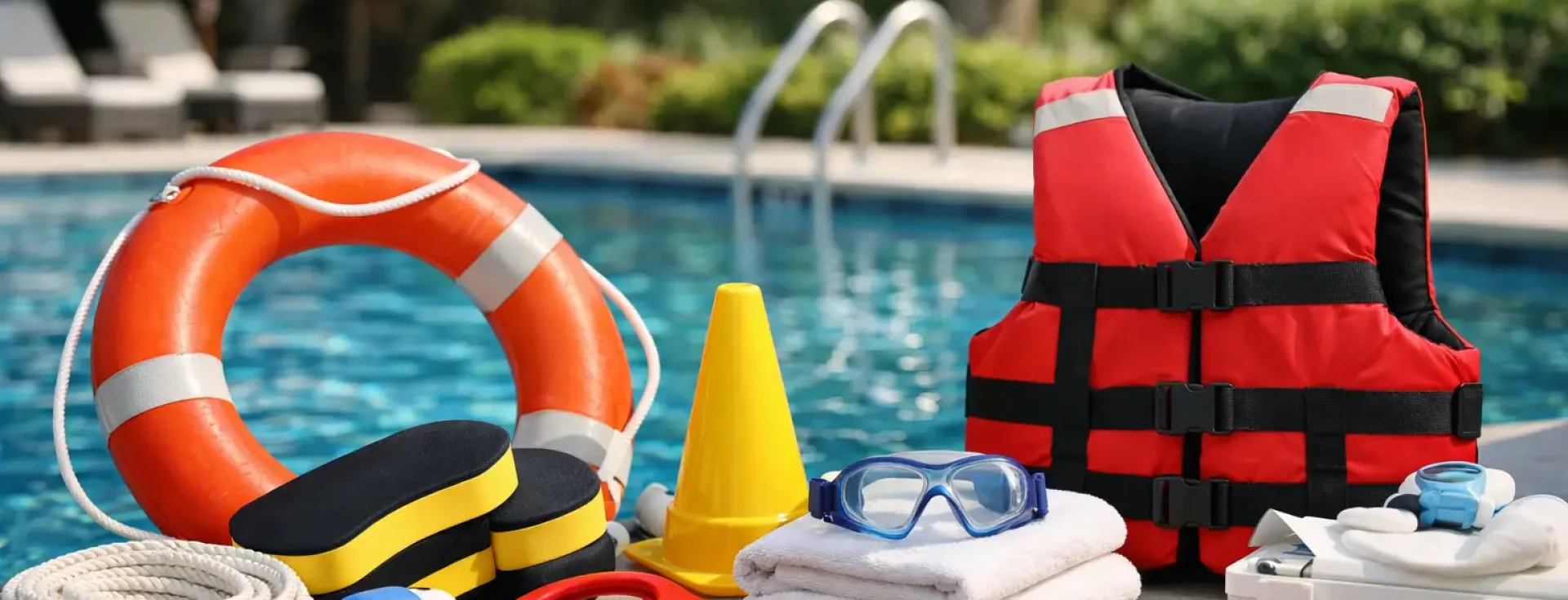
A life ring with rope is one of the most recognizable essentials. It provides a fast way to assist someone in distress without requiring another person to enter the water. A reaching pole is equally important, especially for pulling or guiding a swimmer toward the edge from a safer distance.
For commercial pools, larger pools, or deeper installations, rescue hooks and additional throw devices may also be appropriate. The key is access and condition. Equipment should be mounted properly, easy to identify, and checked routinely for wear, sun damage, or corrosion. In the UAE climate, material durability is not a minor detail. Heat, UV exposure, and humidity can shorten the life of lower-quality products.
First aid provisions should also be close to the pool area. A stocked first aid kit, clearly designated emergency contact information, and, where appropriate, resuscitation equipment can strengthen readiness. For hospitality and managed facilities, this should align with staff training and site procedures rather than exist as a disconnected item on a wall.
Signage, markings, and visibility are often overlooked
Pools are safer when users can understand the environment immediately. Clear signage and markings help prevent misuse, reduce confusion, and support faster decisions in an emergency.
Depth markers are essential and should remain visible over time. For commercial and public-facing pools, no-diving signs may also be necessary in shallow zones. Rules signage should communicate the basics clearly, such as whether children require supervision, whether running is prohibited, and whether emergency equipment must remain accessible.
Lighting also belongs in the conversation, even though many buyers think of it as a design feature before a safety feature. Proper underwater and surrounding area lighting improves visibility at dusk, at night, and in enclosed settings. It helps users judge depth and edges more accurately while supporting supervision and emergency response.
Slip-resistant poolside materials are another practical protection point. While technically not a rescue item, they reduce one of the most common poolside incidents. For hotels, towers, and villas with polished aesthetic finishes, this is where specification discipline matters. Premium design should not create unnecessary slip hazards.
A pool safety equipment checklist for residential and commercial use
The exact checklist will differ, but most well-equipped pools should include the following core items:
- Secure pool fence or barrier
- Self-closing, self-latching gate
- Safety-rated pool cover where applicable
- Door, gate, or pool alarm based on site needs
- Life ring with attached rope
- Reaching pole or shepherd’s hook
- First aid kit
- Emergency contact instructions
- Clear depth markers and warning signage
- Adequate pool and perimeter lighting
- Slip-resistant surrounding surfaces
For commercial properties, the list may extend further depending on pool size, occupancy, operating model, and compliance requirements. Managed environments often need more formal inspection routines, stronger staff readiness, and a wider range of emergency response tools.
Inspection matters as much as installation
Even the best pool safety equipment checklist fails if nobody checks the equipment after installation. Gates drift out of alignment. Latches wear down. Rescue ropes become brittle. Signs fade. First aid supplies expire.
A premium pool should have a documented inspection routine. For private homes, that may mean a simple scheduled review of barriers, rescue tools, and alarms. For hospitality or commercial properties, inspections should be more formal and frequent, with clear accountability for maintenance teams or operators.
This is where working with an experienced equipment and service partner makes a measurable difference. The best outcomes come from combining quality products with correct installation, technical support, and ongoing maintenance. Aquatic Pools and Fountains supports this standard by supplying high-performance pool equipment and helping clients build systems that are not only elegant, but dependable under real operating conditions.
Choosing the right equipment for your property
A compact villa pool, a rooftop amenity deck, and a hotel leisure pool do not carry the same risk profile. That is why a one-size-fits-all package is rarely the right answer.
For family homes, child safety and access control usually lead the discussion. For developers and facility managers, durability, compliance, visual integration, and maintenance practicality are often just as important. Hospitality operators may prioritize guest clarity, staff response readiness, and products that continue to perform well under frequent use.
The common thread is quality. Safety equipment should match the pool environment in both function and finish. Cheap components may save money upfront, but they often create more risk, more replacement cycles, and a lower overall standard for the property.
If you are reviewing a new installation or upgrading an existing pool, treat safety equipment as a core specification, not an afterthought. The right checklist protects people, strengthens the property, and supports the level of performance a premium aquatic space is expected to deliver.
A well-designed pool should feel inviting, but it should also be prepared. That balance is what turns a good installation into a responsible one.