A saltwater pool should feel refined, clear, and effortless to enjoy. That experience is only possible when saltwater pool safety is treated as a complete operating standard, not simply a choice of sanitizer. For villa owners, hotels, residential towers, and commercial facilities, safe performance depends on water balance, reliable equipment, controlled access, and a maintenance plan that responds quickly to changing conditions.
Saltwater systems offer excellent bathing comfort and can provide a consistent supply of chlorine when correctly sized and maintained. They do not, however, eliminate the need for testing, supervision, or technical care. A premium pool installation deserves the same level of precision behind the scenes as it delivers at the waterline.
Saltwater Pool Safety Starts With Realistic Expectations
A saltwater pool uses a salt chlorine generator to convert dissolved salt into chlorine. This process can reduce the need for manually adding chlorine products, but the pool is still chlorinated. That distinction matters because swimmers, operators, and maintenance teams must continue to manage sanitizer levels, pH, filtration, and contamination risks.
The most common safety mistake is assuming that a saltwater system is self-managing. It is automated to a degree, but output can change with water temperature, bather load, sunlight exposure, generator condition, and circulation time. A heavily used hotel pool, for example, needs far more frequent oversight than a lightly used residential pool, even if both use comparable disinfection equipment.
System sizing also matters. An undersized chlorinator may struggle during periods of high use, while an oversized unit operated without proper adjustment can contribute to unnecessarily high chlorine levels. Professional selection and commissioning protect water quality while helping the equipment operate within its intended range.
Protect Water Quality Before It Becomes a Problem
Clear water is not always safe water. The chemicals that control microorganisms can be out of balance even when a pool appears clean, which is why routine testing is central to saltwater pool safety.
Free chlorine should be maintained within the recommended range for the pool’s operating conditions. pH needs equally close attention. When pH rises too high, chlorine becomes less effective, scale can form on the salt cell and surfaces, and swimmers may experience eye or skin discomfort. When pH falls too low, water may become corrosive to metal components, fittings, and finishes.
Salt concentration should remain within the salt chlorinator manufacturer’s specified range. Too little salt may trigger low-output warnings and weaken chlorine production. Too much can accelerate corrosion in vulnerable components and create an unpleasant taste for swimmers. Salt does not evaporate, but it is lost through splash-out, backwashing, leaks, and water replacement, so it should be checked rather than assumed.
Other water factors deserve professional attention, especially total alkalinity, calcium hardness, cyanuric acid, and total dissolved solids. These values affect sanitizer efficiency, scaling, corrosion, and long-term equipment condition. In warm climates, intense sun and high evaporation can make balance more demanding, particularly for outdoor pools with frequent use.
A dependable testing program should include daily operational checks for commercial sites and regular checks for private pools based on use, weather, and system design. Digital water testing systems can bring valuable consistency, but they work best alongside trained review and corrective action.
Keep Electrical and Mechanical Systems Protected
Saltwater is gentle for many swimmers, but salt-containing water is still demanding on pool equipment when materials, bonding, or maintenance are inadequate. Premium-grade pumps, filters, lighting, fittings, and control systems should be selected for the pool environment and installed according to applicable electrical and safety requirements.
The salt cell requires particular care. Scale buildup reduces its ability to generate chlorine and may cause the system to work harder than necessary. Inspect the cell at the recommended intervals, and clean it only when deposits are present and according to the manufacturer’s procedure. Excessive acid cleaning can shorten cell life, so more cleaning is not always better cleaning.
Circulation is another non-negotiable element. A properly sized pump and filter system removes debris, distributes sanitizer, and prevents stagnant areas where water quality can decline. Filter pressure, pump noise, flow warnings, and return-jet performance should be reviewed as part of routine service. A pool that is circulating poorly may look acceptable for a short period while its sanitation performance is already weakening.
Electrical safety needs equal priority. Pool lights, pumps, heaters, salt systems, and control panels must be installed and serviced by qualified technicians. Ground-fault protection, correct bonding, secure cable connections, dry equipment areas, and weather-protected enclosures are essential. Never allow untrained personnel to open electrical panels or attempt repairs around wet equipment.
Build Safety Around the People Using the Pool
Water chemistry protects health, but it cannot prevent slips, unsupervised access, or unsafe behavior. Residential and commercial properties need physical safety measures that match the pool’s users, layout, and operating hours.
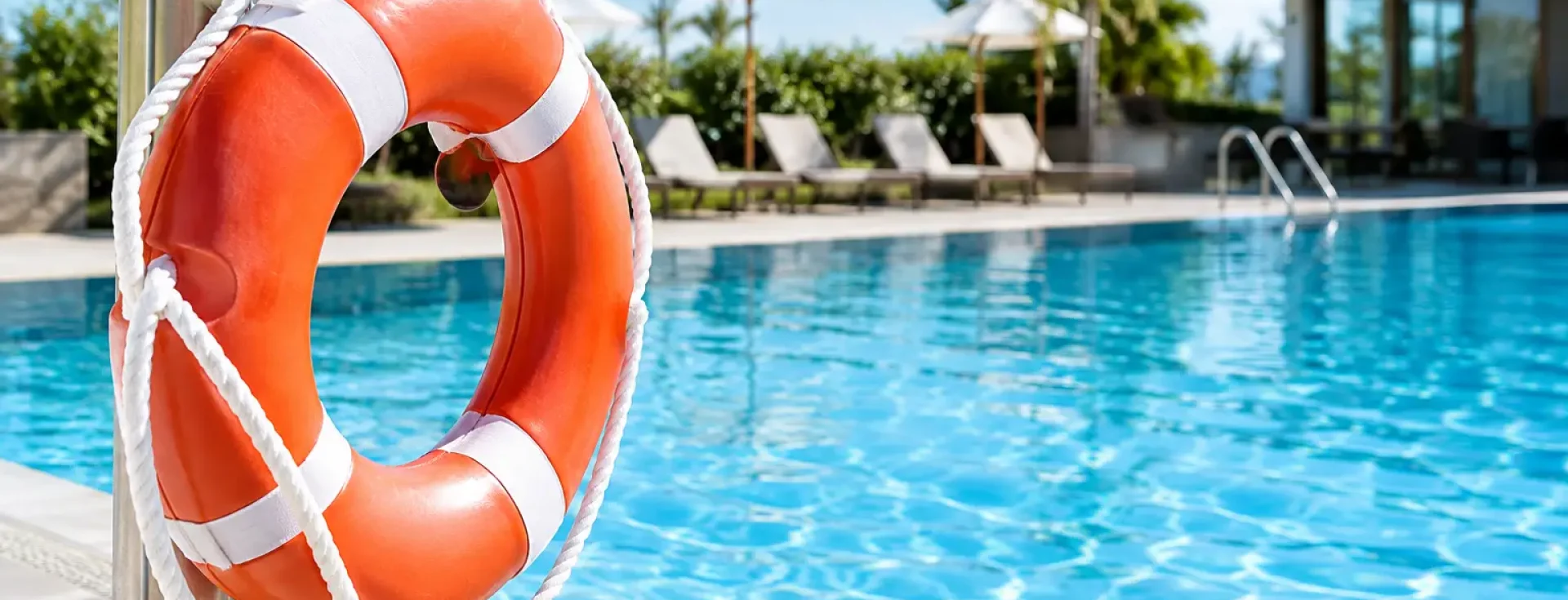
For family villas, secure barriers, self-closing gates, and reliable gate latches are among the most valuable protections for young children. Pool covers and alarms can provide another layer of control, but they are not substitutes for active adult supervision. Store rescue equipment where it is visible and accessible, not inside a locked service room.
At hotels, apartment communities, and corporate facilities, clear rules and professional supervision are especially important during busy periods. Depth markers should be easy to read, walking surfaces should provide dependable traction, and lighting should support safe evening access without creating glare. Drain covers must be secure, compliant, and routinely inspected to reduce entrapment risks.
A practical emergency plan should be visible to staff and reviewed regularly. At minimum, the site should have:
- Clearly identified emergency contacts and property access instructions
- A stocked first-aid kit and appropriate rescue equipment
- Staff who understand shutdown procedures and incident reporting
- A process for closing the pool immediately when water quality or equipment conditions are unsafe
For commercial sites, documented checks create accountability and make it easier to spot recurring issues before they become costly disruptions.
Manage Heat, Weather, and High Bather Loads
The safest operating settings are not fixed all year. Higher water temperatures can increase chlorine demand, encourage algae growth, and make it easier for microorganisms to multiply if sanitizer performance drops. Heat-cool pumps should be maintained to keep water within a comfortable, appropriate range rather than chasing unusually warm temperatures that complicate water management.
After a pool party, heavy rainfall, dust exposure, or a period of unusually high occupancy, test the water and assess the filtration system before assuming normal settings are sufficient. A salt cell may need higher output or longer circulation time during high demand, but adjustments should be made with verified readings rather than guesswork.
Outdoor luxury pools also benefit from thoughtful surrounding design. Shade areas, non-slip deck materials, drainage that prevents standing water, and organized storage for chemicals and cleaning tools all reduce operational risk while preserving the appearance of the property.
Use Chemicals and Cleaning Products With Discipline
Saltwater pools still require balancing chemicals, shock treatment when conditions demand it, and cleaning products for surfaces and equipment. These products should be stored in a cool, dry, ventilated area away from direct sun, moisture, and unauthorized access. Never mix chemicals or transfer them into unlabeled containers.
Follow product instructions precisely, especially when adding acid or adjusting alkalinity. Add chemicals to pool water as directed, keep swimmers out of the pool for the recommended period, and allow circulation to distribute treatments properly. If a strong chemical odor is present, do not assume the pool has too much chlorine. That smell may indicate chloramines and a need for proper testing and corrective treatment.
Professional Service Protects the Investment
A premium saltwater pool is a coordinated system, not a collection of independent parts. The chlorinator, pump, filter, heater or cooler, lighting, fittings, water testing equipment, and safety features must perform together. Scheduled inspections help identify scale, leaks, deteriorating seals, unusual electrical behavior, weak circulation, and water-balance trends before they affect guests or damage equipment.
Aquatic Pools and Fountains supports property owners and facility teams with quality pool equipment, technical guidance, installation support, and maintenance solutions designed for demanding residential and commercial environments. The right service partner can help ensure every component is selected, calibrated, and maintained for dependable long-term operation.
A well-managed saltwater pool should never require guests to think about what is happening behind the scenes. Keep the water balanced, the equipment protected, and the environment controlled, and the result is what every premium property should offer: confident, comfortable, and safe time in the water.