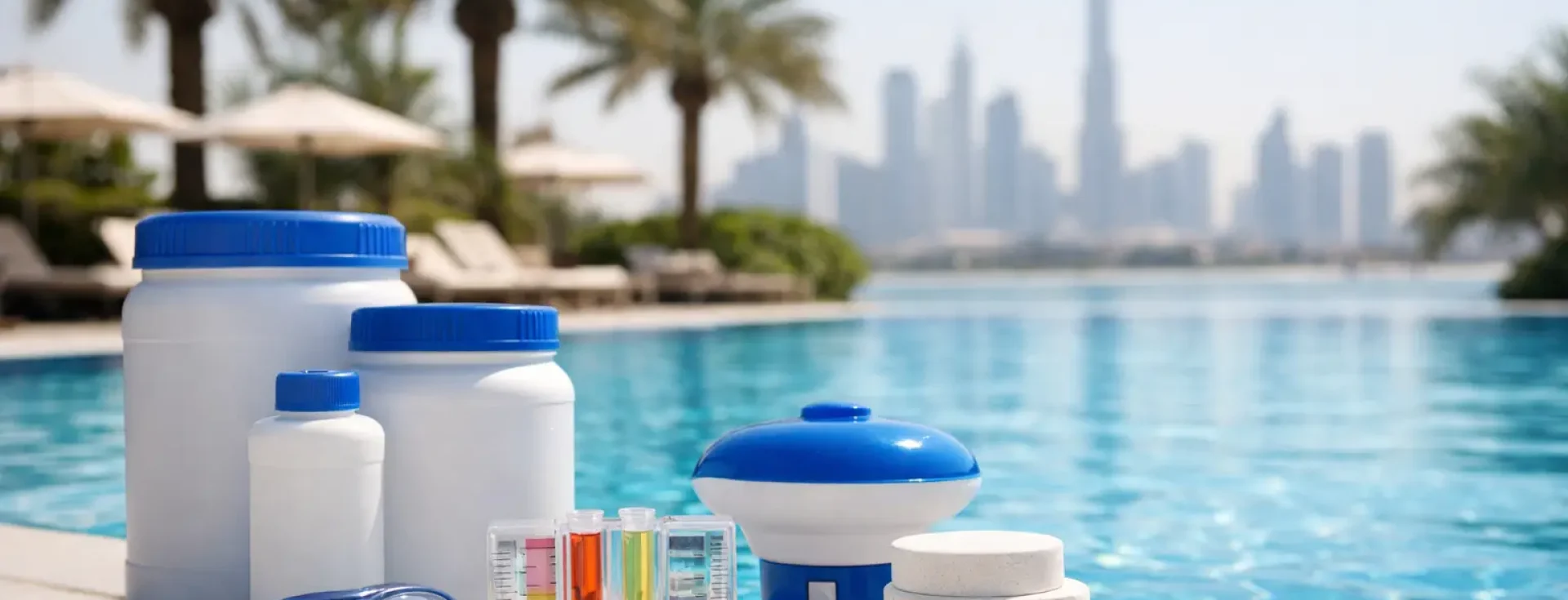
A pool can look perfectly blue and still be poorly balanced. In Dubai, intense sun, high water temperatures, dust, sunscreen, and frequent use can change water chemistry quickly. Choosing the right swimming pool chemicals Dubai property owners and facility teams require is not simply about adding chlorine. It is about protecting swimmers, preserving premium equipment, and maintaining the refined finish expected from a villa, hotel, tower, or commercial leisure facility.
For a high-performance pool, chemicals must work as part of a complete system that includes dependable circulation, filtration, testing, and skilled maintenance. The correct product matters, but so do dosage, timing, water volume, bather load, and the condition of the equipment.
Swimming Pool Chemicals Dubai Properties Depend On
Every pool requires a treatment plan designed around its specific environment. A shaded residential pool with limited daily use will behave differently from a rooftop pool, a busy hotel facility, or a large community pool exposed to direct sunlight for most of the day. Using premium chemical products with accurate testing provides consistent water quality without unnecessary treatment or avoidable damage to pool surfaces and equipment.
Sanitizers for safe, clear water
Sanitizers control bacteria, algae, and other contaminants introduced by wind, swimmers, and the surrounding environment. Chlorine remains a proven and widely used option because it is effective, practical, and compatible with most pool systems when managed correctly. It is available in several forms, including tablets, granules, and liquid solutions, each suited to different maintenance methods and pool sizes.
The right chlorine level should be maintained consistently rather than corrected only when the water turns cloudy or develops an odor. A strong chlorine smell often points to chloramines, not excessive clean chlorine. This condition can cause eye irritation and requires appropriate testing and, in many cases, shock treatment.
For properties seeking an enhanced user experience, supplementary disinfection systems such as salt chlorinators, UV units, or ozone systems can reduce the demand placed on traditional chlorine. They do not remove the need for water balance or routine checks, but they can improve sanitation efficiency and support a more comfortable swimming environment.
pH, alkalinity, and calcium balance
Water balance is the foundation of chemical performance. If pH is too high, chlorine becomes less effective and scale can form on tiles, heaters, heat-cool pumps, and pipework. If it is too low, water may become corrosive, creating discomfort for swimmers and placing metal components, grout, and finishes at risk.
Total alkalinity acts as a buffer that helps prevent sudden pH movement. Calcium hardness also deserves close attention, particularly in a market where water source and top-up practices can vary. Low calcium levels may encourage surface deterioration, while excessive hardness can leave scale deposits on premium finishes and inside circulation equipment.
A professional treatment program uses pH increasers or reducers, alkalinity products, and calcium balancing chemicals only after accurate testing. Guesswork is expensive. It can lead to repeated corrections, wasted product, and preventable service calls.
Shock treatments and algaecides
Heavy use, a dust storm, rainwater contamination, or a prolonged circulation issue can place a sudden burden on pool water. Shock treatments oxidize organic contaminants and restore sanitizer effectiveness. They are particularly valuable after pool parties, high-occupancy periods, or early signs of dull water.
Algaecides provide an additional defense against algae growth, especially in pools exposed to strong sunlight. However, algaecide is not a substitute for correct sanitizer levels and circulation. If a pool repeatedly develops algae, the underlying cause may be inadequate filtration, poor water balance, dead spots in the circulation design, or an incorrectly sized pump.
Why Dubai Conditions Require Closer Chemical Control
Dubai pools operate under conditions that demand more attention than mild-climate installations. High ambient temperatures accelerate chemical consumption, while direct UV exposure breaks down unstabilized chlorine. Fine airborne dust increases the organic load in the water and can rapidly affect clarity when filtration is not operating at the required capacity.
This is why chemical selection should be linked to the wider pool plant. Stabilizers can help protect chlorine from sunlight, but excessive stabilizer levels can reduce chlorine effectiveness. Clarifiers may improve particle removal, but they should be selected according to the filter type and used carefully. More chemical is not automatically better water.
For hospitality, residential tower, and commercial facilities, consistency is also a reputation issue. Guests and residents expect clear water, comfortable swimming conditions, and clean tile lines every day. A documented maintenance routine, accurate test records, and reliable chemical stock help property teams meet that standard without last-minute intervention.
A Practical Water Treatment Routine
Daily visual inspection is valuable, but it should never replace testing. Water can appear clear while sanitizer, pH, or alkalinity levels are outside the preferred range. Residential pools may need testing several times per week depending on use and weather, while high-use commercial pools typically require more frequent checks and tighter documentation.
A strong routine begins with testing, followed by measured adjustments and sufficient circulation time. Chemicals should be added according to product instructions and never mixed together in concentrated form. Granular products should be handled with appropriate safety practices, stored in a cool, dry, ventilated area, and kept away from incompatible materials.
The treatment sequence matters. Correcting alkalinity before making major pH adjustments generally creates more stable results. Sanitizer levels should then be maintained, with shock treatment used when testing or operating conditions indicate a need. Filter cleaning, backwashing where applicable, and basket cleaning are equally important because poor circulation will limit the value of even the best chemical program.
For larger sites, automated dosing and water testing systems offer meaningful operational advantages. These systems can monitor key parameters and dose selected chemicals with precision, supporting stable water quality across demanding schedules. They still require inspection and professional oversight, but they reduce the inconsistency that can occur with manual dosing alone.
Selecting Chemicals for Your Pool Finish and Equipment
The chemical program should match the pool’s construction, finish, equipment, and disinfection method. Mosaic, natural stone, plaster, vinyl, and fiberglass surfaces do not all respond in the same way to imbalanced water. Likewise, a pool with a heat-cool pump, salt chlorination system, automatic cover, or decorative water feature needs treatment choices that protect every connected component.
Premium installations benefit from a complete review before chemicals are selected. This includes pool volume, turnover rate, filtration media, current water test results, surface condition, and typical bather load. It also accounts for whether the property has a spa, fountain, overflow edge, or water feature with separate treatment requirements.
Aquatic Pools and Fountains supports clients with quality pool chemicals, testing solutions, circulation equipment, and technical guidance for residential and commercial applications. The objective is not to sell a single product in isolation, but to provide a dependable system that keeps water clear, equipment protected, and the overall installation operating at its intended standard.
When Professional Chemical Support Makes Sense
Routine residential care can be manageable for informed owners with the correct test equipment and a clear maintenance schedule. Yet professional support is often the better decision when a pool has recurring cloudiness, algae, scaling, equipment corrosion, or unexplained sanitizer loss. These symptoms may indicate a chemistry issue, but they can also reveal a filtration, hydraulic, or dosing problem.
Commercial properties and high-visibility residences benefit from planned maintenance because water quality cannot be left to occasional checks. A qualified technician can assess readings in context, identify patterns over time, calibrate testing equipment, and recommend the correct corrective action before a minor issue becomes a closure, repair, or guest complaint.
Clear, comfortable water is achieved through precision rather than shortcuts. Start with dependable testing, use chemicals suited to your pool and operating conditions, and treat every adjustment as part of protecting a valuable aquatic investment.