
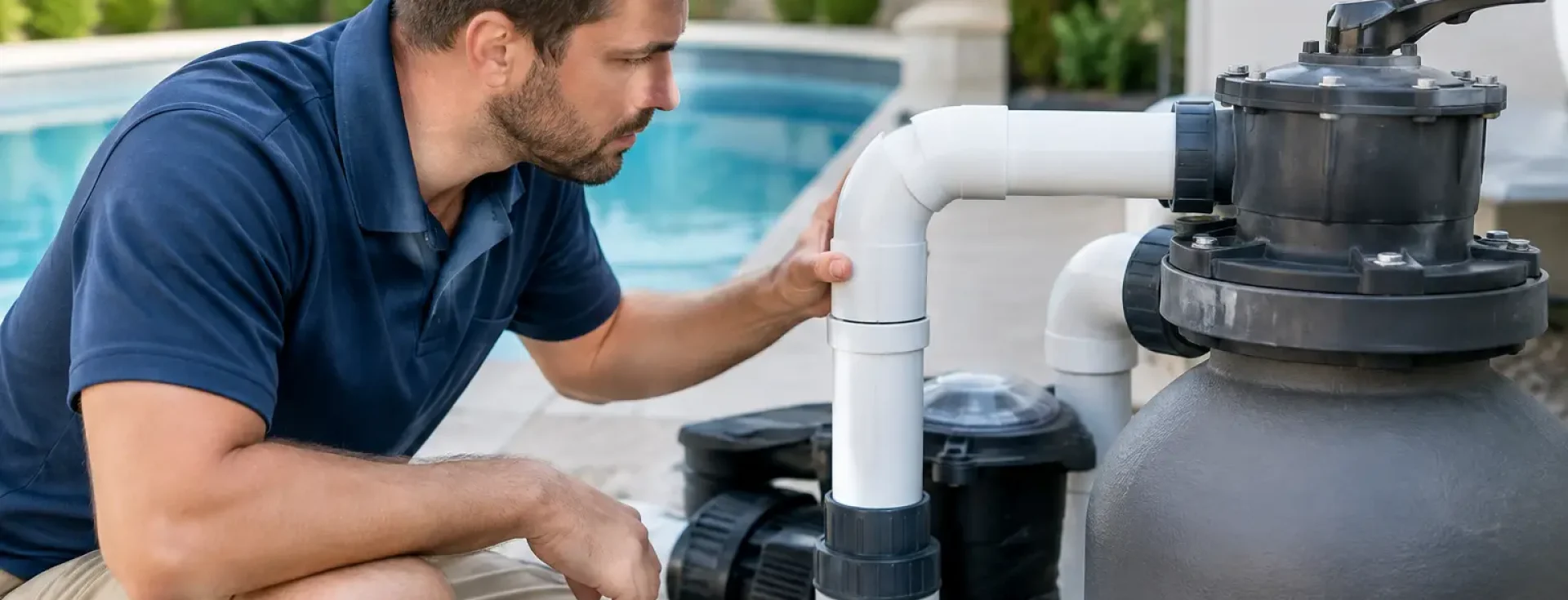
A pump basket that will not stay full, bubbles returning through the pool jets, or a pump that loses prime after switching off are not cosmetic issues. They are early warnings that the circulation system is drawing air where it should be drawing only water. To troubleshoot pool air leaks correctly, start at the suction side of the system and work methodically toward the pump. Fast diagnosis protects pump seals, improves filtration, and prevents a small fitting issue from becoming an expensive equipment failure.
Why Pool Air Leaks Demand Prompt Attention
Your pool pump is designed to pull water from the skimmer, main drain, vacuum line, or balance tank and push it through the filter, heater, sanitizer, and returns. Any opening before the pump impeller can admit air because that section of plumbing operates under vacuum while the pump is running.
A minor air leak may still allow the system to circulate, but it forces the pump to work harder and less efficiently. Over time, repeated loss of prime can overheat the pump, damage the mechanical seal, reduce water turnover, and leave areas of the pool with inadequate sanitizer distribution. For villas, hospitality properties, and commercial facilities, that creates avoidable operating costs and an inconsistent guest experience.
Air is not always coming from a plumbing failure. A low water level, a loose pump lid, a worn O-ring, or a blocked skimmer can produce similar symptoms. The goal is to isolate the source before replacing parts unnecessarily.
The Most Common Signs of a Suction-Side Air Leak
The clearest sign is a visible air pocket under the clear pump lid while the pump is operating. A small bubble can be normal in some systems, particularly immediately after a cleaning cycle or when water features are active. A large, persistent, or growing pocket is not.
You may also see bubbles from return fittings in the pool, intermittent flow from water features, lower pressure at the filter gauge, or a pump that takes too long to prime. In more advanced cases, the pump may surge, make a gravel-like sound, or shut down on thermal protection. Never allow a pump to run dry while investigating. Turn it off if it cannot establish a stable prime within a reasonable period.
Do not confuse a suction leak with a pressure-side leak. Water escaping from a pipe, heater union, filter clamp, or return fitting after the pump is usually a pressure-side issue. Air entering the system before the pump is a suction-side issue, and it often leaves no visible water leak because the line is pulling inward.
Troubleshoot Pool Air Leaks Step by Step
Start with the pool water level and skimmer
Bring the water level to approximately the center of the skimmer opening before testing anything else. If the level is too low, the skimmer can form a vortex and pull air into the line, especially at high pump speeds or when the skimmer basket is partially blocked.
Remove leaves, debris, and broken skimmer weir parts. A stuck or missing weir can affect skimming performance, although it is less likely to be the sole cause of severe air intake. If your pool has multiple suction points, confirm that valves are set to provide adequate water supply to the pump. A valve that heavily restricts the skimmer, main drain, or vacuum line can make a marginal condition appear worse.
Inspect the pump lid, lid O-ring, and drain plugs
Switch off the pump at the breaker or local isolator before opening the pump basket. Clean the lid O-ring and its seating surface with a soft cloth. Check for flattening, cracks, stretching, or cuts. Apply a small amount of silicone-based pool lubricant if appropriate for the manufacturer’s specified O-ring material, then reseat the lid evenly.
Avoid petroleum-based lubricants. They can degrade some rubber compounds and create a short-term fix that leads to premature failure.
Also inspect the pump drain plugs and their O-rings. These fittings are easily overlooked after seasonal servicing or basket cleaning. Even a slightly loose plug can draw air without dripping water. Tighten by hand according to the pump manufacturer’s guidance. Over-tightening can damage threads or O-rings.
Check valves, unions, and threaded fittings before the pump
Examine every accessible connection between the skimmer lines and the pump inlet. Focus on three areas: suction valve stems, union O-rings, and threaded adapters at the pump inlet. A valve may appear dry and intact yet allow air through a worn stem seal or loose cover assembly.
With the pump running and primed as well as possible, carefully pour water over one suspected fitting at a time. If the pump basket suddenly fills and the air pocket decreases, that fitting is likely admitting air. Use a small container and work slowly so you can identify the exact connection. Keep water away from electrical components and never conduct this test near an open electrical enclosure.
A controlled water test is preferable to randomly applying sealant. Sealant may hide the symptom temporarily while making future service harder. Premium installations should be repaired with the correct O-ring, union, valve component, or properly prepared plumbing connection.
Evaluate the pump speed and system demand
Variable-speed pumps can reveal issues that are less obvious at lower flow rates. A small suction leak may disappear when the pump runs slowly and become pronounced at higher speeds because the vacuum at the inlet increases.
This does not automatically mean the pump speed is wrong. Pools with spas, water features, in-floor cleaning systems, heaters, or long suction runs may require higher flow at certain times. The correct solution is to confirm hydraulic requirements and repair the leak, not to permanently reduce pump speed until the symptoms disappear. Lowering speed can be a useful diagnostic step, but it may compromise skimming, heating, or filtration if used as a workaround.
When the Leak Is Hidden Underground or Behind Finishes
If visible components pass inspection and air remains in the pump basket, the issue may be in a concealed suction line. This is more likely after ground movement, renovation work, aging pipe joints, or damage around skimmer and vacuum fittings. A line leak can also be suspected when one suction line performs normally while another causes the pump to lose prime.
At this stage, professional testing is the right decision. A qualified pool technician can isolate individual lines, conduct vacuum or pressure testing, inspect valves, and assess the pump’s mechanical condition. Specialized leak detection may be required before any decking, tile, landscaping, or equipment-room finishes are disturbed.
This approach is particularly valuable for high-specification villas, hotels, and shared residential facilities, where unnecessary excavation can affect finishes, operations, and project budgets. Accurate testing narrows the repair scope and helps preserve the integrity of the installation.
Avoid These Common Repair Mistakes
Do not keep adding water to the pump basket while it is running. Prime the pump with power off, secure the lid, then restart the system according to the equipment instructions. Repeatedly opening the lid during operation introduces more air and increases safety risk.
Do not assume bubbles at the returns always confirm a plumbing leak. Air can be introduced after backwashing, filter cleaning, low-water events, or a recently opened pump lid. Watch whether the symptom clears after normal circulation has been restored.
It is also unwise to replace the pump immediately. A pump with a damaged lid, impeller issue, or worn seal may need service, but many air-leak calls are resolved with correct O-ring maintenance, valve servicing, or an adjustment to the suction configuration. Diagnosis should lead the repair decision.
Protect Long-Term Circulation Performance
A well-maintained circulation system should run quietly, hold a consistent prime, and deliver even flow through the pool and connected features. Make pump lid and O-ring inspection part of routine maintenance, especially after basket cleaning, filter servicing, or equipment-room work. Keep skimmer baskets clear, maintain the correct water level, and use quality replacement seals and fittings that match the installed equipment.
For properties with complex hydraulics or premium water features, professional servicing provides an added level of protection. Aquatic Pools and Fountains supports owners and facility teams with dependable pool equipment, technical diagnosis, and maintenance solutions selected for long-term performance. A stable, air-free suction line is one of the simplest signs that the entire pool system is operating as it should.