
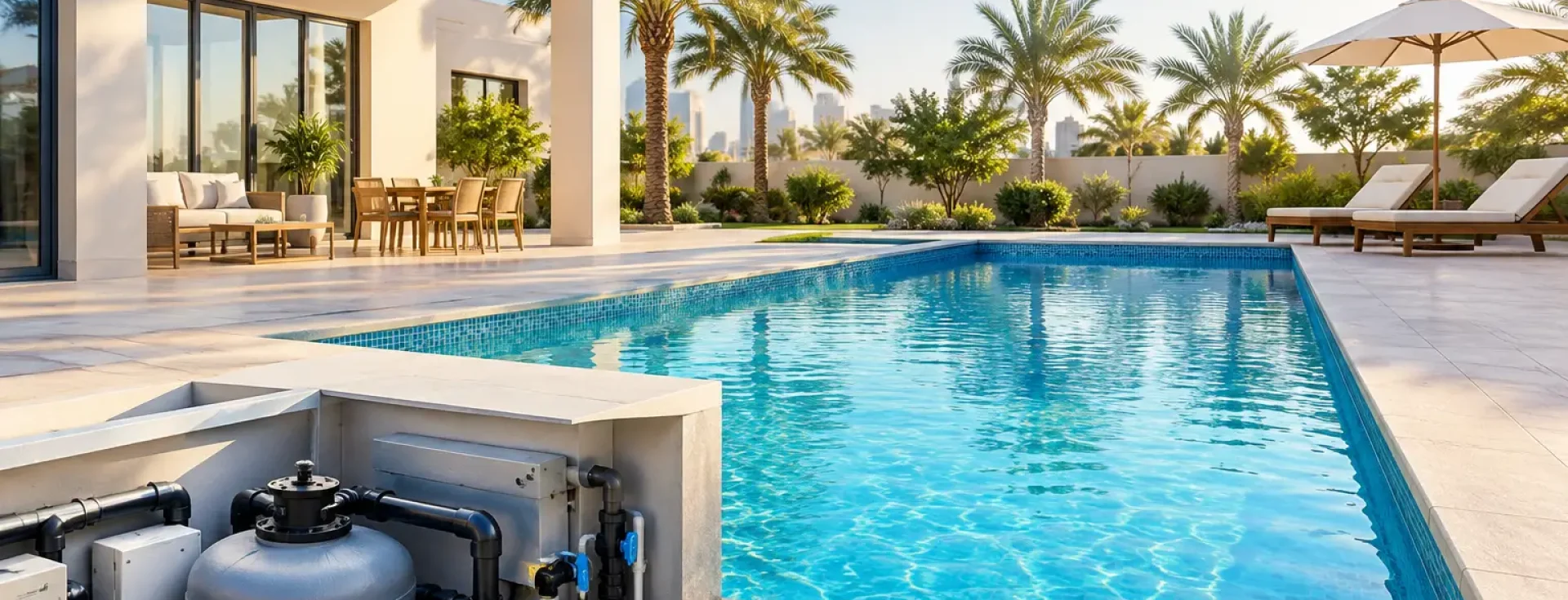
A pool can still look impressive from the terrace while its equipment room tells a very different story. Rising energy use, weak circulation, fading lights, uneven water quality, and unreliable heating are common signs that the original system is no longer meeting the demands of a premium home. A villa pool retrofit replaces outdated components with efficient, durable equipment that improves water clarity, comfort, safety, and visual appeal without requiring a complete pool rebuild.
For villa owners in Dubai and across the UAE, retrofitting is often the most practical route to a better pool experience. The right scope depends on the condition of the structure, the age of the equipment, how the pool is used, and the level of automation or luxury expected from the finished space.
When a Villa Pool Retrofit Makes Sense
Most pools do not fail all at once. Their systems gradually become less efficient as pumps wear down, filters lose performance, pipework develops restrictions, and controls become difficult to operate. In a hot climate with long operating seasons, these issues can quickly affect both water quality and operating costs.
A retrofit is particularly valuable when the pool requires frequent chemical correction, the circulation pump is noisy or oversized, filtration is inconsistent, or lighting no longer suits the landscape design. It is also a strong option for homeowners renovating outdoor living areas. A new deck, pergola, garden, or façade can make an older pool finish and outdated fittings look disconnected from the rest of the property.
Not every pool needs a full equipment replacement. A well-built shell with sound waterproofing may only need modern circulation equipment, LED lighting, and improved treatment systems. Conversely, a pool with recurring leaks, cracked finishes, or damaged plumbing may require a broader renovation before new equipment can perform as intended. A professional site assessment prevents cosmetic upgrades from masking a deeper technical issue.
Start With the Equipment Room
The equipment room should be the first priority in a villa pool retrofit. It determines how efficiently the pool circulates, filters, disinfects, heats, and responds to daily use. Replacing visible finishes before correcting poor hydraulics may improve the appearance of the pool, but it will not solve cloudy water, high electricity consumption, or weak skimmer action.
Variable-Speed Pumps and Better Hydraulics
Older single-speed pumps are often selected for peak demand rather than normal daily circulation. That approach can create excessive energy use, noise, and unnecessary wear on pipework and filters. A properly sized variable-speed pump allows lower-speed filtration for much of the day while retaining higher flow when needed for cleaning, water features, or spa jets.
The benefit is not simply lower power consumption. Controlled flow can improve filtration performance and reduce stress on the system. However, pump selection must match the pool volume, pipe diameter, filter type, water features, and required turnover rate. Installing a premium pump without reviewing the hydraulic design can leave performance gains unrealized.
Filtration That Matches the Pool’s Use
Filters should be selected around actual operating conditions, not only pool size. A family villa pool used every weekend has different demands from a pool that hosts regular gatherings or serves a high-occupancy rental property. Sand and glass-media filters remain dependable choices for many residential pools, while cartridge solutions can suit certain compact equipment areas and water-saving requirements.
Glass media can provide finer filtration than conventional sand in many applications, but it must be paired with proper circulation and backwash settings. The best choice depends on available space, maintenance preferences, local water conditions, and the desired level of water polish. Quality valves, pressure gauges, and correctly installed fittings are equally important because they make routine servicing more accurate and reliable.
Smarter Water Treatment
The UAE climate places constant pressure on pool water. High temperatures, dust, sunscreen, and frequent use can quickly disturb water balance. Modern disinfection systems can reduce day-to-day chemical handling and provide more consistent treatment when professionally sized and calibrated.
Salt chlorination, UV treatment, ozone systems, and automated dosing can each support excellent water quality, but they are not interchangeable. A salt system can offer a more comfortable swimming experience, while UV or ozone can assist with reducing chloramine-related odor and improving treatment performance. Automated pH and sanitizer control is especially valuable for owners who travel frequently or manage multiple properties.
These systems still need testing, balancing, and scheduled maintenance. Automation improves consistency; it does not eliminate the need for trained pool care.
Upgrade Comfort, Safety, and Evening Appeal
A premium pool should work beautifully at every hour, not only under direct daylight. Once circulation and treatment systems are performing correctly, a retrofit can transform the way the space feels and functions.
LED pool lighting is one of the most visible upgrades. Modern fixtures deliver more consistent illumination, lower energy consumption, and a cleaner visual effect than aging halogen installations. White lighting creates an elegant architectural look, while color-changing systems can be programmed for entertaining, holiday gatherings, or a softer evening atmosphere. Fixture placement matters as much as output, particularly in pools with steps, tanning ledges, waterlines, and adjacent landscape features.
Heating and cooling equipment can further extend pool use. In Dubai, cooling may be as valuable as heating during the hottest months, particularly for pools exposed to long periods of direct sun. A heat-cool pump offers a practical way to maintain a more comfortable water temperature, though capacity should be calculated according to pool volume, exposure, desired temperature range, and operating schedule.
Safety upgrades deserve the same attention as aesthetic improvements. Non-slip surrounds, secure drain covers, compliant suction fittings, handrails, depth markers, and safety covers can all reduce risk for families, guests, and household staff. For homes with children, these measures should be considered early in the retrofit plan rather than added as an afterthought.
Refresh the Pool Finish Without Overspending
A villa pool retrofit does not always require replacing every visible surface. If tiles are secure and the finish is in good condition, targeted repairs and deep restoration may be enough. When there is extensive staining, loose mosaic, damaged coping, or an outdated color scheme, resurfacing can produce a more complete transformation.
Interior finishes influence both appearance and maintenance. Light finishes create a bright, resort-style water color but can make staining more noticeable. Darker finishes add depth and drama, though they may absorb more heat and reveal mineral deposits differently. Mosaic tile offers a distinctive luxury appearance and design flexibility, while plaster and aggregate finishes can provide a refined result at different budget levels.
The right selection should reflect the villa’s architecture, the surrounding landscape, and the owner’s expectations for upkeep. A striking finish is only a premium investment when waterproofing, substrate preparation, and installation quality are equally strong.
Automation Should Simplify Ownership
Pool automation is especially valuable for villa owners who want control without constant manual adjustment. A centralized system can manage pumps, lighting, heating, water features, and treatment schedules from a dedicated controller or mobile interface. It also allows the pool to operate efficiently around the household’s real routine rather than a fixed, wasteful schedule.
For example, filtration can run at lower speeds during normal hours, increase before a gathering, and coordinate with a water feature or spa mode when needed. Remote alerts can also help identify unusual pressure readings, temperature changes, or equipment faults before they become costly failures.
Automation should be specified around usability. A complicated interface with too many functions can frustrate homeowners and staff. The best systems are professionally commissioned, clearly labeled, and supported by technicians who can provide ongoing service when settings or components need attention.
Plan the Retrofit as One Connected System
The strongest retrofit projects are planned as connected upgrades rather than isolated purchases. A new pump affects flow. Flow affects filtration, heating, water treatment, and water features. New lighting may require electrical upgrades, while a new finish may call for replacement inlets, drains, and skimmers to achieve a clean final result.
Before approving equipment, request a technical review of the existing pool shell, plumbing, electrical capacity, filtration, water treatment, and circulation requirements. This process clarifies what can be retained, what should be replaced, and where investment will have the most visible and operational impact.
Aquatic Pools and Fountains supports villa owners, developers, and facility teams with premium equipment, technical guidance, installation support, and dependable maintenance solutions. From high-performance pumps and filters to lighting, heat-cool systems, disinfection, fittings, and pool accessories, each component should be selected for long-term reliability rather than short-term convenience.
A well-executed retrofit gives an existing pool a second life: quieter operation, clearer water, more comfortable temperatures, and a setting that belongs with the standard of the villa around it.