
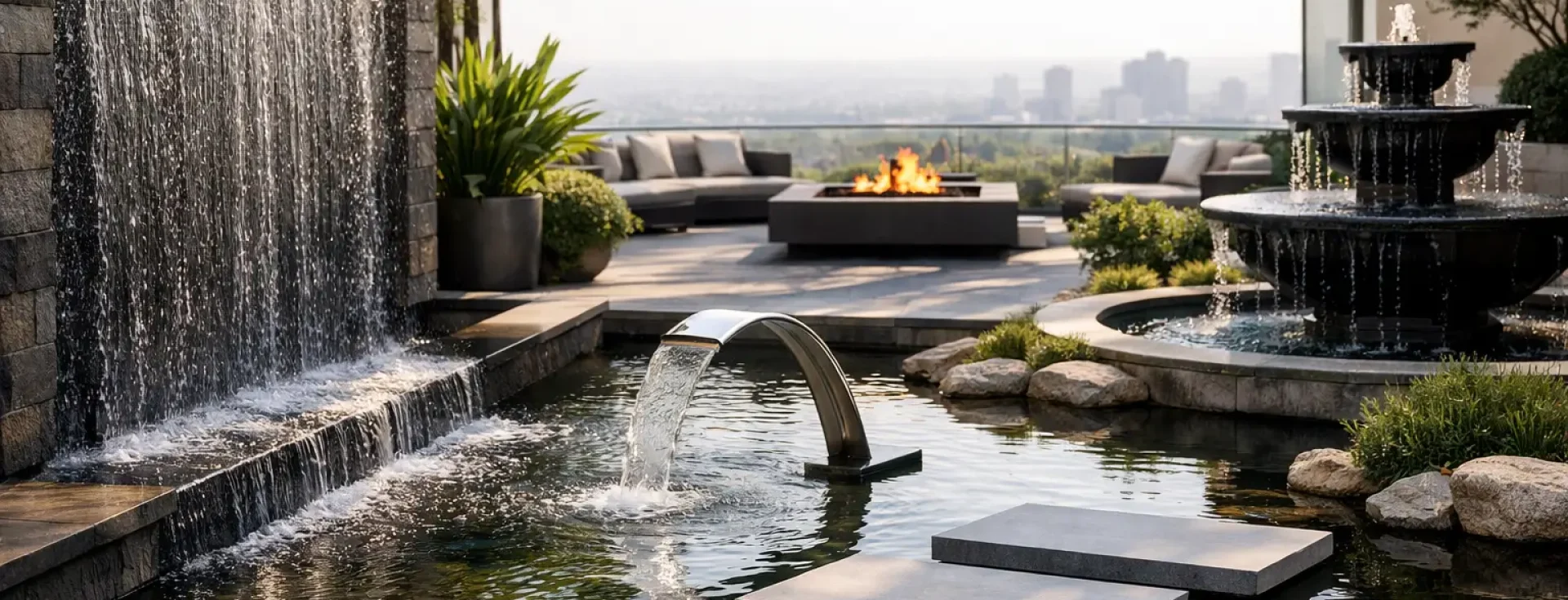
A silent courtyard rarely stays memorable for long. Add movement, light, and sound through well-designed water features, and the same space starts to feel finished, premium, and intentionally built. For villa owners, developers, hotels, and facility managers, the difference is not only visual. The right installation adds identity, supports property value, and creates a stronger first impression from the moment someone arrives.
In premium residential and commercial environments, water features are not decorative afterthoughts. They are technical installations that must perform consistently, withstand climate demands, and align with the architecture around them. A feature that looks impressive on day one but suffers from weak circulation, uneven flow, poor lighting, or difficult maintenance quickly becomes a liability instead of an asset.
That is why selection should start with performance as much as appearance. The strongest projects balance aesthetics, hydraulic design, equipment quality, and long-term serviceability from the beginning.
Why water features matter in high-end properties
A well-executed feature changes how a property is perceived. In a private villa, it can create a more refined outdoor setting and soften large hardscape areas with movement and sound. In hospitality and commercial settings, it strengthens the visual language of the property and helps define arrival zones, courtyards, podium decks, and interior focal points.
There is also a practical side to their appeal. Properties competing at the premium end of the market benefit from details that feel custom rather than standard. Water introduces a sense of exclusivity that static landscaping alone often cannot deliver. It creates motion, reflects lighting, and adds a cooling visual effect that works especially well in modern architecture.
Still, not every feature suits every site. A dramatic fountain in a compact residential entrance may feel oversized. A minimal reflecting element in a large hospitality forecourt may disappear visually. Scale, surrounding finishes, user traffic, and maintenance access all shape the right decision.
Choosing water features by application
The best starting point is the purpose of the space. Residential clients often want elegance, tranquility, and visual cohesion with landscaping or pool design. Commercial clients usually need stronger impact, dependable operation, and easier long-term maintenance across high-visibility areas.
Residential water features
For villas and upscale homes, design usually leans toward refinement rather than spectacle. Wall-mounted cascades, spillover bowls, scuppers, pondless waterfalls, and compact fountains work well where the goal is to enrich the atmosphere without overwhelming the setting. These features can complement pools, garden lounges, entry courtyards, and terrace spaces.
Homeowners should think beyond the visual concept. Noise level matters. Some want a soft background sound, while others prefer near-silent movement. Splash control is another key factor, especially near seating zones, stone paving, or glazed façades. The right nozzle selection, water depth, and flow rate make a measurable difference.
Commercial and hospitality water features
Hotels, residential towers, retail developments, and corporate properties often require a different approach. These projects need scale, durability, and visual authority. Dry deck fountains, formal fountain arrays, feature walls, illuminated jets, and custom architectural water displays are common choices because they create a strong public-facing impression.
Commercial installations also face heavier operational demands. Continuous run times, public exposure, larger basins, and stricter safety requirements mean the equipment specification cannot be secondary. Pumps, filtration, control systems, underwater lighting, and water treatment all need to be chosen for reliable duty cycles, not just initial appearance.
Design is only half the job
A premium finish can hide a poor system for a while, but not for long. Many water features fail because they are approached as surface design instead of engineered installations. Behind every clean water sheet, synchronized jet, or illuminated cascade is a set of components that must work together precisely.
Hydraulics are central. Flow must be matched to the feature type, pipe sizing must support stable operation, and water return must be managed so the effect remains consistent. If circulation is underpowered, the feature looks weak. If it is oversized, energy use rises and splash, turbulence, or noise may become a problem.
Material selection matters just as much. A premium project should use finishes and fittings suited to long-term exposure, chemical balance, and environmental conditions. Stainless steel components, quality nozzles, durable housings, and dependable seals are not luxuries in this category. They are standard requirements for performance and lifecycle value.
Equipment quality defines the result
Clients often focus first on shape, lighting, and placement, but the real success of water features depends on the hidden system. Pumps must deliver stable flow. Filters must protect water clarity. Lighting must withstand immersion and maintain consistent output. Control systems should make operation simple rather than creating unnecessary complexity.
This is where product quality becomes a business decision, not just a technical one. In a private home, poor equipment leads to interruptions, repair calls, and visible decline in appearance. In a hotel or commercial property, it affects guest perception and operating efficiency. Downtime in a flagship visual feature sends the wrong message immediately.
For that reason, premium buyers should look for proven equipment, clear specification guidance, and technical support that continues after installation. A supplier with broad inventory and service capability is often better positioned than a basic reseller, because replacement compatibility, troubleshooting, and maintenance continuity all become easier over time.
Lighting and control create the premium effect
Many features look ordinary in daylight and exceptional after dark. Integrated underwater lighting, accent illumination, and programmable controls can transform a fountain or cascade into a signature design element. This is particularly valuable in hospitality, luxury residential outdoor spaces, and commercial frontage areas where evening presentation matters.
The key is restraint and precision. Overlighting can flatten the elegance of a feature, while poor placement creates glare and uneven highlights. The strongest results come from lighting plans that work with water movement, surrounding architecture, and user sightlines.
Control systems are equally important. Timers, variable-speed operation, and coordinated lighting sequences help owners manage both performance and operating cost. Some projects benefit from dynamic effects, while others need a constant, understated presentation. It depends on the brand of the property and the behavior of the space.
Maintenance is not optional
Even the best-designed water feature needs routine care. Water quality, debris control, pump condition, nozzle cleanliness, and lighting performance all affect how the installation looks and runs. Neglect usually shows up quickly as cloudy water, inconsistent jet patterns, staining, algae, or equipment strain.
For residential owners, the goal is simple reliability with minimal disruption. For developers, hospitality operators, and facility managers, maintenance planning is part of asset protection. Access for service, availability of replacement parts, and technical support should be considered before the installation is approved, not after issues appear.
This is one reason full-scope support has real value. When supply, installation guidance, and maintenance are aligned, problems are identified faster and performance standards are easier to maintain. Aquatic Pools and Fountains serves this need by supporting premium projects with quality equipment, technical expertise, and dependable after-sales service rather than treating the sale as the end of the relationship.
What to consider before you commit
Every project benefits from a few direct questions early in the process. What visual effect is the feature meant to create? How often will it operate? Who will maintain it? Is the installation meant to be a calm architectural accent or a public-facing statement piece?
Budget also needs to be viewed correctly. Initial cost matters, but long-term value matters more in premium spaces. A cheaper specification may lower the opening spend, yet increase maintenance demands, shorten equipment life, and compromise the final appearance. In many cases, the better decision is to invest in stronger components and a cleaner technical design from the start.
There is also the matter of customization. Some clients need a highly tailored feature integrated with pools, landscaping, or building façades. Others need a more standardized, efficient solution for repeated use across properties. Both approaches can work when matched to the right objectives.
The most successful water features are the ones that feel effortless to the end user. They run smoothly, look polished, and fit the property so naturally that it is hard to imagine the space without them. If you are planning one for a villa, hospitality project, or commercial development, choose a solution that is engineered to perform as well as it looks – because in premium environments, lasting impact always comes from both.