
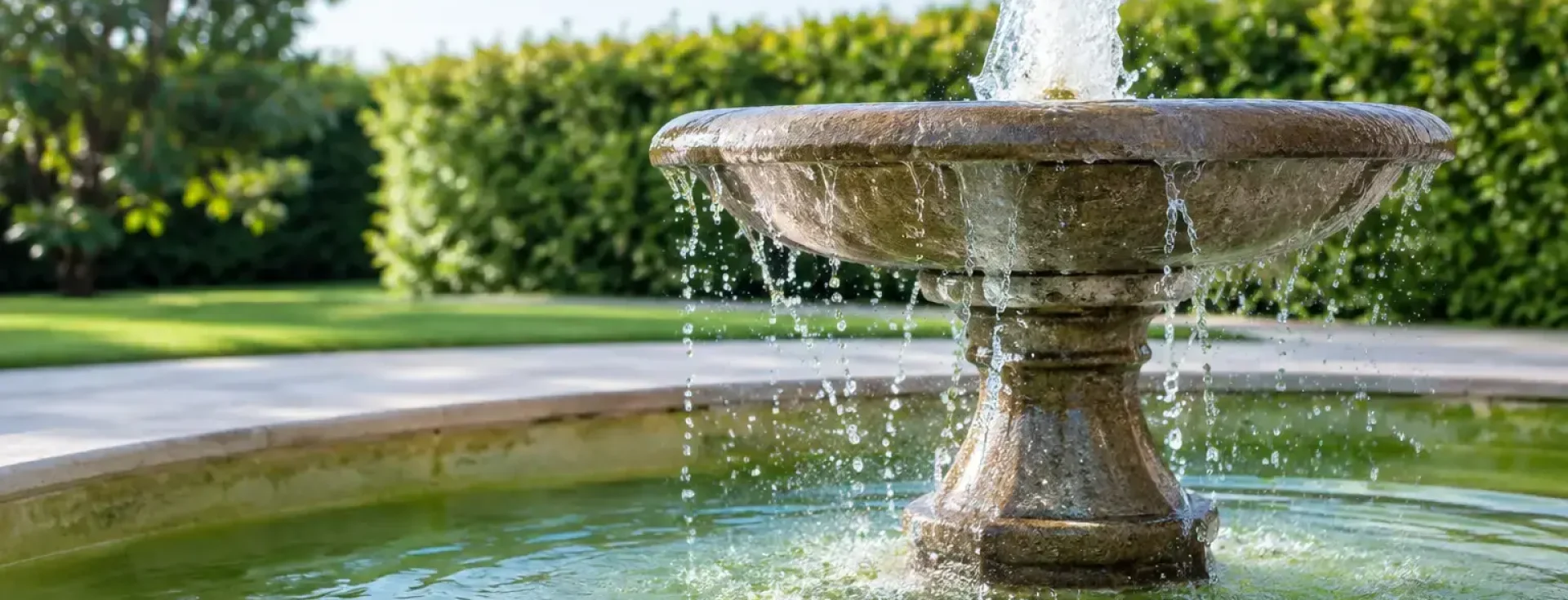
A fountain can look pristine in the morning and noticeably green within days, especially in a sun-exposed courtyard, hotel entrance, or villa landscape. Understanding why fountain water turns green is the first step toward protecting the visual impact of the feature and avoiding recurring maintenance costs. In most cases, the green color is algae, but poor circulation, unbalanced water, debris, or metals can make the issue more persistent than it first appears.
For a premium fountain, clear water is not simply an aesthetic preference. It reflects correct hydraulic performance, effective filtration, and professional water treatment. A fast fix may improve the appearance temporarily, but lasting clarity requires addressing the condition that allowed the water to turn green.
Why Fountain Water Turns Green
Algae growth is the most common cause
Green fountain water is usually caused by algae – microscopic plant-like organisms that multiply in water exposed to sunlight. Algae need only three things to grow: light, moisture, and nutrients. An outdoor fountain provides all three, particularly when leaves, dust, pollen, grass clippings, or organic debris settle in the basin.
Warm conditions accelerate the problem. In high-heat environments such as Dubai and across the UAE, water temperature can rise quickly in a shallow decorative basin. Combined with strong sunlight, this creates an ideal setting for algae to reproduce. Water may first look slightly dull or hazy, then develop a green tint on walls, steps, nozzles, and collection basins.
Algae also creates a slippery surface, can obstruct fountain jets, and places additional load on filters and pumps. Left untreated, it can turn an elegant water feature into a maintenance concern that affects guest perception and property value.
Inadequate circulation creates stagnant zones
A fountain can be running and still have poor circulation. Water may move attractively through the main jets while dead spots remain in corners, behind feature walls, beneath ledges, or at the bottom of the basin. These low-flow areas allow algae and sediment to settle and grow.
Undersized pumps, blocked strainers, incorrectly positioned return outlets, and partially closed valves can all reduce circulation. A pump that runs only for short periods may also fail to filter the full water volume often enough to maintain clarity. This is particularly common in fountains that are operated only during daytime display hours.
The right operating schedule depends on basin size, bather-free water volume, filtration capacity, sun exposure, and the fountain’s hydraulic design. High-visibility commercial installations often benefit from a maintenance plan that prioritizes water turnover and filtration performance rather than relying on a fixed timer setting.
Poor water chemistry weakens sanitation
Sanitizers are designed to control algae and bacteria, but they only work efficiently when water chemistry is balanced. If pH is too high, chlorine becomes less effective. If sanitizer levels are too low, algae can establish itself before the water visibly changes color.
For many treated fountain systems, pH is commonly maintained in the 7.2 to 7.6 range, while total alkalinity is managed to help prevent rapid pH movement. The exact targets and treatment program should suit the fountain’s materials, system design, water source, and local operating conditions. Natural stone, specialty finishes, metal fixtures, and certain decorative surfaces may require additional care.
A common mistake is adding extra sanitizer without testing first. This can create avoidable chemical imbalance, damage finishes over time, or leave the underlying circulation issue unresolved. Accurate testing should guide every correction.
Filters may be dirty, undersized, or bypassed
A filter captures fine debris and organic matter before it becomes food for algae. When a filter is clogged, damaged, undersized, or poorly maintained, the system loses its ability to polish the water effectively. Sand filters may need backwashing, cartridge filters may need cleaning or replacement, and media filters may require inspection after extended service.
The pump basket and skimmer basket also deserve attention. A restricted basket lowers water flow and can cause the pump to work harder while the fountain performs less effectively. In decorative features with multiple jets or water walls, blocked nozzles can further disrupt the intended circulation pattern.
Green water is not always algae
Although algae is the leading cause, green water can occasionally point to dissolved metals, especially copper. Copper may enter the water through source water, certain algaecides, corroding components, or incompatible chemical use. Unlike algae, metal-related discoloration may appear while the water remains relatively clear rather than cloudy.
The distinction matters. Treating metal staining as an algae outbreak can waste chemicals and delay the correct solution. A professional water analysis can identify whether the concern is biological growth, a metal issue, suspended debris, or a combination of conditions.
How to Clear Green Fountain Water Properly
The best response is systematic. Removing visible green water without correcting circulation or chemistry often leads to another outbreak within a short period.
Test before adding treatment products
Begin with a complete water test. Check sanitizer level, pH, total alkalinity, calcium hardness, and stabilizer where applicable. If the water is unusually clear but green, include a metal test. Testing provides the information needed to select the right corrective products and avoid over-treating the basin.
For luxury residential and commercial properties, testing should be part of routine fountain care rather than a response reserved for visible problems. Small shifts in balance are easier and less costly to correct before algae becomes established.
Remove debris and clean affected surfaces
Skim leaves and floating debris, empty baskets, and vacuum sediment from the basin. Then brush the basin walls, floor, grout lines, and other submerged surfaces to dislodge algae film. Pay close attention to shaded corners, waterline areas, and areas beneath decorative stone or tile projections.
Brushing is essential because algae can cling to surfaces even after the water begins to look better. If the fountain has delicate tile, natural stone, specialty coatings, or metal components, use cleaning methods compatible with those materials. Abrasive tools or aggressive chemicals can compromise a premium finish.
Restore sanitation and maintain filtration
Once the water is tested and debris is removed, adjust chemistry and apply the appropriate sanitizer treatment for the system. In an active algae event, a corrective treatment may be necessary, followed by continuous circulation long enough for the filter to capture suspended material.
Clean or backwash the filter as required during this process. As algae dies, it can turn the water cloudy before it becomes clear. That temporary cloudiness is often a sign that filtration is doing its job, provided circulation and water balance remain correct.
Algaecide can be useful as part of a properly managed treatment program, but it should not replace sanitizer, filtration, or cleaning. Some products can foam in fountains with strong aeration, and some may introduce metals. Product selection should always match the fountain’s finish, equipment, and treatment method.
Preventing Green Water From Returning
Prevention is more reliable than repeated recovery treatments. A well-maintained fountain needs a consistent operating routine, not occasional chemical additions when the water changes color.
Keep the system circulating according to its hydraulic requirements, inspect pump and skimmer baskets frequently, and service filters before flow declines. Remove organic debris promptly, particularly after landscaping work, wind events, or heavy visitor activity around commercial properties. In bright outdoor locations, shading can reduce algae pressure, although it must be considered alongside the overall architectural design.
Automated dosing and monitoring systems can be a strong investment for larger properties, hospitality environments, and fountains that must remain presentation-ready every day. These systems improve consistency, but they still require inspection and professional calibration. UV and ozone treatment can also support water quality, yet neither should be treated as a complete substitute for circulation, filtration, and a properly managed sanitizer residual where required.
When Professional Fountain Service Is the Better Choice
If green water returns quickly after treatment, the issue may be mechanical rather than chemical. Low pump flow, incorrect plumbing configuration, damaged filter internals, leaking lines, blocked nozzles, or an unsuitable equipment selection can all prevent a fountain from staying clear.
Professional service is especially valuable for multi-level fountains, water walls, large basins, hospitality installations, and features finished in natural stone or specialized tile. A technical inspection can confirm flow rates, identify circulation dead zones, assess filtration capacity, and establish a treatment program that protects both the water and the investment.
Aquatic Pools and Fountains supports property owners, developers, and facility teams with premium fountain equipment, water treatment solutions, technical guidance, and dependable maintenance support. The objective is not simply to remove green water, but to maintain an elegant, reliable feature that performs as designed.
Clear fountain water is the result of disciplined care working quietly behind the display. When testing, circulation, filtration, and cleaning are managed as one system, the fountain remains a focal point for the right reasons.