
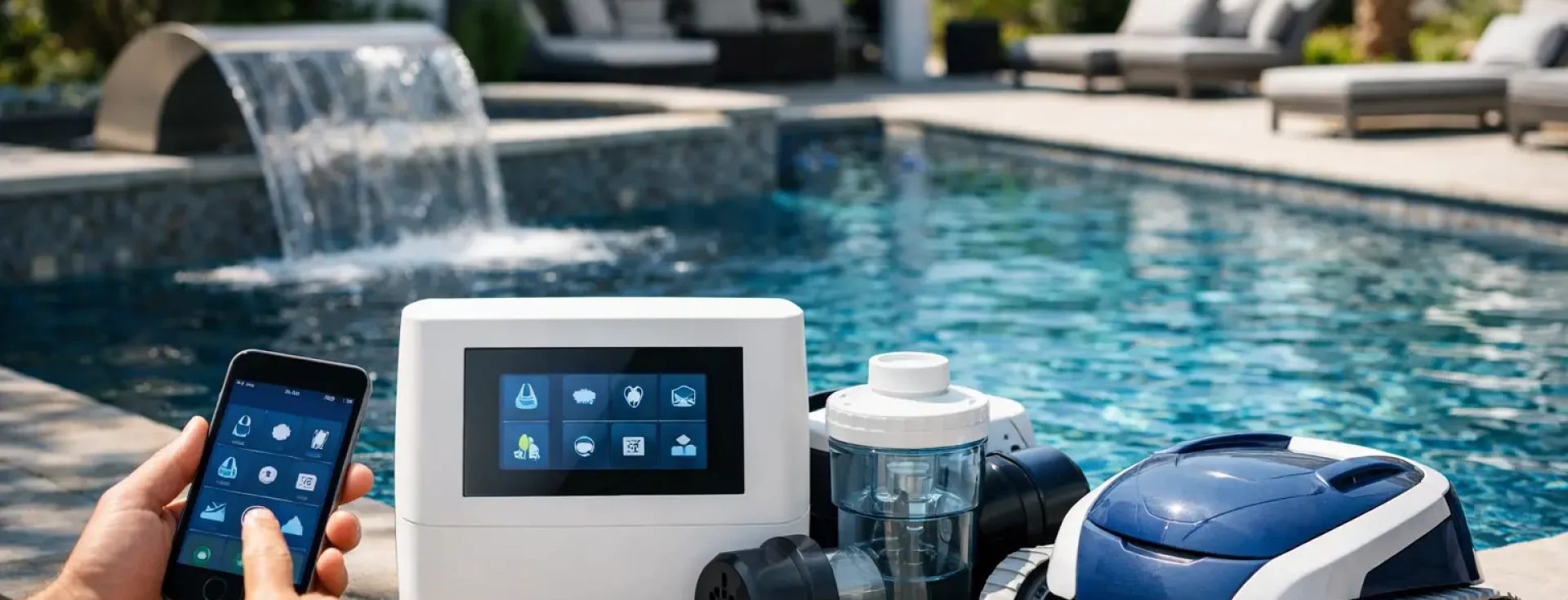
A pool that looks exceptional at noon can become a maintenance headache by evening if circulation, lighting, temperature, and sanitation are all managed separately. That is exactly why a pool automation system guide matters for property owners, developers, and facility teams who expect premium performance without constant manual adjustment. In high-value residential and commercial environments, automation is no longer a luxury add-on. It is a practical way to protect equipment, improve water quality, and keep the entire pool operation under control.
What a pool automation system actually does
A pool automation system connects key equipment into one controlled platform. Instead of turning pumps on and off manually, adjusting lights one by one, or relying on inconsistent timing for heating and disinfection, the system coordinates these functions from a central controller, wall panel, or mobile app.
In most premium installations, automation manages pump schedules, filtration cycles, pool lighting, heating and cooling, water features, and sanitation equipment. More advanced systems can also integrate level sensors, chemical monitoring, backwash controls, and energy-saving logic. For larger projects, that level of coordination is not just convenient. It reduces operational error and helps maintain consistent performance across the entire installation.
That said, not every pool needs the same level of automation. A private villa pool may only require scheduling, remote access, and lighting control. A hotel, residential tower, or commercial property usually needs broader system integration, monitoring, and stronger protection against equipment downtime.
Why automation makes sense for premium properties
The strongest case for automation is not novelty. It is control. Pools depend on timing, balance, and consistent mechanical performance. When those elements are handled manually, small oversights turn into bigger problems – poor circulation, wasted energy, uneven chemical treatment, or unnecessary strain on pumps and heaters.
For villa owners, automation adds comfort and simplicity. The pool is ready when it should be ready, lighting scenes are easy to manage, and heating can be adjusted before use rather than after arrival. For developers and hospitality operators, the value is broader. Automated systems support predictable operation, simplify routine oversight, and help maintain the polished standards expected in premium environments.
There is also a brand and guest experience angle. A pool with perfectly timed lighting, stable temperature, clear water, and responsive water features presents a far stronger impression than one that feels manually managed and inconsistent. In luxury properties, these details matter.
Core features to prioritize in this pool automation system guide
A good automation platform starts with the pump and filtration cycle. This is the operational foundation of the pool. If circulation is poorly scheduled, almost every other water-quality function suffers. Variable-speed pump control is especially valuable because it allows better efficiency and finer adjustment than simple on-off operation.
Lighting control is another high-impact feature. It allows users to schedule evening scenes, coordinate underwater and landscape lighting, and manage aesthetics without walking to multiple switch points. For residential properties, this is a convenience feature with clear visual appeal. For commercial properties, it supports consistency and presentation.
Temperature control is equally important where comfort is a priority. Integrated automation can coordinate heaters, heat pumps, or cooling systems with pool usage schedules. This avoids unnecessary run time while keeping water at the desired temperature range.
Sanitation and chemical management can also be included, depending on the system design. Automated chlorination, salt chlorination, UV, ozone, and dosing systems benefit from coordinated control. This does not eliminate the need for professional testing and maintenance, but it does improve consistency.
For high-spec pools and fountains, water features deserve attention as well. Jets, cascade effects, deck features, and decorative lighting can all be programmed into scenes or schedules. When planned correctly, automation turns these features into an asset rather than a maintenance burden.
Choosing the right system for residential or commercial use
This is where buying decisions often go wrong. Many buyers focus on the app or user interface first, but the smarter approach is to start with the equipment layout and operational goals. A controller is only as effective as the infrastructure behind it.
For a villa pool, the right system is usually one that is intuitive, reliable, and expandable. The owner may begin with pump, light, and heater control, then add sanitation or water features later. In that case, future compatibility matters. A lower-cost controller that cannot scale may become expensive to replace.
For commercial and hospitality projects, capacity and technical integration are more important than simplicity alone. The system must handle more circuits, more safety requirements, and more demanding operating hours. It should also support dependable service access, because commercial downtime carries higher cost and reputational impact.
Compatibility with existing equipment is another major factor. Not all pumps, lights, chlorinators, and sensors communicate equally well across brands or generations. In retrofit projects, an expert equipment review is essential before selecting the automation platform. Sometimes partial automation is the right first step. Sometimes a full upgrade delivers better long-term value.
Installation quality matters as much as the controller
Even the best automation hardware can underperform if installation is rushed or poorly configured. Wiring logic, load allocation, sensor placement, programming, and equipment calibration all affect how well the system performs day to day.
This is particularly important in premium residential and commercial projects where multiple systems interact. A pool may include filtration, heating, decorative lighting, chemical dosing, and fountain effects, all with different operating priorities. If the control sequence is not designed properly, one function can interfere with another or create unnecessary equipment wear.
Professional setup also improves safety. Electrical protection, weather-resistant enclosures, proper relays, and code-compliant installation are not optional. They are core to system reliability. For buyers who want a clean result and fewer service issues later, technical execution should carry as much weight as the controller brand itself.
The real trade-offs buyers should understand
Automation delivers clear benefits, but it is not magic. A smart controller does not replace maintenance, and it does not fix weak hydraulics, undersized pumps, poor plumbing design, or neglected water chemistry. If the pool system has underlying technical problems, automation may expose them more clearly rather than solve them.
There is also a difference between convenience automation and operational automation. Convenience automation focuses on app access, scheduling, and remote control. Operational automation goes further into sensor logic, dosing coordination, and equipment protection. Residential users may not need the second level. Commercial sites often do.
Cost varies widely as well. Entry-level systems can automate basic scheduling and a few circuits. Premium systems with broader integration, remote monitoring, and custom programming require a higher investment. The right question is not whether automation is cheap or expensive. It is whether the system specification matches the value of the property and the expectations for performance.
A practical buying approach
Start by defining what must be controlled from day one. That usually includes circulation, lighting, and temperature. Then consider what may be added later, such as water features, sanitation equipment, or advanced monitoring. This keeps the system aligned with actual use instead of overspending on functions that will never be activated.
Next, evaluate the age and compatibility of the current equipment. If the pool is part of a renovation, this step is critical. Older components may limit integration or create reliability issues within a new automation platform.
Then look at service support. An automation system is not just a box on the wall. It is an operational layer that may need programming updates, seasonal adjustments, troubleshooting, or expansion. Working with an experienced supplier and technical team is the difference between a system that remains useful and one that becomes frustrating.
For clients seeking premium execution, Aquatic Pools and Fountains approaches automation as part of a complete equipment and performance strategy, not as an isolated accessory. That matters when long-term reliability is the goal.
Who benefits most from automation
Homeowners with busy schedules benefit because the pool becomes easier to manage and more enjoyable to use. Developers benefit because automation improves asset quality and helps position a project at a higher standard. Facility managers benefit because routine control is more organized and less dependent on manual intervention. Hospitality operators benefit because guest-facing pool environments must perform consistently, every day, with minimal disruption.
The stronger the expectation for appearance, uptime, and equipment protection, the stronger the case for automation.
A well-chosen automation system does not make a pool more complicated. It makes a premium pool operate the way it should – precisely, efficiently, and with the level of control that modern properties now expect.