
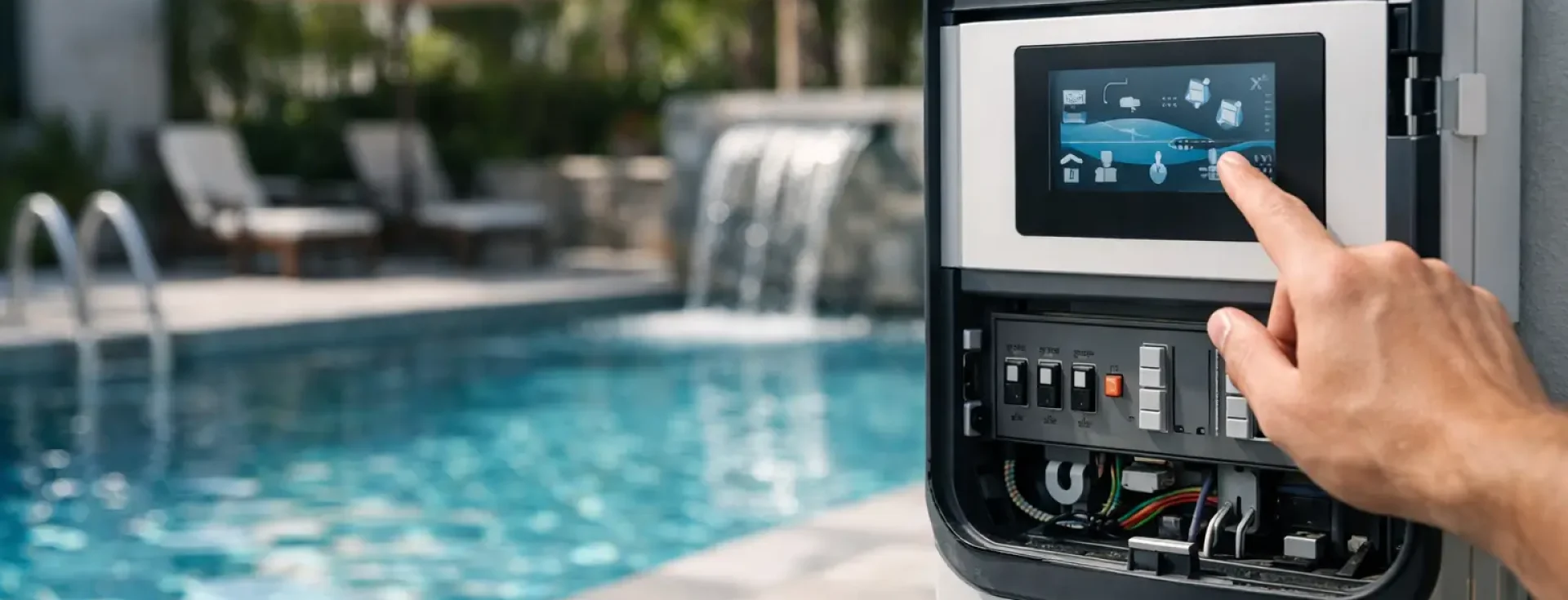
A swimming pool control panel is where a pool’s mechanical systems become manageable, predictable, and efficient. For a villa owner, it can mean setting filtration and lighting from one clear interface. For a hotel, residential tower, or commercial facility, it can mean maintaining water quality, comfort, and visual presentation without relying on manual switching or inconsistent operating routines.
The right panel does much more than turn equipment on and off. It coordinates pumps, lights, heating or cooling, water features, sanitization equipment, and safety functions according to the demands of the installation. In Dubai and across the UAE, where high ambient temperatures, heavy bather loads, and premium design expectations can place added pressure on pool systems, that level of control is a practical requirement.
What a Swimming Pool Control Panel Controls
At its simplest, a control panel supplies and manages power to pool equipment. A professionally specified unit is designed around the equipment installed on site, the required operating schedule, and the environment where the panel will be located. It should make routine operation easier while protecting valuable pumps, heaters, lights, and water-treatment equipment.
Most systems manage the circulation pump first. Scheduled filtration is essential because it moves water through the filter and treatment equipment, helping maintain clarity and stable water conditions. Instead of depending on someone to operate a pump manually every day, a programmed panel can run filtration at the right intervals, including separate schedules for lower-demand and higher-demand periods.
A premium installation may also use the panel to control pool and landscape lighting, heat-cool pumps, salt chlorinators, UV or ozone systems, dosing equipment, booster pumps, and decorative fountains. These functions do not always need to be grouped together. A simple residential pool may only require circulation, lighting, and heating controls. A hospitality or mixed-use property may need multiple circuits, interlocks, alarms, and separate access levels for technical staff.
Why Proper Control Matters in UAE Pool Environments
A pool can look elegant on the surface while its equipment works unnecessarily hard behind the scenes. Poorly timed filtration, excessive pump run times, equipment that operates at the wrong time of day, and conflicting commands between devices can raise operating costs and shorten component life.
The UAE climate makes programming especially valuable. Water temperature can rise quickly, and pools exposed to direct sun may require a different circulation and treatment approach from shaded or indoor installations. Heat-cool pumps must be coordinated with water flow, while sanitization equipment should operate only when the circulation system can support it. A well-configured control panel helps establish those conditions automatically.
For commercial pools, consistency is equally important. Facility managers need dependable schedules, easy status visibility, and a system that technicians can service without disrupting the wider property. A panel selected purely on price may lack capacity for future additions, clear labeling, proper protection, or integration with specialized equipment. The initial saving can become expensive when upgrades, troubleshooting, or replacement are required.
Key Features to Consider Before Selecting a Panel
The best swimming pool control panel depends on the pool’s equipment list, electrical requirements, and operational goals. It is not simply a matter of choosing the panel with the most functions. A well-matched system is easier to maintain and provides more dependable long-term performance.
Timers and programmable schedules
Reliable timers are the foundation of automated operation. They allow filtration to run during planned periods and enable lighting, water features, or heating equipment to follow separate schedules. Digital controls offer greater flexibility, particularly where different operating modes are required for weekends, events, seasonal use, or changing occupancy levels.
For a private pool, straightforward programming may be preferable. For a large property, multiple schedules and password-protected settings can prevent unauthorized changes while giving the maintenance team the visibility it needs.
Equipment capacity and circuit planning
Every controlled item requires appropriate electrical capacity and protection. The panel must be sized for the connected pump loads, heater or heat-cool pump requirements, lights, dosing systems, and accessories. It must also allow for the starting current of motors and any future equipment planned for the project.
Circuit planning is a technical step that should never be treated as an afterthought. A variable-speed pump, for example, may need different control logic from a single-speed pump. A fountain installation may involve several pumps and lighting zones that need to run independently. The panel should be designed around the actual system rather than forcing the system to fit a generic enclosure.
Safety protection and interlocks
Quality electrical protection is essential around water. Depending on the project, a panel may include circuit breakers, overload protection, contactors, isolation switches, and protection against low water flow or dry-running conditions. The exact arrangement should be determined by the equipment manufacturer’s requirements and local electrical standards.
Interlocks are particularly valuable. They prevent one item from operating unless another condition is met. A heat-cool pump should not run without adequate circulation. A salt chlorinator or UV unit should be linked to filtration operation. Water features may need an automatic shutdown when a tank level drops below a safe point. These safeguards help protect equipment and reduce avoidable service issues.
Remote access and smart controls
Remote control can be highly useful, but it should serve a clear operational purpose. App-based systems allow homeowners to check equipment status, adjust lighting, or activate a water feature before guests arrive. For facility managers, remote visibility can support faster response when a schedule has changed or an alarm requires attention.
However, smart capability is not a substitute for proper installation. Remote access depends on stable connectivity, compatible equipment, secure user permissions, and controls that remain functional locally if network service is interrupted. In a high-value project, the strongest approach is often a dependable physical panel combined with intelligently configured remote access.
Choosing Between Standard and Custom-Built Panels
A standard control panel can be an excellent choice for a conventional residential pool with defined equipment and limited expansion plans. It offers an efficient route to organized, scheduled operation and can simplify installation when the specifications are correct.
A custom-built panel is usually the stronger solution for luxury villas, pools with extensive water features, hotels, apartment developments, and commercial facilities. It can be configured with dedicated circuits, labeled connections, tailored automation, and space for future additions. This is particularly relevant when a pool includes heat-cool pumps, advanced disinfection, multiple lighting scenes, or a connected fountain system.
Custom design also improves serviceability. When every circuit is clearly identified and equipment is arranged logically, technicians can diagnose faults and perform maintenance more efficiently. That matters when a pool is part of a guest-facing hospitality environment or a premium residential asset where downtime affects the property experience.
Installation Quality Is Part of the System
Even an excellent panel cannot compensate for poor electrical installation or unclear commissioning. The enclosure location should be accessible for service, protected from direct water exposure, and suited to the surrounding heat and dust conditions. Cable routing, grounding, ventilation, waterproof connections, and clear labeling all affect safety and long-term reliability.
Commissioning should include more than powering up the equipment. Each circuit should be tested, schedules should be set according to the pool’s needs, and safety interlocks should be verified. The property owner or facilities team should also understand the basic controls, manual override procedures, and the signs that require professional support.
Aquatic Pools and Fountains supports this process with premium pool equipment, technical guidance, installation expertise, and maintenance support for residential and commercial aquatic projects. A coordinated approach helps ensure that the panel, pump, filtration system, treatment equipment, and decorative features work as one properly engineered installation.
Maintenance Keeps Controls Reliable
A control panel needs periodic inspection just like pumps and filters. Technicians should check for loose terminals, signs of heat stress, moisture ingress, worn contactors, damaged cable glands, and timer accuracy. Settings should also be reviewed when equipment changes, such as when a pump is upgraded or a heat-cool unit is added.
Do not ignore repeated breaker trips, unusual clicking, burnt odors, intermittent pump operation, or displays showing persistent errors. These can indicate electrical or equipment problems that deserve prompt professional assessment. Resetting a fault repeatedly without identifying the cause may place the pump, heater, or panel at greater risk.
A well-specified swimming pool control panel protects the investment behind the pool finish, water quality, and guest experience. Choose one that matches the actual demands of the property, leaves room for sensible expansion, and is installed and maintained with the same precision expected from every visible part of a premium aquatic environment.