
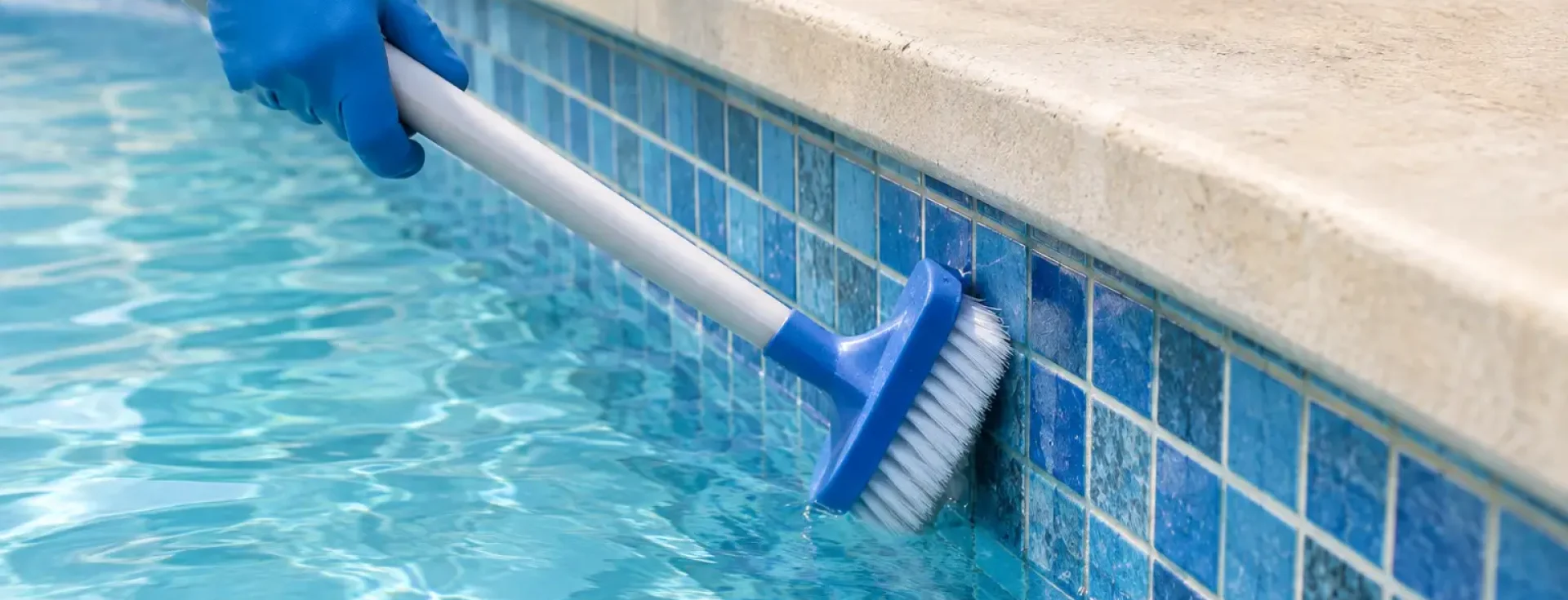
A clean waterline is one of the details that separates a well-maintained pool from one that merely looks acceptable at a distance. In villas, hotels, residential towers, and commercial properties, dull tile, white scale, or a dark grease line can undermine an otherwise premium aquatic environment. Knowing how to clean pool tile correctly protects the finish while restoring the crisp, polished appearance the installation was designed to deliver.
The right approach depends on what is actually on the tile. Calcium scale, sunscreen residue, algae, metal staining, and grout discoloration require different solutions. Using the strongest chemical first is rarely the best answer, particularly on glass mosaic, natural stone, metallic finishes, or older grout.
Identify the Deposit Before You Clean
The waterline is where most pool tile problems begin. Oils from sunscreen, body lotion, and airborne dust collect at the surface of the water, creating a gray, brown, or black band. This type of buildup is generally soft or slightly tacky and responds well to a purpose-made tile cleaner and a nonabrasive pad.
Hard, chalky white deposits are usually calcium scale. In Dubai and across the UAE, mineral-rich water and high evaporation can make scale control a regular maintenance requirement. Calcium may appear as a thin haze at first, then develop into rough, raised deposits that are difficult to remove by hand. If it has turned gray or brown, it may also contain dirt, metals, or embedded organic material.
Green, yellow, or black marks may indicate algae, especially in corners, along grout lines, or in areas with weak circulation. Algae cleaning should never be treated as a tile-only issue. The pool water chemistry, filtration performance, sanitizer level, and circulation schedule must be corrected as well, or the growth will return.
How to Clean Pool Tile Safely
For routine waterline cleaning, lower the water level slightly if possible so the affected tile can be reached without working at the edge of the water. Turn off nearby water features if spray would continuously wet the work area, then begin with the least aggressive effective method.
Apply a pool-specific, nonabrasive tile cleaner according to its instructions. Allow it to dwell briefly, but do not let it dry on the surface. Gently scrub with a nylon pool brush, soft grout brush, or non-scratch cleaning pad. Work in small sections, rinse thoroughly, and inspect the finish before moving forward.
Avoid wire brushes, metal scrapers, coarse sanding pads, and household scouring powders. These can scratch glazed ceramic tile, etch glass mosaic, damage protective coatings, and roughen surfaces enough to attract future scale more quickly. A tile may look clean immediately after aggressive scrubbing but lose its smooth, reflective finish over time.
For a light oily waterline ring, a neutral or mildly alkaline tile cleaner is typically appropriate. For mineral deposits, use a cleaner specifically formulated to dissolve calcium. The product selection must match the tile material and the severity of the buildup. Glass tile, natural stone, and specialty decorative finishes deserve particular care because some acid-based cleaners can permanently dull or etch them.
A note on acid-based cleaning
Acid can remove stubborn calcium scale, but it is not a general-purpose cleaning shortcut. Strong acid solutions can harm grout, corrode nearby metal fittings, damage delicate finishes, and create serious safety risks if handled incorrectly. They must never be mixed with chlorine products or other chemicals.
On premium residential and commercial installations, professional assessment is often the better value when scale is heavy, the tile is unknown, or the pool includes mosaic, stone, stainless steel, or decorative water features. A trained technician can determine whether controlled chemical treatment, mechanical scale removal, or a combination of methods is appropriate without compromising the installation.
Match the Method to the Tile Finish
Ceramic and porcelain pool tile are durable, but their glazed surfaces can still be scratched by abrasive tools. A nonabrasive cleaner and nylon brush are the standard starting point. If scale persists, test a calcium remover in an inconspicuous area before treating the full waterline.
Glass mosaic tile requires a more measured approach. Its surface is generally smooth, but grout joints and iridescent finishes may be vulnerable to harsh chemicals. Use a cleaner approved for glass tile and avoid abrasive pads. Rinse carefully so residue does not remain in joints or behind the waterline.
Natural stone is the most sensitive category. Travertine, limestone, marble, and other calcareous stones can react badly to acidic products. Use a stone-safe cleaner, avoid unverified descalers, and consult a pool professional before addressing persistent mineral marks. What appears to be scale may actually be etching or a change in the stone itself.
For textured tile, deep grout lines, or intricate decorative bands, brushing alone may not reach all deposits. A specialist may use suitable low-pressure methods, targeted cleaning compounds, or controlled media treatment. The goal is not simply a brighter surface. It is to preserve the tile, grout, coping, and surrounding equipment for long-term service.
Remove Algae Without Treating Only the Surface
If algae is present on tile, brush the affected area and vacuum or filter out loosened debris. Then test the water. Low sanitizer levels, poor pH control, inadequate circulation, and clogged filtration can all contribute to recurring growth.
Bring the pool chemistry back within the recommended operating range for its disinfection system. Clean or backwash the filter as required, confirm that return inlets are circulating water effectively, and brush dead spots such as steps, corners, and behind ladders. In commercial pools and high-use hospitality environments, frequent testing and documented maintenance routines are essential because bather load can change water conditions quickly.
Do not rely on tile cleaner to solve algae. Cleaning the visible growth without correcting water treatment only produces a short-lived result.
Prevent Calcium Scale From Returning
Tile cleaning is easier and more economical when scale is controlled before it becomes thick. Calcium deposits develop when water is oversaturated with minerals, often combined with elevated pH, high alkalinity, warm temperatures, and evaporation. Pools in hot climates need consistent water testing because evaporation concentrates dissolved minerals even when the pool appears to be operating normally.
Maintain balanced pH, alkalinity, calcium hardness, and sanitizer levels based on the pool system and finish. Automatic dosing equipment can be particularly valuable for luxury villas, hotels, residential developments, and other properties where stable water quality is expected every day. Proper filtration, routine brushing, and timely top-ups also help prevent deposits from settling along the waterline.
A weekly wipe of the waterline prevents oils from hardening into a visible ring. During regular service, inspect tile grout, expansion joints, skimmer areas, returns, and water features for early signs of scale or staining. These small checks protect the visual standard of the pool while helping identify equipment or chemistry issues before they become more costly.
When Professional Tile Cleaning Is the Right Choice
Routine cleaning can be handled by a trained property team or homeowner when deposits are light and the tile finish is known. Professional support is the stronger option when scale is thick, tile is etched or stained, water chemistry is unstable, or the pool has high-value finishes and integrated fountain features.
For facility managers and developers, professional service also provides consistency across multiple assets. A planned maintenance program can combine water testing, filtration checks, cleaning products, equipment inspection, and tile care under one technical standard. This is especially valuable where appearance, guest experience, and operational reliability are equally important.
Aquatic Pools and Fountains supports premium pool environments with quality cleaning solutions, water treatment equipment, technical guidance, and maintenance expertise tailored to residential and commercial requirements.
Clean tile should look effortless, not overworked. Treat buildup early, choose products that respect the finish, and keep water chemistry under control so the pool retains the elegance and durability expected of a premium installation.