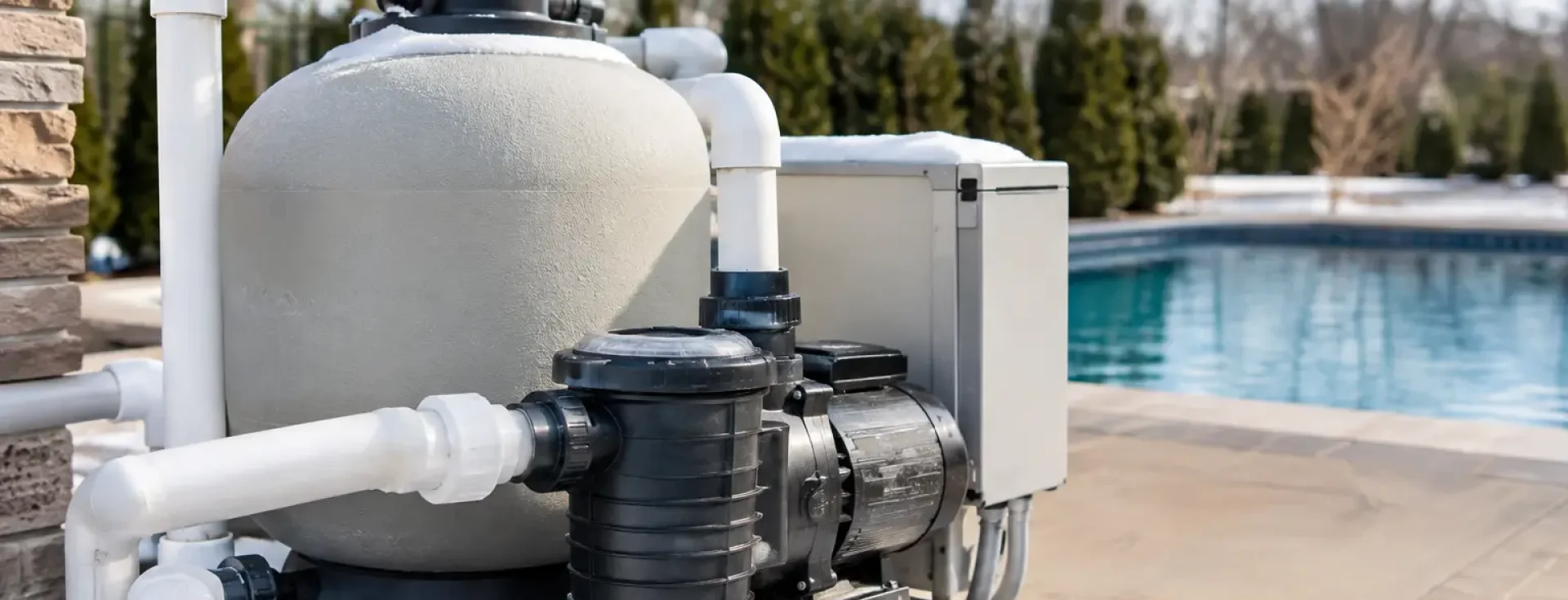
A freeze event can damage a premium pool system in a single night. Water expands as it freezes, placing exceptional pressure on pump housings, filter tanks, heater exchangers, valves, and underground plumbing. Knowing how to winterize pool equipment protects the performance, appearance, and long-term value of a residential or commercial aquatic installation.
For properties in consistently warm climates, a complete seasonal shutdown may not be necessary. In the UAE, for example, most pools operate throughout the year and need a well-maintained circulation and filtration program rather than conventional winterization. However, villas and commercial properties in colder regions, seasonal properties, and installations exposed to subfreezing temperatures require a precise, professionally managed process. The standard is simple: no water should remain trapped in equipment or lines where it can freeze.
When Pool Equipment Needs Winterization
Winterization should begin before temperatures are expected to remain near or below freezing. Waiting until the first hard freeze creates unnecessary risk, especially for larger systems with multiple pumps, water features, heaters, automation panels, and long plumbing runs.
The right timing depends on the property, local climate, and whether the pool will be used during winter. Some owners choose to keep a heated pool open, relying on freeze-protection settings and continuous circulation. This can be an excellent solution where cold periods are brief, provided the equipment is correctly sized, the automation is functioning, and a qualified team is monitoring the system.
A full shutdown is often the better choice for seasonal pools or vacant properties. It reduces operating costs and limits exposure to freeze damage, but it must be completed thoroughly. Draining only the pump basket or lowering the pool water level is not enough.
How to Winterize Pool Equipment Step by Step
A dependable winterization process follows a controlled sequence. Each component should be isolated, drained, protected, and documented before the pool is covered or left unattended.
Balance and clean the pool water first
Start with clean, balanced water. Remove leaves, debris, and sediment from the pool, skimmer baskets, pump strainer baskets, and surrounding deck drains. Brush walls, vacuum the floor, and backwash or clean the filter as appropriate for its design.
Test and adjust the water chemistry before closing. A properly balanced pool is less likely to develop staining, scale, algae, or corrosion while circulation is off. The exact chemical treatment depends on the pool finish, sanitizer method, water temperature, and intended closing period. Avoid adding excessive chemicals in the belief that more product offers better protection. Over-treatment can damage surfaces and equipment just as easily as poor water quality can.
Turn off power and document the system
Shut off power to pumps, heaters, chlorinators, lighting transformers, fountains, and automation equipment at the appropriate breakers. Label breakers and valves if they are not already clearly identified. For commercial facilities and multi-pump systems, a shutdown record should identify which equipment was isolated, drained, and inspected.
This is also the right time to photograph valve positions, controller screens, and plumbing layouts. Clear documentation makes spring commissioning faster and helps prevent errors when several technicians or facility staff members share responsibility for the equipment room.
Drain the pump, filter, heater, and accessories
Open the drain plugs on the pump housing and filter tank, then allow each component to empty completely. Remove and store pump drain plugs in a labeled location so they are not misplaced during reopening. Open the pump lid and leave it loose or remove it according to the manufacturer’s guidance, allowing residual moisture to evaporate.
Filter requirements vary. Sand filters, cartridge filters, and diatomaceous earth filters have different internal configurations and service procedures. A sand filter may need its drain cap removed and multiport valve set to a designated winter position. Cartridge elements should be removed, cleaned, dried, and stored in a protected area. Diatomaceous earth filters require careful cleaning to prevent residual media from hardening inside the tank.
Heaters require special attention. Turn off gas or electrical supply in line with the manufacturer’s instructions, open heater drain points, and make sure the heat exchanger is fully cleared of water. Heat pumps, salt chlorinators, UV systems, ozone units, and chemical feeders should also be isolated and drained where required. Do not assume every accessory can be treated like a standard circulation pump.
Clear water from every plumbing line
The most critical part of winterization is removing water from suction and return lines. After lowering the water level if the pool design requires it, use a correctly sized air blower to push water from skimmers, main drains, returns, spa jets, cleaner lines, and water-feature plumbing.
Once air reaches each return fitting, install winter plugs to keep water from re-entering the line. Skimmer lines may need expansion protection or an approved skimmer device, depending on the construction and local winter conditions. Main drain lines are handled differently based on whether they can be blown clear and plugged or need an air lock.
This work demands practical knowledge of the plumbing layout. Pools with spas, infinity edges, fountains, deck jets, slide lines, in-floor cleaning systems, or remote equipment pads often have hidden branches that retain water. A single overlooked line can lead to a costly repair when temperatures fall.
Protect controls, fittings, and the equipment area
After the system is drained, inspect valves, unions, gauges, O-rings, and visible fittings. Replace cracked seals, damaged pressure gauges, or brittle valve handles before they become a reopening problem. Lubricate O-rings only with a lubricant approved for pool equipment, not petroleum-based products that can cause deterioration.
Store removable accessories such as pressure gauges, salt cells, cartridges, robotic cleaners, and detachable handrails in a dry, protected location. Cover exposed equipment only with breathable, purpose-made covers. Wrapping motors or heaters in impermeable plastic can trap condensation and contribute to corrosion.
Control panels and automation systems should remain dry and protected. If the pool has remote monitoring, check that freeze alerts, fault notifications, and power-status reports are configured correctly before the property is left unattended.
Common Winterization Errors That Cause Damage
The most expensive mistakes are usually small omissions. Owners may drain the pump but overlook the heater, close valves before lines are fully blown out, or forget that a decorative fountain has its own pump and plumbing circuit. Equipment with multiple elevations requires special care because water naturally collects at low points.
Another common issue is using automotive antifreeze. It should never be introduced into a pool or fountain system. If antifreeze is needed for a specific approved application, use only a non-toxic propylene glycol product designed for pool and plumbing winterization, and follow local regulations and manufacturer instructions.
Do not rely on a pool cover to protect equipment from freezing. A cover helps manage debris, evaporation, and water quality, but it does not remove water from pumps, filters, pipes, or heaters. Likewise, leaving equipment powered on without confirming that freeze protection is operational creates a false sense of security.
Professional Winterization for Complex Pool Systems
High-performance pool environments deserve more than a basic closing checklist. Hospitality pools, residential towers, luxury villas, and properties with integrated fountains often use variable-speed pumps, heat-cool systems, automated valves, specialized disinfection, and detailed hydraulic designs. These systems need a winterization plan that respects their specific equipment requirements.
A professional inspection can identify vulnerable pipe runs, confirm that all zones have been cleared, test automation settings, and address worn components before they fail. It also creates a cleaner path to reopening, when pumps are recommissioned, filters are serviced, water chemistry is corrected, and the system is returned to its intended operating standard.
Aquatic Pools and Fountains supports premium pool and fountain installations with the technical precision required for dependable equipment performance. For property owners and facility teams, professional service is especially valuable when an installation includes multiple bodies of water, complex controls, or equipment from several manufacturers.
Before the temperature drops, treat winterization as an investment in the next swimming season. A carefully protected equipment room and fully cleared plumbing system let you reopen with confidence rather than begin spring with repairs.