
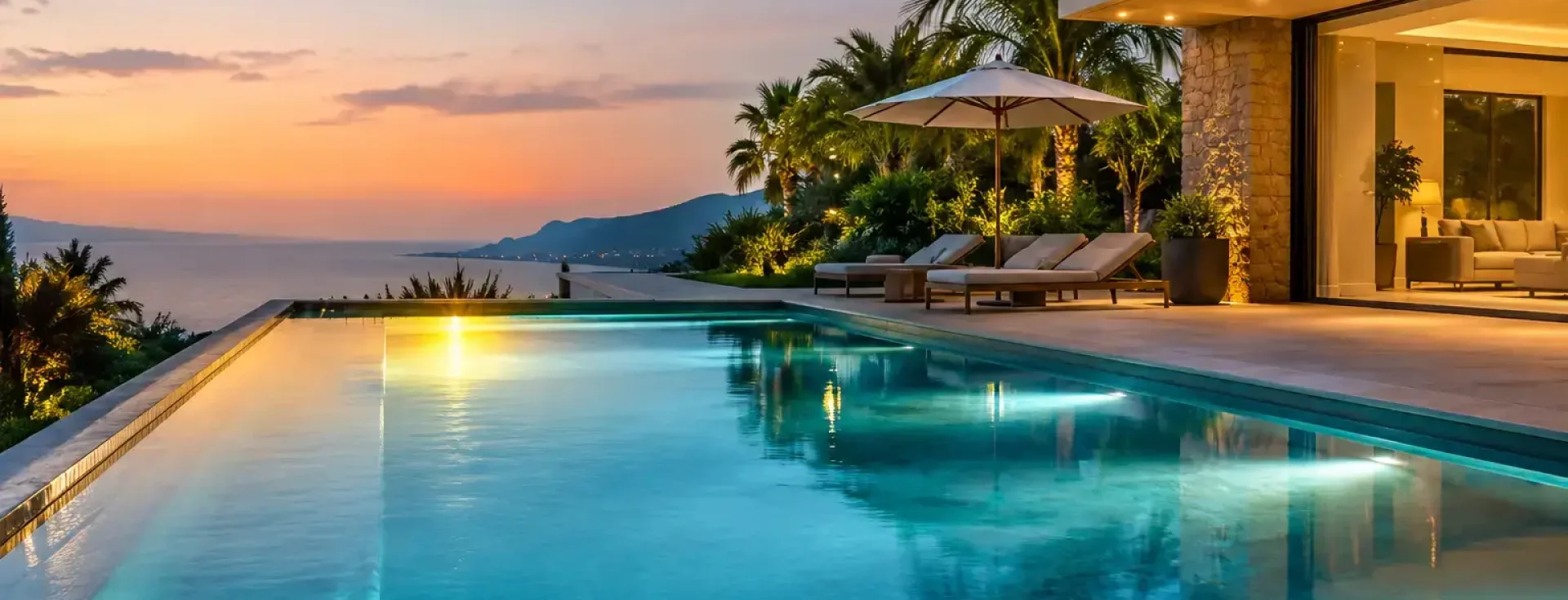
A well-executed villa pool lighting example does more than make the water visible after sunset. It gives the entire outdoor area a stronger presence: the pool becomes an architectural feature, pathways become safer, and landscaped spaces feel intentionally designed rather than simply illuminated. For premium villas in Dubai and across the UAE, the difference lies in combining visual impact with reliable equipment, correct placement, and professional electrical planning.
A Villa Pool Lighting Example That Balances Elegance and Performance
Consider a modern villa with a rectangular 12-meter pool, pale stone coping, a shallow tanning ledge, two water features, and a landscaped garden that opens onto the pool deck. The goal is not to flood the area with light. It is to create a composed nighttime setting where the water appears clear, calm, and inviting while every circulation area remains practical and safe.
For this type of project, recessed LED pool lights are positioned along one long wall of the pool, aimed across the water rather than directly toward the seating area or villa windows. This placement prevents glare while allowing the water to carry the light across its surface. Three or four properly selected fixtures can often create a more refined result than a larger number of poorly positioned lights.
A warm-white light around the surrounding deck and garden creates contrast with the cooler tone inside the pool. The pool itself may use crisp white illumination for a clean, contemporary look, while RGBW LEDs provide controlled color options for entertaining, holidays, or special events. RGBW is generally the better choice for premium properties because it includes a dedicated white channel, producing more natural white light than standard RGB fixtures.
The tanning ledge receives a lower-output fixture or a carefully placed small LED light. This avoids creating a bright hotspot in shallow water. Steps are lit independently, either with compact recessed lights or with low-level illumination integrated into the pool structure, so each change in depth is clearly visible at night.
The result is layered lighting with purpose: underwater illumination for depth and visual quality, step lighting for safety, landscape lighting for atmosphere, and subtle feature lighting for movement and architectural definition.
Start With How the Villa Is Used After Dark
The right lighting layout depends on the property, not just the pool dimensions. A family villa used for evening swimming needs strong, consistent visibility around entries, steps, and shallow areas. A villa designed primarily for entertaining may prioritize a more dramatic water effect, color scenes, and illuminated water features.
For rental properties, hospitality-style residences, and high-traffic outdoor spaces, durability and ease of maintenance become even more important. Fixtures need to withstand regular operation, water chemistry exposure, high ambient temperatures, and frequent use without fading, leaking, or creating service issues.
It also matters where people sit. If the main lounge area faces the pool, underwater lights should be located on the wall opposite the seating. When lights face guests directly, the visual comfort of the space is reduced, no matter how premium the fixture may be. The same principle applies to dining terraces, bedroom windows, and indoor living rooms overlooking the water.
White Light or Color-Changing LEDs?
White LED pool lighting remains the strongest option for villas seeking a timeless, high-end appearance. It complements natural stone, porcelain decking, modern landscaping, and contemporary architecture without making the pool feel overly theatrical. For daily use, white light is also simple to operate and provides excellent visibility.
Color-changing LEDs suit owners who want flexibility. A calm blue scene can complement evening gatherings, while warmer tones may support a celebratory setup. However, color should enhance the design rather than replace it. If the lighting arrangement only looks impressive when it is cycling through colors, the core pool illumination may need reconsideration.
A premium approach often combines both: use RGBW pool lights with a well-calibrated white setting as the primary scene, then retain color control for selected occasions. This gives the owner a refined everyday look without limiting the pool’s entertainment value.
Technical Details That Protect the Investment
Premium lighting is not defined by appearance alone. The equipment behind the visual result must be selected and installed for long-term performance. Underwater pool lights should be purpose-built for submerged use, rated appropriately for the installation, and connected through suitable low-voltage systems, transformers, junction boxes, and controls.
Poor-quality fittings, incorrect sealing, and undersized electrical components can lead to water ingress, inconsistent illumination, premature failure, and costly access work later. These issues are particularly avoidable when lighting is planned as part of the pool system rather than treated as a final decorative addition.
For new villa projects, conduits and cable routes should be coordinated before finishing work begins. This allows future access for servicing without damaging pool finishes, surrounding tiles, or landscaped areas. In renovation projects, the available cable paths, niche condition, and compatibility with existing transformers must be assessed before selecting replacement LEDs.
Energy efficiency is another practical advantage of modern LED pool lights. Compared with older incandescent systems, quality LEDs consume significantly less power and offer a much longer operating life. Still, wattage should not be the only selection factor. Beam angle, lens design, light output, water depth, pool finish color, and fixture placement all influence the final visual result.
A dark mosaic finish, for example, absorbs more light than a pale blue or white interior finish. It may require a different fixture output or spacing plan to achieve even illumination. Conversely, a highly reflective light-colored pool can become visually harsh if too many high-output lights are installed.
Coordinate Pool, Landscape, and Water Feature Lighting
The pool should not be designed in isolation from the rest of the outdoor environment. A villa landscape with bright spotlights, unshielded garden fixtures, or excessive facade lighting can overpower the water and create reflections that reduce the pool’s visual clarity.
The strongest installations use a hierarchy of light. The pool remains the focal point, while pathways receive low-level functional lighting, planted areas get soft accent illumination, and architectural walls are treated with restraint. Water features can be highlighted with their own dedicated lighting, especially when a spillover, cascade, or fountain wall is visible from the villa’s main entertaining areas.
Avoid placing bright fixtures where they reflect directly onto the water surface. Reflections can be attractive in moderation, but too much competing light makes the pool appear flat rather than luminous. Shielded fixtures and thoughtful aiming are essential, particularly in compact villa gardens where surfaces sit close together.
Control Systems Make the Design Easier to Use
A sophisticated lighting installation should remain easy for the owner, household staff, or facility team to operate. Separate lighting zones allow the pool, steps, water features, deck, and landscape areas to be controlled independently. This prevents unnecessary energy use and makes it possible to create different settings for swimming, dining, relaxation, or entertaining.
Timers and automation can activate standard evening scenes without manual operation. Smart controls may also allow scene selection from a wall panel or mobile device, but reliability should always take priority over unnecessary complexity. The best control solution is one that the property team will use confidently every day.
Aquatic Pools and Fountains supports villa and commercial clients with premium pool lighting equipment, technical guidance, installation coordination, and maintenance support, helping each lighting plan meet both visual and operational requirements.
Common Mistakes in Villa Pool Lighting Design
The most frequent mistake is installing too many lights in pursuit of brightness. A pool does need enough illumination for safe use, but excessive output creates glare, washes out the water, and makes the outdoor setting feel commercial rather than private.
Another issue is treating steps as an afterthought. Entry points, ledges, and changes in depth need intentional illumination, especially in family homes and properties used by guests. Lighting should reveal these areas clearly without exposing users to direct glare.
Finally, do not select fixtures based only on a showroom demonstration. Water depth, pool finish, landscaping, viewing angles, and local operating conditions all affect performance. A lighting plan that looks excellent in a display environment may require adjustment to suit a specific villa.
The most effective next step is to review the pool after sunset from the same places where residents and guests will actually spend time. That perspective reveals where light should lead, where it should soften, and where the design needs to stay beautifully quiet.