
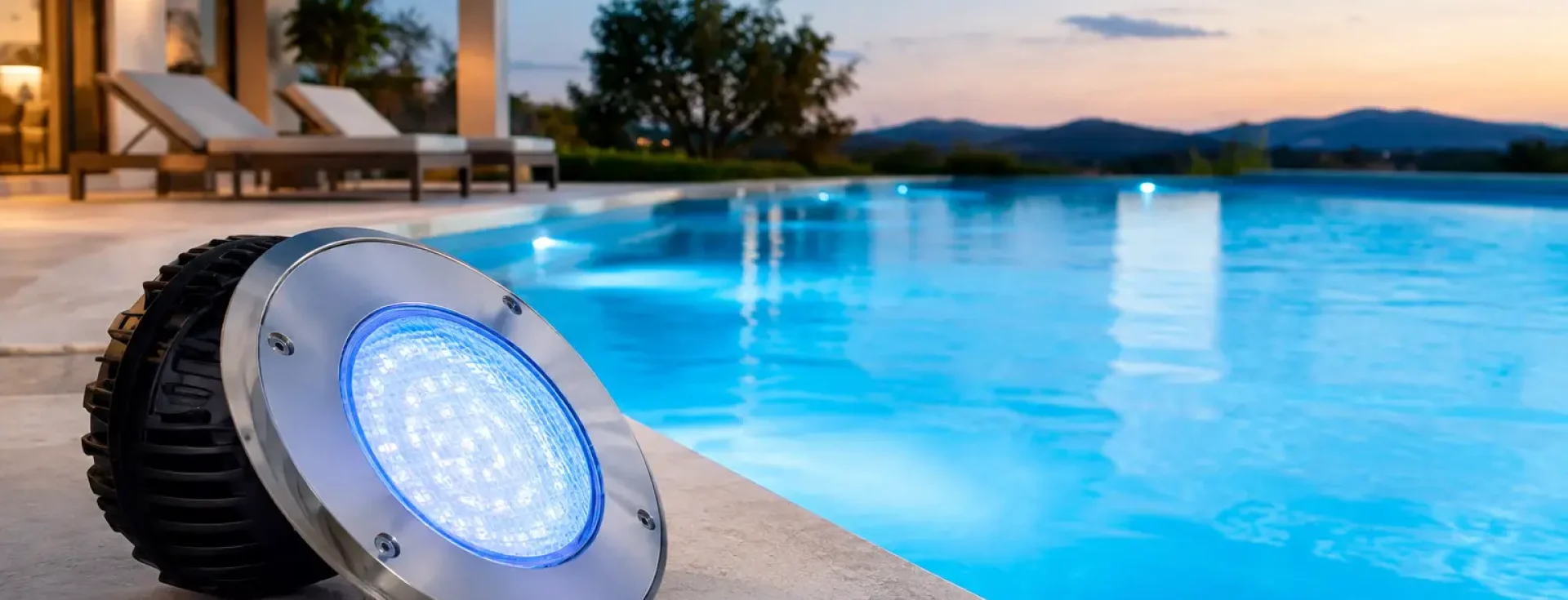
A pool can have flawless tile, clear water, and carefully planned landscaping, yet still lose its presence after sunset. AstralPool lights give residential and commercial pools the controlled illumination needed to make the water a visual feature at night, while supporting safer use around steps, ledges, and changing depths.
For villas, hotels, residential towers, and leisure facilities across the UAE, lighting is not a finishing detail. It is part of the pool’s operating system and its architectural identity. The right fixture layout creates depth, reveals the texture of the interior finish, and gives property owners the flexibility to shift from calm white illumination to programmed color for events and hospitality settings.
Why AstralPool Lights Matter in Premium Pools
AstralPool is recognized for pool equipment designed around long-term performance, coordinated system compatibility, and refined visual results. Its lighting solutions are suited to projects where appearance must be matched by dependable operation, whether the pool is a compact private courtyard installation or a heavily used commercial amenity.
Modern LED pool lights consume considerably less energy than older halogen systems and generate less heat. That efficiency is particularly valuable where lights run for several hours every evening. More importantly, quality LED lighting provides a cleaner, more even beam that enhances water without creating distracting glare from common viewing areas.
The visual outcome depends on more than brightness. Light color, beam spread, fixture position, pool shape, waterline level, and interior tile all influence the final effect. A pale blue or white finish reflects light differently from dark mosaic, for example. A professional specification considers these details before equipment is selected, rather than attempting to correct poor illumination after the pool is complete.
Choosing the Right AstralPool Lighting System
The best AstralPool lighting configuration depends on the pool’s construction, intended use, and desired atmosphere. A quiet residential pool may benefit from consistent warm or cool white light, while a hotel deck or entertainment-focused villa may require color-changing LEDs with automated scene control.
White Light or Color-Changing LEDs
White LED lights remain a strong choice for properties that favor a timeless, understated presentation. They provide crisp water definition and work especially well with elegant stone decks, classic mosaics, and formal landscape lighting. They also suit facilities where easy operation and uniform visibility are the priority.
Color-changing LED lights bring another level of flexibility. Depending on the controller and system design, users can select static colors, gentle transitions, or programmed sequences for celebrations, dining areas, and special events. Used well, color is sophisticated. Used without a clear plan, it can overpower the architecture. For high-end projects, the most effective approach is often a restrained palette that complements the property rather than competing with it.
Fixture Size and Pool Geometry
Large pools generally need more than one light source to avoid dark corners and uneven water coverage. Long lap pools, L-shaped pools, infinity edges, tanning shelves, steps, and spa zones should all be assessed individually. Installing one powerful fixture where two strategically positioned fittings are needed often creates harsh highlights and leaves important areas underlit.
As a general design principle, lights should be positioned to direct illumination away from primary seating, dining, and viewing areas. This improves comfort for swimmers and guests while allowing the pool surface to appear more inviting from the deck. The precise number and placement of fixtures should be determined from the pool dimensions and interior finish.
Compatibility With New and Existing Pools
For new construction, lighting can be integrated with niches, conduits, transformers, and control systems during the build. This gives the project team the greatest freedom to create a clean, coordinated result.
For refurbishment work, compatibility is the key consideration. Some older pools use existing niches or electrical arrangements that may influence the available replacement options. A retrofit can still deliver a major improvement in efficiency and appearance, but the existing installation should be inspected before a fixture is ordered. The right replacement is not simply one that fits physically. It must also work correctly with the pool’s voltage, cabling, transformer capacity, and control method.
Design Details That Improve the Final Effect
A premium lighting scheme should make the pool look composed from every important angle: inside the water, from the main terrace, through villa windows, and from adjacent landscape areas. This is why lighting must be coordinated with the wider outdoor environment.
Pool interior color has a major role. Light-colored finishes produce a bright, expansive look and show white LED illumination clearly. Darker finishes can create a dramatic mirror-like surface, but they often require more careful fixture positioning to retain visibility below the waterline. Glass mosaic can intensify color and movement, while natural stone finishes may call for softer illumination to preserve their texture.
Steps, benches, and shallow ledges deserve particular attention. These features can disappear visually at night if the surrounding light is poorly placed. Proper illumination adds a practical safety benefit while improving the pool’s sense of depth. In commercial environments, it also supports a more confident guest experience around the water.
For fountains and decorative water features, underwater lighting should be selected as part of the hydraulic and visual design. The angle of the light can emphasize falling water, rising jets, or textured basin finishes. A fountain may not require high output, but it does require a deliberate result. Random fixture placement rarely delivers the elegance expected in a luxury setting.
Installation Is a Technical Requirement, Not a Cosmetic Task
Underwater lighting combines water, electrical equipment, structural penetrations, and control components. It must be installed by qualified pool technicians who understand the relevant project requirements and manufacturer specifications.
A professional installation includes more than mounting the light. Technicians assess the niche or fitting, cable route, conduit condition, junction connections, transformer, controller, and protection arrangements. They verify that the system operates safely, that the fixture is sealed correctly, and that the light output is consistent across the pool.
Low-voltage LED systems are widely used because they support efficient, reliable operation when specified and installed correctly. However, low voltage does not eliminate the need for professional workmanship. Water ingress, damaged cables, unsuitable transformers, and incompatible controllers can all shorten equipment life or cause performance problems.
At Aquatic Pools and Fountains, the value of a full-scope approach is clear on lighting projects. Product availability matters, but so do technical guidance, installation quality, commissioning, and ongoing service support. This is especially relevant for developers and facility managers who need equipment that performs consistently across multiple units or high-visibility properties.
Maintaining AstralPool Lights for Lasting Performance
LED fixtures are designed for a long service life, but the surrounding pool environment still requires attention. Stable water chemistry helps protect fittings, seals, and metal components. Excessive chemical imbalance can affect pool equipment well beyond the lighting system, including interior finishes and circulation components.
Regular pool maintenance should include a visual check of light lenses, bezels, cable entries, and the surrounding niche area. If a light begins to flicker, changes color unexpectedly, loses brightness, or trips the electrical system, it should be inspected promptly. Continuing to operate a faulty fixture can turn a simple service issue into a larger repair.
For commercial pools, scheduled inspections are particularly valuable. High operating hours, frequent cleaning, and constant guest use place more demand on every component. Keeping spare-compatible equipment and service records can reduce downtime when maintenance is required.
Planning a Lighting Upgrade With Confidence
Before selecting lights, define what the pool must achieve after dark. Is the priority relaxed evening swimming, a refined architectural look, safer circulation around steps, colorful entertainment scenes, or all of these? A clear brief helps determine whether white LEDs, color-changing fixtures, automated controls, or a combination of solutions is appropriate.
It is also wise to evaluate the complete pool system at the same time. A lighting upgrade may be the right opportunity to review aged transformers, damaged conduits, outdated control panels, or inefficient equipment in the plant room. Coordinated improvements are usually more effective than replacing one visible component while leaving weak supporting infrastructure in place.
A well-designed lighting system does more than brighten water. It gives the pool a stronger role in the property after sunset, protects the standard of the installation, and creates an atmosphere guests will remember long after they leave the deck.