
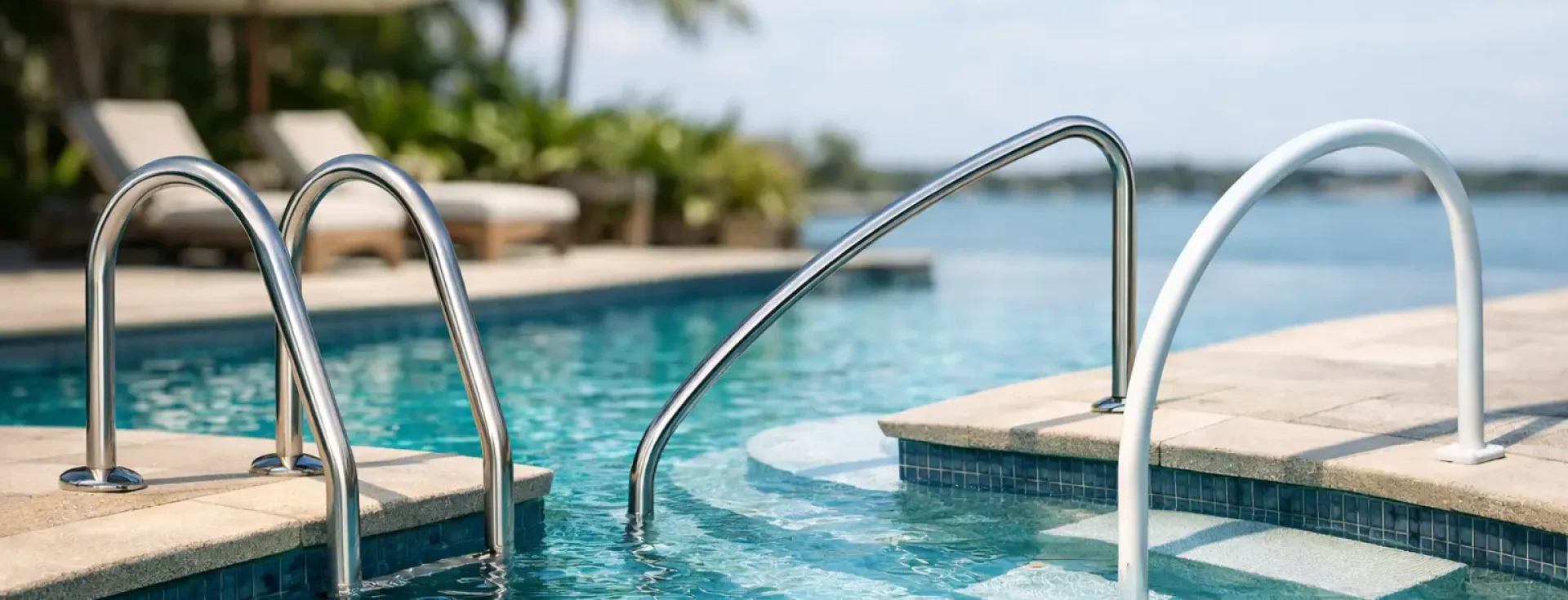
A pool handrail may occupy only a small section of the deck, yet it has a direct effect on how confidently guests enter and leave the water. The best pool handrails combine secure support, corrosion resistance, and a finish that belongs in the overall design of the pool area. For luxury villas, hospitality pools, residential towers, and wellness facilities, this is not a detail to treat as an afterthought.
A poorly selected rail can loosen at the deck, become uncomfortable under the sun, stain surrounding finishes, or look out of place beside premium tile and coping. A professionally specified handrail, on the other hand, provides dependable access while preserving the clean, refined appearance expected from a high-quality aquatic installation.
What Makes a Pool Handrail the Right Choice?
The right handrail is not simply the strongest model in a catalog. It must suit the pool’s users, the deck construction, exposure to chemicals and weather, and the visual standard of the property. A shallow step entry at a private villa has different requirements from a busy hotel pool with frequent guest turnover, just as an indoor spa has different environmental demands from an outdoor pool exposed to heat, salt air, and dust.
Start with the intended purpose. Standard entry rails support swimmers using steps, while longer three-bend or return-style rails can provide more continuous assistance along a deeper entry. Grab rails near the pool edge are useful where users need a stable point of contact before entering, and accessibility-focused configurations may require more carefully planned dimensions and placement.
The most effective solution gives users a natural, secure grip without interrupting circulation around the pool. It should also allow maintenance teams to clean the deck and surrounding waterline areas without creating difficult corners or unstable fittings.
Best Pool Handrails by Material
Material selection is where long-term value is often decided. Pool water treatment, moisture, heat, and frequent hand contact all place pressure on the rail surface and its mounting components.
Marine-Grade Stainless Steel
For premium residential and commercial pools, marine-grade stainless steel is widely regarded as the preferred choice. Its polished or satin finish offers a modern appearance that works particularly well with porcelain decking, natural stone, mosaic finishes, and contemporary architecture. More importantly, the correct stainless steel grade delivers much stronger resistance to corrosion than lower-grade alternatives.
Grade 316 stainless steel is generally the stronger choice for outdoor pool environments because of its enhanced resistance to chlorides. This matters in pools using salt chlorination, locations near the coast, and facilities where cleaning chemicals are used regularly. In Dubai and across the UAE, high temperatures and airborne dust add further reasons to choose durable materials and maintain them correctly.
A mirror-polished rail creates a more decorative statement, while satin stainless steel is often more practical for high-traffic installations because it shows fingerprints and minor surface marks less readily. Both can look exceptional when paired with precision fittings and a well-finished deck.
Powder-Coated and Painted Metals
Powder-coated rails can offer color flexibility, making them useful where a design scheme calls for black, bronze, white, or a custom architectural tone. They can be appropriate for controlled environments, but the quality of the coating and the preparation of the metal beneath it are critical. Once the finish is chipped or damaged, moisture can reach the substrate and lead to corrosion.
For a high-visibility hospitality or luxury residential setting, this option should be selected for its visual purpose rather than assumed to be equal to premium stainless steel in every environment. Frequent inspections are especially valuable around joints, base plates, and areas exposed to pool splash.
Aluminum and Economy Options
Aluminum is lightweight and naturally corrosion resistant in many settings, but it may not provide the same premium feel or rigidity as a properly fabricated stainless steel handrail. Lower-cost rails can also use thinner tubing, inferior anchors, or finishes that deteriorate quickly under demanding pool conditions.
The initial saving may be appealing for a low-use pool, but replacement work can be disruptive and expensive once deck finishes are complete. For properties built around longevity and presentation, investing in quality hardware from the beginning is usually the more efficient decision.
Select the Right Mounting System
A handrail is only as reliable as the system holding it in place. Before choosing a style, confirm whether the deck is new or existing, what material lies beneath the surface finish, and whether waterproofing or structural reinforcement needs protection.
In-Deck Anchors
In-deck mounting uses sleeves or anchors installed within the pool deck. The rail can be removed when necessary, which may be useful for seasonal layouts, deck refinishing, or special events. It also gives a clean result with minimal visible hardware once the rail is in place.
This system requires accurate positioning and adequate support below the finished surface. Improperly installed anchors can allow movement over time, particularly where users apply repeated force while entering the water. A professional installer should assess concrete thickness, reinforcement locations, and the relationship between anchors and waterproofing layers before drilling.
Surface-Mounted Base Plates
Surface-mounted handrails are fixed to the top of the deck with visible flanges or base plates. They are often a practical option for retrofit projects, existing pools, and applications where in-deck sleeves cannot be installed easily. With well-designed covers and quality stainless hardware, a surface-mounted rail can still look refined.
The trade-off is that the mounting plate remains part of the visible deck finish, and the fasteners need careful sealing and inspection. This approach is particularly dependent on the strength of the substrate. Anchoring into weak screed, damaged tile, or insufficient concrete is not an acceptable substitute for proper structural preparation.
Size, Shape, and Placement Matter
A handrail should feel intuitive from the first step. The tubing diameter needs to be comfortable for different hand sizes, while the rail height and reach should support the user’s movement rather than force an awkward stretch. Smooth bends, consistent spacing from the deck, and rounded ends all contribute to comfort and safety.
For step entries, the rail should begin where users naturally need support and extend far enough into the pool to assist with the final transition. A rail that stops too early may look minimal but provide limited functional value. Conversely, an oversized rail in a compact pool can obstruct the entry and make the space feel crowded.
Consider the people using the pool most often. Families with young children, older residents, rehabilitation users, and hotel guests with varying mobility levels benefit from well-planned support points. In commercial settings, accessibility requirements and local codes should be reviewed during design, not after construction is complete.
Pool Chemistry Affects Handrail Life
Even the best pool handrails need the right operating conditions to retain their appearance. Stainless steel is corrosion resistant, not maintenance-free. Persistent chemical imbalance, excessive chlorides, poor ventilation in indoor pools, and residue from cleaning products can all cause staining or surface corrosion.
Regularly rinsing exterior rails with fresh water and wiping them with a soft cloth helps remove chemical deposits and dust. Avoid abrasive pads, strong acids, steel wool, and harsh cleaners that can damage the protective surface layer. If tea staining or discoloration appears, address it early with a suitable stainless steel cleaning process rather than allowing it to spread.
Pool chemistry should be managed within recommended operating ranges, with special attention to pH, sanitizer levels, and salt concentration. This protects far more than the handrail. It supports the lifespan of ladders, light fixtures, fittings, heat equipment, tile grout, and other valuable components throughout the installation.
Why Professional Specification Delivers Better Results
Handrails are often purchased late in a project, after the pool shell, coping, and deck design are already complete. That approach can limit the available mounting options and introduce avoidable installation risk. Early specification allows the rail location, anchors, deck reinforcement, drainage, and visual alignment to be planned as one coordinated detail.
For commercial pools and premium properties, the value of technical guidance is clear. Product selection must account for bather load, environmental exposure, cleaning procedures, deck material, and the appearance expected by owners and guests. Aquatic Pools and Fountains supports this process with high-quality pool accessories, experienced technical input, and installation-focused solutions tailored to each project.
A well-chosen handrail should never distract from the pool. It should make every entry feel more secure, look intentional beside the surrounding finishes, and continue performing through years of daily use. That is the standard worth specifying before the deck is finished.