
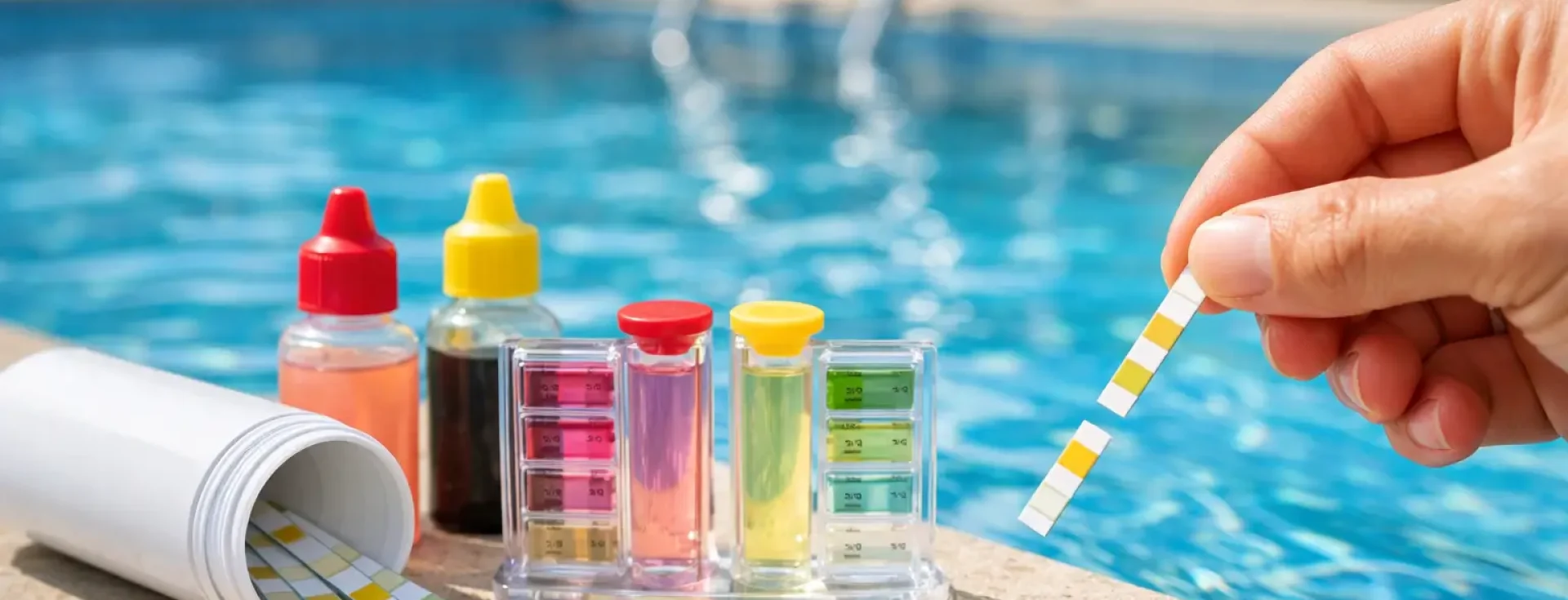
A pool can look perfectly blue while its water chemistry is moving in the wrong direction. In hot climates, heavy bather use, direct sun, dust, and frequent top-ups can change sanitizer levels quickly. The best pool test strips give property owners and facility teams a fast, practical way to see what the water needs before a minor imbalance becomes cloudy water, scaling, corrosion, or an uncomfortable swimming experience.
For villas, hotels, residential communities, and commercial properties, test strips are not a replacement for professional water analysis. They are an essential first line of control. A quality strip provides a dependable daily or several-times-weekly reading, helping operators make measured chemical adjustments and recognize when a more detailed test is required.
What the Best Pool Test Strips Should Measure
Not every strip measures the same parameters. Basic products may only check chlorine and pH, which can be useful for quick checks but leave out chemistry that directly affects water comfort, equipment protection, and sanitizer performance. For a premium pool environment, choose a multi-parameter strip that matches the treatment system and the demands placed on the pool.
The best pool test strips commonly measure free chlorine, pH, total alkalinity, and cyanuric acid, also called stabilizer. Free chlorine indicates the amount of active sanitizer available to protect swimmers. pH affects swimmer comfort, chlorine efficiency, and the risk of corrosion or scale. Total alkalinity acts as a buffer, helping prevent sharp pH swings. Cyanuric acid is particularly relevant in outdoor pools because it protects chlorine from sunlight, although excessive levels can reduce chlorine effectiveness.
For many pools, hardness testing also matters. Calcium hardness that is too low can encourage corrosive water conditions, while excessive hardness can contribute to scale on tiles, heaters, pumps, filters, and decorative fittings. Saltwater pools should use strips that include salt readings or be supported by a dedicated salt test, as the salt cell depends on an appropriate concentration to produce chlorine effectively.
A strip that measures six or seven parameters is often the right choice for a professionally maintained residential pool or a commercial facility. However, more readings do not automatically mean better performance. Select strips with only the parameters your pool team can interpret and manage accurately.
Best Pool Test Strips: Accuracy Starts With Quality
The difference between a premium test strip and a low-grade alternative is not simply the number of color pads. It is the consistency of the reagent pads, the clarity of the color chart, the protection of the packaging, and the manufacturer’s quality control. Vague color blocks and poorly sealed containers create uncertainty at precisely the moment when a clear decision is needed.
Look for strips supplied in moisture-resistant containers with a tight lid and a visible expiration date. Heat and humidity can degrade the reactive pads, so stock should be stored indoors, away from direct sunlight and pool chemicals. This is especially relevant for properties where pool stores, pump rooms, or outdoor cabinets become very warm.
Color charts should be easy to read in natural light. Some strips require an immediate comparison, while others require a short wait period. Neither method is inherently superior, but the instructions must be followed exactly. Reading too early or too late can produce a misleading result.
For facility managers, consistency across the team is equally important. Using one high-quality strip system and one documented procedure makes records easier to compare over time. A sudden change in readings is then more likely to represent a genuine water-quality issue rather than a difference in testing method.
Choosing Strips for Your Pool Type
Pool chemistry changes according to construction, disinfection method, water source, and usage. A strip suitable for a small private pool may not provide enough information for a hotel or a busy residential complex.
For a standard chlorine pool, prioritize free chlorine, pH, total alkalinity, stabilizer, and hardness. Avoid relying solely on total chlorine. Total chlorine includes both effective chlorine and combined chlorine, the latter being associated with the familiar chloramine odor and potential irritation. Knowing free chlorine offers a more useful indication of active sanitation.
For saltwater pools, choose a strip designed for salt systems and continue to test free chlorine, pH, alkalinity, stabilizer, and hardness. A salt chlorinator is a chlorine generator, not a chemistry-free solution. Salt cells, sensors, and pool finishes still need balanced water to perform reliably.
For spas and heated pools, fast and frequent testing is essential. Higher water temperatures can increase sanitizer demand and accelerate chemical changes. Select strips rated for spa use, and verify that their chlorine or bromine scale suits the system in place.
For commercial pools, strips are valuable for operational checks between formal testing intervals. They should support, not replace, professional photometer, digital, or laboratory-grade testing where regulations, high bather loads, and documented water-quality standards apply. The right approach depends on the property’s operating requirements and maintenance protocol.
How to Use Pool Test Strips Correctly
Even the best strip cannot compensate for poor sampling technique. Take the sample from elbow depth, away from return jets, skimmers, chemical feeders, and the pool edge. Water near these areas may not represent the chemistry of the pool as a whole.
Remove one strip with dry hands and close the container immediately. Dip it briefly according to the manufacturer’s instructions, remove it without shaking off excess water unless directed, and hold it level. Compare each pad to the chart at the specified time. A phone timer is a simple way to prevent guesswork.
Do not test immediately after adding chemicals. Allow the circulation system enough time to distribute the product fully, then retest before making another major adjustment. Adding several chemicals based on one questionable reading can create a larger correction problem and put unnecessary stress on pool equipment and finishes.
Record the result, the time, recent chemical additions, and any visible water condition. This small discipline is highly valuable in large properties. It helps maintenance teams identify recurring patterns, such as sanitizer loss after peak use, gradual stabilizer buildup, or pH drift caused by aeration from water features.
When Test Strips Need Professional Support
Test strips are designed for speed and convenience, but certain situations call for more precise analysis. Persistent cloudy water, algae, strong chlorine odor, eye irritation, rapid chlorine loss, scale formation, metal staining, or repeated pH instability should be investigated beyond a strip result.
The same applies when a pool is newly filled, reopened after extended closure, converted to a new disinfection system, or connected to specialized equipment such as heaters, salt chlorinators, UV systems, or automated chemical controllers. These systems benefit from balanced chemistry, and an inaccurate adjustment can affect both performance and service life.
A premium supplier and technical service partner can help verify water readings, identify the underlying cause, and recommend the correct chemicals and equipment settings. Aquatic Pools and Fountains supports this more complete standard of care with quality water-testing solutions, pool chemicals, equipment guidance, and maintenance expertise for residential and commercial installations.
A Smart Buying Checklist
Before purchasing, confirm that the test strips provide the readings your pool actually requires. The following points separate a practical product from one that will sit unused in the pump room:
- Measure free chlorine, pH, alkalinity, stabilizer, and hardness for most outdoor chlorine pools.
- Choose a salt-specific option when operating a saltwater chlorinator.
- Check the expiration date and select sealed, moisture-resistant packaging.
- Make sure the color chart is clear and the testing instructions fit your team’s routine.
Do not purchase an oversized quantity simply because the unit cost appears lower. Fresh strips are more valuable than a large supply that has been exposed to heat or stored beyond its usable date. For a villa, a modest quantity that is replaced regularly is usually sensible. For hotels and property portfolios, planned replenishment and controlled storage provide better value and more dependable readings.
Clear water is the visible result of disciplined testing, proper circulation, effective filtration, and carefully balanced treatment. Keep quality test strips on hand, use them consistently, and treat an unexpected reading as an early opportunity to protect the pool, the equipment, and every person who uses it.