
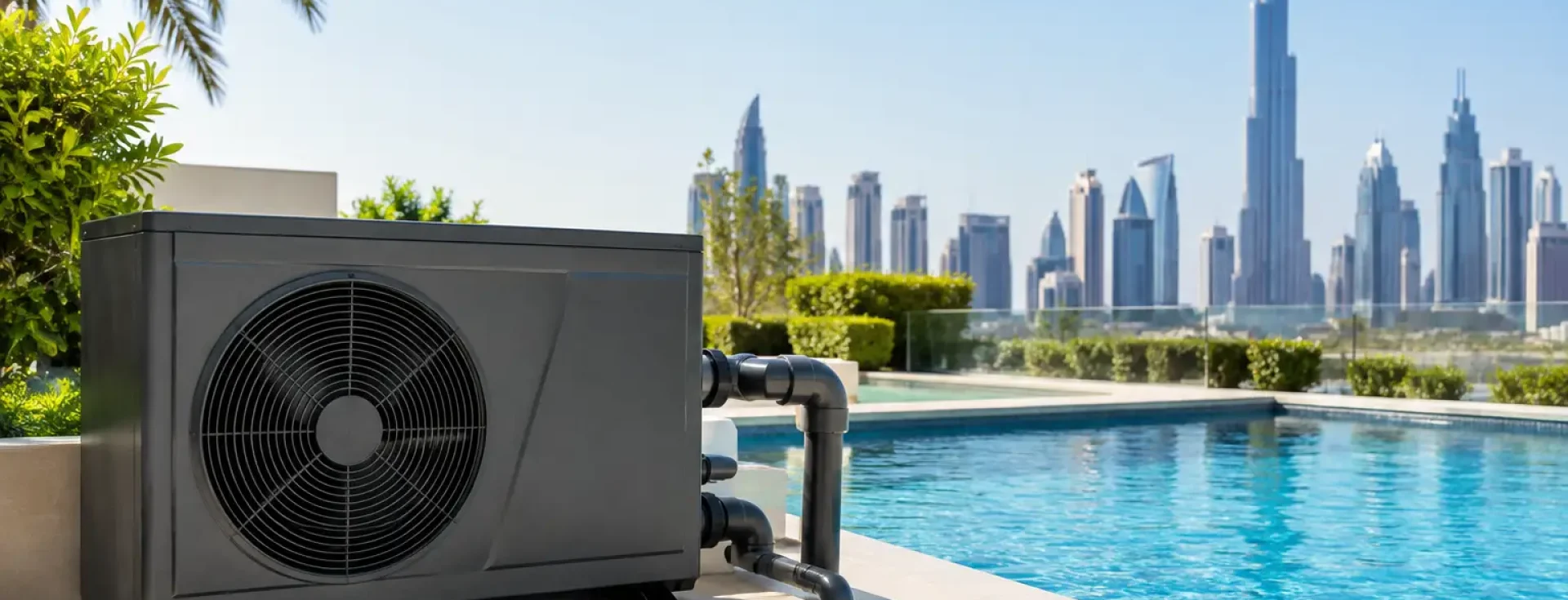
A pool that looks exceptional but cannot be enjoyed for much of the year is an underused asset. The right heater turns a residential pool, hotel deck, or wellness facility into a more consistent, comfortable experience while protecting the premium standard expected of a high-value property.
For villas, hospitality venues, residential developments, and commercial facilities in Dubai, pool heating is not simply a question of adding warmth. It is a technical decision shaped by pool volume, desired water temperature, operating schedule, circulation equipment, installation conditions, and long-term energy expectations. A correctly specified system delivers reliable performance. An undersized or poorly installed unit can create disappointing water temperatures, high running costs, and avoidable service demands.
Why a Pool Heater Matters in Dubai
Dubai is associated with heat, yet pool water can become uncomfortably cool during winter evenings, early mornings, and the cooler months. Wind exposure, shaded areas, large surface water features, and nighttime heat loss can all reduce water temperature faster than many owners expect. This is particularly noticeable in pools designed for early exercise, family use, guest enjoyment, or extended hospitality operating hours.
A pool heater gives the property owner control. Rather than accepting seasonal water conditions, the pool can be maintained closer to a selected comfort range based on how it is used. For a luxury villa, that may mean making morning swims more inviting. For a hotel or residential community, it can support a stronger guest and resident experience across more months of the year.
The value is not only comfort. A heated pool can improve the perceived usability of an outdoor amenity, support premium rental or hospitality positioning, and make a major capital investment work harder. The correct equipment should do this without compromising water quality, circulation performance, or the visual integrity of the pool environment.
Choosing the Right Pool Heater Capacity
Capacity is the starting point of every successful heating project. It is tempting to select a unit based only on pool size, but volume is only one part of the calculation. A technically sound recommendation accounts for the pool’s dimensions, average depth, surface area, target temperature, local seasonal conditions, exposure to wind, and how quickly the owner expects the water to warm.
Surface area often matters more than people assume because heat escapes from the water surface. An infinity-edge pool, a pool in a wind-exposed garden, or a large commercial pool can lose heat at a different rate than a sheltered courtyard pool of similar volume. Water features may also increase heat loss by exposing more water to moving air.
The intended operating pattern is equally important. A pool maintained at a stable temperature requires a different approach from one that is heated only for weekends or special events. Continuous operation can favor an energy-efficient system that maintains temperature gradually. Rapid warm-up requirements may call for a different capacity or heating technology.
A professional site review prevents guesswork. It confirms whether the selected unit can meet demand in realistic conditions, rather than performing well only under ideal assumptions. For premium installations, correct sizing is one of the clearest ways to protect both comfort and operating efficiency.
Heat Pumps for Efficient Year-Round Comfort
For many Dubai properties, a heat pump is a strong choice because it transfers heat from ambient air into the pool water rather than generating all heat directly. This approach can offer efficient operation when properly sized and installed in an area with sufficient airflow.
Modern heat-cool pumps can also provide cooling capability, which is valuable for pools that become excessively warm during peak summer conditions. This gives owners more control over water temperature throughout the year and is especially relevant for hospitality pools, high-use villas, and properties where guest comfort is a constant priority.
Heat pumps are not a one-size-fits-all solution. Their performance depends on air temperature, airflow, placement, electrical supply, and the condition of the pool circulation system. Noise considerations also matter for villa gardens, balconies, and hotel leisure areas. Selecting a premium unit and positioning it correctly are both essential.
Gas and Electric Heating Options
Gas pool heaters are often considered where fast temperature recovery is a priority. They can be useful for projects with irregular usage, large heating loads, or a need to bring water to temperature quickly. However, fuel availability, ventilation, operating costs, safety requirements, and maintenance planning must be assessed before selection.
Electric resistance heaters can suit smaller applications or specific site conditions, but they may carry higher operating costs when used for large pools or frequent heating. Their suitability depends on the electrical infrastructure available and the property’s expected usage pattern.
The best option is not automatically the least expensive unit to purchase. It is the system that matches the pool, the property infrastructure, the owner’s expectations, and the long-term operating plan. A lower initial price can become costly if the equipment is inefficient, undersized, difficult to service, or unsuitable for the site.
Installation Quality Determines Performance
Even world-class equipment cannot compensate for poor installation. A pool heater must be integrated correctly with the pump, filter, valves, bypass arrangement, electrical supply, and control system. Water flow must remain within the manufacturer’s recommended range, and the installation should allow technicians to inspect and service the equipment without disruption.
For air-source units, location is critical. The unit needs clear airflow and adequate spacing around it. Enclosing it tightly, placing it beside a heat-trapping wall, or allowing discharged air to recirculate can reduce efficiency and strain the system. Drainage should also be planned carefully, particularly for heat pumps that produce condensate during normal operation.
The equipment should be protected from unnecessary exposure while still remaining accessible. On luxury properties, visual integration matters as much as technical performance. Thoughtful placement, screening, pipe routing, and acoustic planning can preserve a clean architectural finish without compromising service access.
For commercial pools and hotels, installation planning should also consider operational continuity. Equipment rooms, control access, backup provisions, and maintenance windows need to reflect the demands of the facility. A heating system is part of the wider aquatic plant room, not an isolated purchase.
Reduce Heat Loss Before Increasing Heating Capacity
The most effective heating strategy often begins with retention. A quality pool cover can significantly reduce evaporation and nighttime heat loss, allowing the heater to maintain the desired temperature with less effort. This is particularly valuable for outdoor pools that are unused overnight.
Pool covers also help reduce water loss and may limit the amount of debris entering the pool. For commercial properties, the right cover system must be selected around safety, daily staff workflow, storage, and the shape of the pool. For villas, ease of handling often determines whether the cover is used consistently.
Other design choices can affect heating demand. Windbreaks, landscaping, shade structures, pool orientation, and water-feature operating schedules all influence heat retention. A fountain or cascade may be visually impressive, but running it continuously during cooler evenings can increase heat loss. The answer is not to sacrifice design – it is to operate the feature intelligently and specify the heating system accordingly.
Water Chemistry and Maintenance Protect the Investment
Pool heating equipment depends on balanced water. Poor chemistry can cause scale formation, corrosion, reduced heat transfer, and premature component wear. This applies to all heating technologies, especially where high temperatures, salt systems, or intensive commercial use place greater demands on equipment.
Routine checks should include water balance, sanitizer levels, filter condition, circulation flow, and heater performance. A blocked filter or weak pump can restrict flow through the heater and trigger faults or reduce heating output. Maintaining the pool as a complete system is more effective than treating the heater as a separate appliance.
Professional maintenance is especially valuable for commercial pools, residential towers, and hospitality sites where downtime affects residents, guests, and the property’s reputation. Scheduled inspection allows technicians to identify small issues before they become costly interruptions.
Aquatic Pools and Fountains supports premium pool environments with high-quality heating solutions, technical guidance, installation expertise, and dependable maintenance support. The goal is not simply to supply equipment, but to specify a system that performs confidently within the demands of the complete aquatic installation.
A pool heater should feel invisible in daily use: the water is comfortable, the equipment operates efficiently, and the surrounding space retains its elegance. That result begins with the right assessment – before equipment is selected, not after performance falls short.