
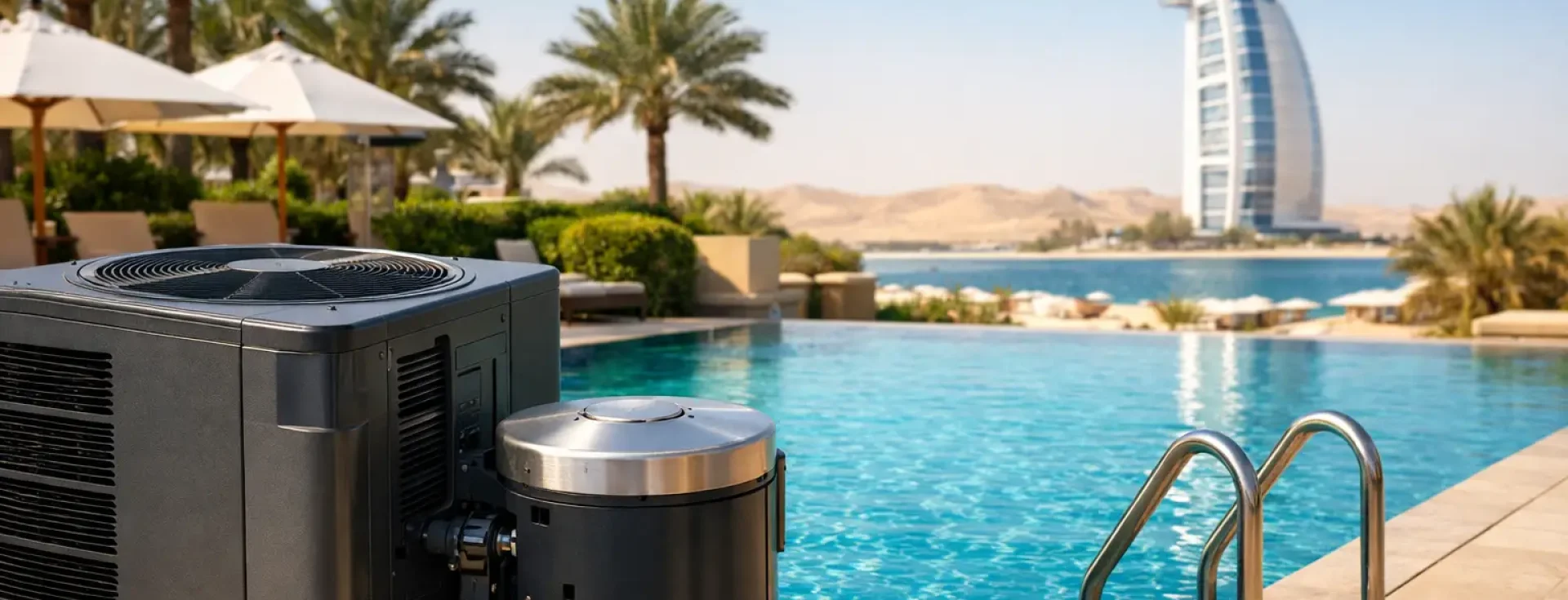
A pool can look exceptional under the Dubai sun and still sit unused for much of the year if the water is uncomfortable. The right pool heater changes that equation, extending practical swimming hours, supporting guest satisfaction, and protecting the value of a premium aquatic investment. For villas, hotels, residential towers, and leisure facilities, heating is not simply an accessory. It is part of a complete water-comfort system.
Selecting the correct equipment requires more than choosing the highest output rating. Pool volume, desired water temperature, operating schedule, site conditions, and energy priorities all affect the result. A properly specified system delivers stable performance without excessive running costs or unnecessary strain on the pool’s circulation equipment.
Why a Pool Heater Matters in the UAE
The UAE has long, warm seasons, but pool water does not remain consistently comfortable just because the air temperature is high. Cooler nights, winter months, wind exposure, shaded areas, and large water volumes can reduce water temperature quickly. Early-morning swimmers, children, hotel guests, and fitness-focused residents often expect water that is ready to use rather than water that needs several days to warm up.
A quality pool heater provides control. Instead of relying on weather conditions, property owners and facility managers can maintain a defined temperature range suited to the pool’s purpose. A private villa pool may be set for relaxed family use, while a hotel or commercial facility may need dependable warmth throughout the day to meet guest expectations.
Heating also improves the return on investment from the pool itself. A pool that remains comfortable for more months of the year becomes a more valuable amenity, whether it is part of a luxury residence, a hospitality property, or a residential development competing for tenants.
Choosing the Right Pool Heater Capacity
Capacity is the first technical decision, and it should never be based on guesswork. An undersized unit may run continuously yet struggle to reach the required temperature. An oversized system can increase upfront cost and may not deliver proportional efficiency if the pool is poorly insulated or left uncovered.
A professional assessment should account for the pool’s water volume, surface area, depth profile, location, and desired temperature rise. It should also consider whether the pool is indoors or outdoors. Outdoor pools lose heat through evaporation, especially when exposed to wind. Indoor pools benefit from reduced environmental loss but may require ventilation and humidity planning as part of the wider project.
Usage patterns matter as much as the dimensions. A villa owner who uses a pool primarily on weekends may prioritize fast heat-up performance. A hotel, health club, or community pool that operates daily needs a system designed for sustained, predictable output. The best solution is one that aligns heater capacity with actual demand rather than a generic sizing rule.
Temperature Expectations and Real Conditions
Most comfort-focused pools are maintained within a moderate temperature range, but the right setting depends on the users and application. A lap pool may be kept cooler than a children’s pool or a therapy-oriented installation. Raising water temperature even a few degrees can materially affect energy use, particularly in larger commercial pools.
The target should be realistic and stable. Constantly increasing the thermostat to compensate for heat loss is not an efficient strategy. Correct sizing, adequate circulation, and a suitable cover typically produce better results than simply selecting a larger heater.
Heat Pump Systems for Efficient Year-Round Use
For many UAE applications, a heat pump is a highly effective pool heating solution. Rather than generating heat directly, it transfers available heat from the surrounding air into the pool water. This approach can provide attractive operating efficiency, especially when matched correctly to the pool size and climate conditions.
Premium heat-cool pumps offer an additional advantage: they can help manage water temperature during extremely hot periods. This is particularly useful for pools exposed to direct sunlight, where water can become less refreshing than intended during peak summer conditions. A heat-cool solution gives property owners greater command over comfort across the calendar.
However, efficiency depends on installation quality and operating conditions. The unit needs appropriate airflow, correctly sized plumbing, sound hydraulic integration, and a suitable electrical supply. Placing equipment in a restricted or poorly ventilated enclosure can reduce performance and create avoidable service issues. Noise considerations should also be addressed early, especially for villas where equipment rooms are close to outdoor living areas.
The System Around the Heater Is Equally Important
A pool heater does not work in isolation. Its performance is tied directly to the circulation pump, filter, pipework, valves, automation, and water-treatment equipment. A premium heater connected to an inadequate circulation system will not deliver the consistent result the property owner expects.
Water flow must remain within the manufacturer’s required range. Insufficient flow can trigger faults or limit heat transfer, while excessive flow can affect operational efficiency and equipment longevity. Correct bypass arrangements, isolation valves, and filtration placement allow technicians to regulate flow, simplify maintenance, and protect the heater during servicing.
Water balance also deserves attention. Poorly maintained water chemistry can contribute to scale formation, corrosion, and component wear. This is especially relevant in high-use commercial pools, where chemical demand and bather load can change quickly. Consistent testing, calibrated dosing, and professional maintenance help protect both the heater and the wider pool system.
Reduce Heat Loss Before Increasing Energy Use
The most cost-effective heat is often the heat that never escapes. For outdoor pools, evaporation is one of the largest sources of heat loss. A high-quality pool cover can substantially reduce that loss while also limiting debris, reducing water evaporation, and easing the load on chemical treatment systems.
Site design can make a meaningful difference as well. Windbreaks, thoughtful landscaping, and equipment placement can support more efficient operation without compromising the visual standards of a luxury property. For new-build developments, heater planning should begin during the design stage rather than after the pool is complete. Early planning allows for correct electrical provisions, pipe sizing, drainage, ventilation, and discreet equipment positioning.
Commercial properties should also consider automation. A programmed control system can maintain approved temperatures, schedule operation around facility hours, and provide clearer visibility into system performance. This level of control helps facility managers balance guest comfort with responsible energy management.
Installation Quality Protects Long-Term Performance
Pool heating equipment is a long-term investment, and installation standards are central to its reliability. Correct plumbing connections, electrical protection, drainage, ventilation, and commissioning determine whether a system performs as specified from the first season onward.
Professional commissioning is more than switching the unit on. It includes confirming water flow, checking operating pressures, verifying temperature sensors, reviewing control settings, and ensuring the heater communicates correctly with the circulation and automation equipment. For commercial projects, documentation and maintenance planning should be established at handover so operational teams understand the system’s requirements.
Aquatic Pools and Fountains supports premium pool projects with equipment selection, technical guidance, installation coordination, and ongoing maintenance support. This full-scope approach is particularly valuable when a heating system must integrate with existing pumps, filters, disinfection equipment, and automated controls.
Maintenance Keeps Heating Costs Under Control
A well-maintained heater is more likely to operate efficiently and provide consistent water temperatures. Routine service should include cleaning the surrounding equipment area, checking water flow, inspecting plumbing connections, reviewing electrical components, and confirming that sensors and controls are operating accurately.
For heat pumps, maintaining clear airflow around the unit is essential. Leaves, dust, stored materials, and restricted ventilation can reduce efficiency. In the UAE, dust accumulation can be significant, making planned inspection and cleaning especially worthwhile.
Facility managers should also watch for signs that require attention: longer heat-up times, unstable temperatures, unusual noise, repeated error messages, leaks, or changes in energy consumption. Addressing these issues early can prevent downtime during high-demand periods and reduce the likelihood of more extensive repairs.
A Better Decision Starts With the Whole Pool
The strongest pool heating result comes from looking beyond the heater itself. Consider the pool’s purpose, water volume, exposure, operating hours, circulation system, cover strategy, and long-term maintenance plan before selecting equipment. That level of planning produces a pool environment that feels as refined and reliable as the property around it.
When water comfort is treated as a complete system rather than a last-minute upgrade, owners can enjoy a pool that is ready for use when they are – not only when the weather allows it.