
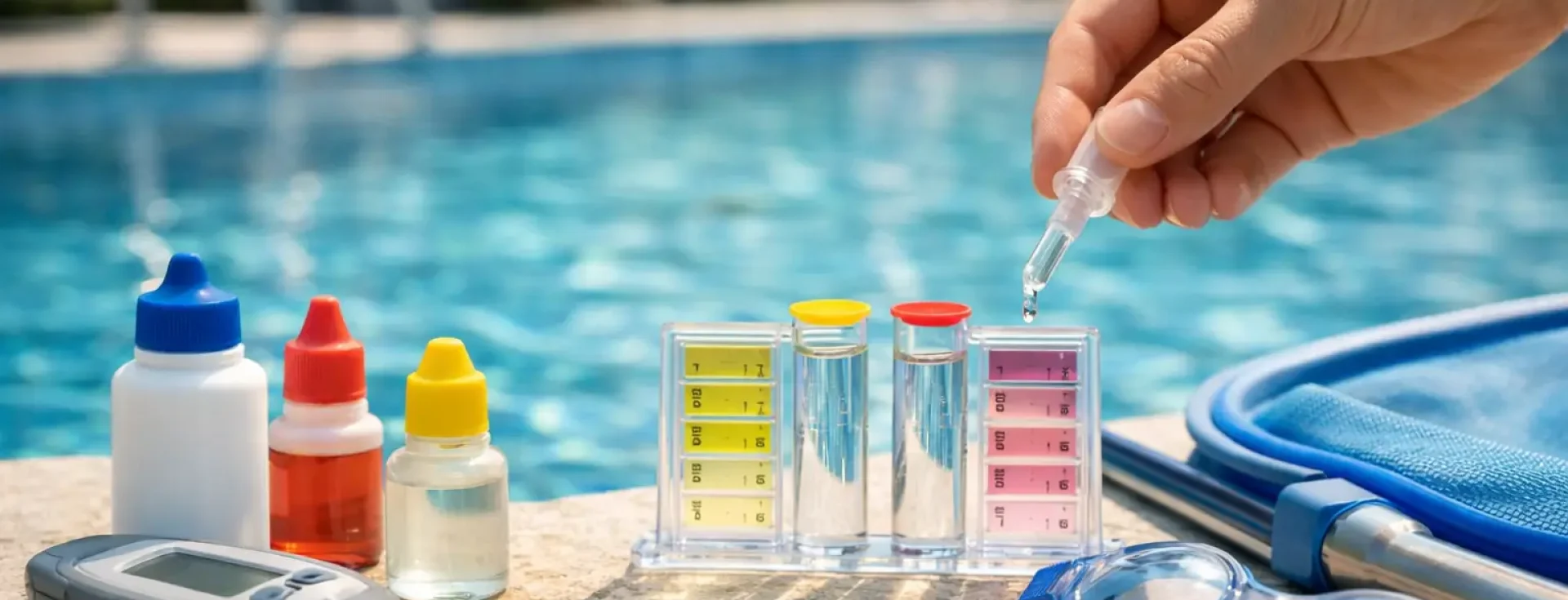
A pool can look clear and still be out of balance. Early corrosion at a heater, rough scale on tile, chlorine odor, irritated eyes, and recurring algae are often water-chemistry issues hiding behind an attractive surface. Knowing how to test pool water gives property owners and facility teams the information needed to protect swimmers, preserve premium equipment, and avoid costly corrective treatment.
For villas, hospitality pools, residential towers, and high-use commercial facilities, testing should be treated as a routine operating standard, not a reaction after the water turns cloudy. The right method is quick, repeatable, and based on reliable readings rather than guesswork.
What You Need to Test Pool Water Properly
Pool test strips are convenient for a fast daily check, particularly when a maintenance team needs a quick indication of sanitizer and pH. Their trade-off is precision. Lighting, damp hands, expired strips, and subjective color matching can all affect the result.
For more dependable decisions, use a quality liquid reagent kit or a digital photometer. Liquid kits are practical for many residential pools and provide clearer readings for free chlorine, total chlorine, pH, total alkalinity, calcium hardness, and cyanuric acid. Digital photometers are well suited to commercial properties and premium installations where consistent records, accurate dosing, and equipment protection are priorities.
Use a clean sample container and check expiration dates before testing. Old reagents and strips can create a false sense of control, which is more dangerous than recognizing that a reading is unknown.
How to Test Pool Water: Take a Representative Sample
Collecting the sample correctly is the first step. Switch on the circulation system and allow it to run long enough for the water to mix thoroughly. Then take the sample from elbow depth, typically 12 to 18 inches below the surface, and away from return jets, skimmers, chemical feeders, and the pool edge.
Do not test water immediately after adding chlorine, acid, alkalinity increaser, or other treatment products. Give the system time to circulate according to the product instructions. A sample taken beside a feeder or shortly after dosing may show an extreme reading that does not represent the rest of the pool.
If you use test strips, dip one briefly, remove it without shaking it aggressively, and compare the pads to the chart at the exact time specified. With a liquid kit, fill the test cell to the marked line, add the correct number of drops, and read the color against a white background. Digital instruments should be rinsed, calibrated where required, and used with clean cuvettes.
For large pools or facilities with multiple bodies of water, test each pool, spa, fountain, or water feature independently. Shared equipment does not always mean identical chemistry, especially where water temperatures, bather loads, or circulation patterns differ.
The Readings That Matter Most
A complete test can include several measurements, but a few readings determine whether the water is sanitary, comfortable, and compatible with pool finishes and equipment.
Free chlorine and combined chlorine
Free chlorine is the active sanitizer available to control bacteria, organic contaminants, and algae. Most chlorine pools perform well with free chlorine in the 1 to 3 ppm range, though the appropriate level depends on cyanuric acid concentration, bather load, local requirements, and the disinfection system in use.
Total chlorine includes both free chlorine and combined chlorine. Combined chlorine is chlorine that has already reacted with contaminants and is less effective. A noticeable “chlorine smell” often signals chloramines, not excessive free chlorine. If combined chlorine rises above approximately 0.5 ppm, the pool may need oxidation or shock treatment selected for the pool’s equipment and operating conditions.
pH and total alkalinity
pH measures whether pool water is acidic or basic. A target range of 7.2 to 7.6 is commonly recommended. Within that range, chlorine works efficiently, swimmers are more comfortable, and surfaces are less likely to suffer etching or scale formation.
Total alkalinity acts as a buffer that helps prevent pH from moving too quickly. A common target is 80 to 120 ppm, but the ideal number can vary by sanitizer type and water source. Low alkalinity allows pH to swing unpredictably. High alkalinity can make pH difficult to lower and can contribute to cloudy water or scale.
Calcium hardness
Calcium hardness is especially significant for plaster, tile, stone, and other premium finishes. Water with too little calcium may become aggressive and draw minerals from cementitious surfaces or damage metal components. Excessive calcium can create scale on tiles, heaters, salt cells, filters, and plumbing.
Many plaster and concrete pools target roughly 200 to 400 ppm, while vinyl-lined pools may operate at lower levels. The correct range depends on the pool finish, water temperature, total alkalinity, and the broader saturation balance. A professional evaluation is valuable when scale or surface etching appears.
Cyanuric acid
Cyanuric acid, often called stabilizer or conditioner, protects chlorine from rapid sunlight loss in outdoor pools. For many traditionally chlorinated pools, 30 to 50 ppm is a workable range. Saltwater pools may require a higher concentration, commonly 60 to 80 ppm, based on the equipment manufacturer’s guidance.
More stabilizer is not always better. Excess cyanuric acid reduces chlorine’s effectiveness and can make routine sanitation difficult. Because it does not evaporate, lowering an overly high reading often requires partial water replacement.
Adjust Chemistry in the Right Order
A pool is a connected water system. Changing one parameter can influence another, so avoid adding several corrective chemicals at once. Test, make one measured adjustment, circulate, and retest before moving to the next issue.
A sensible order is to address total alkalinity first, then pH, then sanitizer level. After those core readings are stable, review calcium hardness and cyanuric acid. This sequence reduces the risk of chasing numbers and helps prevent unnecessary chemical use.
Always add chemicals according to the manufacturer’s dosing instructions and the actual pool volume. Estimate is not good enough for a large residential or commercial pool. An incorrect volume calculation can lead to under-treatment, wasted chemicals, or aggressive water that damages finishes and mechanical equipment.
Never mix chemicals together, never add water to acid, and never store incompatible products side by side. Apply treatments with the circulation system operating unless the product instructions state otherwise. For premium installations, chemical handling and storage should be part of a controlled maintenance process, not an improvised task.
How Often Should You Test a Pool?
Testing frequency depends on use, weather, water temperature, and the type of disinfection system. A lightly used residential pool may only need a full chemistry check once or twice a week, with free chlorine and pH checked more often. A hotel, community, or high-traffic pool should typically be tested at least daily and may require multiple checks throughout operating hours.
Test after heavy rain, a dust event, a pool party, unusual water loss, equipment service, or an algae treatment. High temperatures and direct sun can consume sanitizer quickly. In hot climates, leaving water unchecked for even a few days can turn a minor imbalance into a filtration, staining, or sanitation issue.
Keep a simple log of dates, readings, chemicals added, water temperature, and any unusual conditions. This record helps identify patterns, such as consistently rising pH, rapidly falling chlorine, or recurring calcium buildup. It also gives facility managers a clear basis for maintenance decisions and service planning.
When Testing Reveals a Bigger Equipment Issue
Balanced chemistry cannot compensate for poor circulation, a blocked filter, a failing pump, or an undersized sanitation system. If chlorine demand remains high despite proper treatment, if water stays dull after balancing, or if pressure and flow are inconsistent, inspect the mechanical side of the installation.
Filter condition, pump run time, valve positions, automated dosing equipment, salt cells, UV systems, and heaters all influence water quality. This is where professional technical support becomes valuable: the correct solution may be a calibration, a circulation adjustment, or a component replacement rather than additional chemicals.
Aquatic Pools and Fountains supports property owners and commercial operators with quality testing systems, treatment products, circulation equipment, and technical maintenance expertise for demanding aquatic environments. A precise test result is only useful when it leads to the right corrective action.
Clear water is the visible result. Consistent testing is the discipline behind it, protecting the comfort, appearance, and long-term performance that a well-designed pool is expected to deliver.