
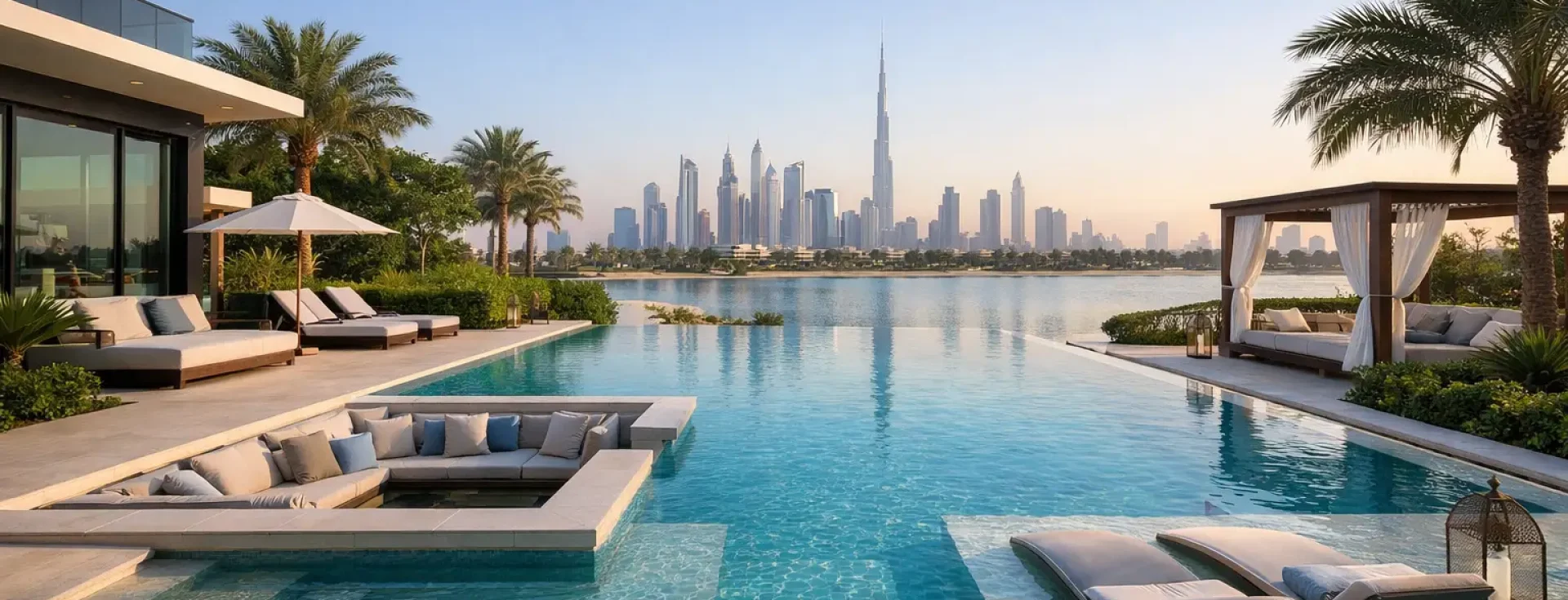
A luxury pool is no longer treated as a separate backyard feature. For premium villas, hospitality venues, and commercial properties, luxury pool design trends now center on creating a complete water environment that supports architecture, entertaining, wellness, and long-term asset value. In Dubai, where outdoor living is central to the property experience, the strongest projects combine visual impact with equipment selected for heat, intensive use, and dependable maintenance.
The most successful designs are not driven by one statement finish or a passing social media look. They begin with a clear understanding of how the pool will be used, how it connects to the property, and what is required to keep the water clear, comfortable, and efficient throughout the year.
Luxury Pool Design Trends That Add Lasting Value
Architectural integration over standalone pools
The defining trend in premium pool design is integration. Rather than placing a conventional rectangle beside the house, designers are extending the property’s architectural language into the water. Clean linear pools reinforce contemporary villas, while curved outlines can soften landscaped hospitality spaces. Coping, decking, wall cladding, and waterline tile are specified as one material palette instead of separate choices.
This approach can make a pool feel larger and more intentional, particularly where outdoor space is limited. It also requires careful coordination. A very dark finish may deliver a dramatic mirror-like surface, but it can absorb more heat and make minor debris more visible. Pale finishes create a bright resort effect, yet may require more attention to grout selection and surface cleaning. The right choice depends on sun exposure, surrounding materials, and the desired water color.
Resort-style edges and visual continuity
Infinity edges remain a premium choice where a pool overlooks a garden, skyline, waterfront, or lower terrace. The effect depends on exact structural levels, a properly sized balance tank, and reliable circulation. It is a technical feature as much as a visual one, and underspecified equipment can compromise both the water level and the finished appearance.
For properties without a view line to frame, perimeter-overflow pools offer a refined alternative. Water sits close to the deck level and flows evenly into a concealed channel, producing a calm, architectural surface. This design is especially effective in hotels, residential towers, and formal villa settings because it creates a polished, high-end visual from every angle.
The trade-off is that overflow and infinity systems need precise hydraulic design, accessible drainage channels, and consistent maintenance. They should be planned early, not added after the pool shell and surrounding hardscape are complete.
Sun shelves, integrated seating, and social zones
Luxury is increasingly measured by how comfortably a pool can be used throughout the day. Wide tanning ledges, shallow sun shelves, submerged benches, and integrated spa zones are now common in premium residential projects. These areas make the pool more versatile for families and entertaining, allowing guests to sit in the water without swimming.
A sun shelf can accommodate loungers or provide a safe shallow play area, while a submerged bench encourages conversation and creates a natural transition between the deck and deeper water. In commercial settings, these features can elevate the guest experience, although designers must consider bather load, circulation patterns, and safety requirements.
Hydrotherapy features also continue to grow in demand. Targeted jets, air blowers, and heated spa sections can turn a beautiful pool into a daily wellness amenity. In the UAE climate, heat-cool pumps are particularly valuable because comfort is not only a winter consideration. The ability to moderate water temperature during hotter months can extend practical pool use and protect the guest experience.
Water Features Are Becoming More Deliberate
Decorative water is moving away from oversized, purely ornamental installations toward features that complement the architecture. Sheer descents, slim scuppers, rain curtains, deck jets, and wall-mounted spillways can add movement and sound without overwhelming the setting. A carefully positioned fountain can also define an arrival court, lobby, courtyard, or landscaped retail zone.
The best feature is not always the loudest or most complex one. A fountain near guestrooms or a villa’s primary seating area should be selected with sound levels in mind. Wind direction, splash zones, and evaporation are equally important in exposed outdoor locations. Every water feature needs a practical plan for filtration, pumping, water treatment, and service access.
For large commercial properties, independent systems may be preferable for pools and fountains. This gives facility teams better control over water quality, operating hours, and maintenance without affecting adjacent aquatic elements.
Lighting Designed for Mood and Safety
Underwater LED lighting has developed into a core part of luxury pool design rather than an afterthought. High-quality LED fixtures can define steps, benches, pool walls, and water features while reducing energy demand compared with older lighting technologies. Warm white lighting creates a sophisticated hotel-inspired atmosphere, while controlled color-changing systems can support events and seasonal programming.
The key word is controlled. Too many colors or poorly positioned lights can make an expensive pool look distracting after dark. For most luxury villas and hospitality spaces, a restrained lighting plan delivers stronger results: clear illumination on entry points, soft wash lighting through the water, and carefully placed accent lighting on fountains or landscape features.
Safety remains essential. Steps, depth transitions, handrails, and deck edges need to be visible without introducing glare. Professional electrical installation, correctly rated fittings, and accessible service points are non-negotiable for reliable operation.
High-Performance Equipment Is Part of the Design
A premium finish cannot compensate for poor water circulation. In Dubai’s high temperatures, equipment selection directly affects clarity, comfort, energy consumption, and the longevity of finishes. Variable-speed pumps, correctly sized filters, automated water testing, and dependable disinfection systems should be considered part of the design specification from the outset.
Variable-speed pumps are a particularly strong choice for luxury residential and commercial pools because they can adjust flow according to filtration, water-feature operation, heating or cooling demand, and cleaning cycles. They may cost more initially than basic equipment, but the operational benefits can be meaningful over time, especially for pools with multiple features.
Disinfection should match the property’s usage profile. Salt chlorination can provide a softer-feeling swimming experience for private villas, while commercial pools may need a more comprehensive treatment strategy that supports higher bather loads and local compliance requirements. UV and ozone systems can complement primary disinfection, helping reduce chloramine formation and improve water quality, but they do not eliminate the need for correct chemical control.
At Aquatic Pools and Fountains, the most effective premium installations are approached as complete systems, with pumps, filtration, lighting, water treatment, fittings, and maintenance access planned together rather than sourced in isolation.
Automation for confident daily operation
Smart controls are increasingly expected in high-value properties. Automated systems can manage filtration schedules, lighting scenes, temperature settings, water features, and certain water-quality functions from a central controller. This is useful for villa owners who travel frequently, as well as facility managers responsible for multiple pools across a development.
Automation should simplify operation, not create unnecessary complexity. A system is only as valuable as its setup, commissioning, and ongoing support. Controls must be intuitive for the daily operator, and there should always be a clear manual override for essential equipment.
Sustainable Choices Without Compromising the Experience
Sustainability in luxury pool design is less about reducing the pool to a basic utility and more about preventing waste while maintaining premium performance. Energy-efficient pumps, LED lighting, pool covers, optimized filtration schedules, and leak monitoring all support lower operating demand. These choices are practical, not decorative, and they can help protect a property’s long-term operating budget.
Water conservation deserves particular attention in hot climates. Reducing unnecessary splashing, controlling water-feature run times, maintaining correct water levels, and addressing leaks promptly can limit avoidable loss. A pool cover may not suit every architectural concept, but it can be highly beneficial for private pools when the property is unoccupied or the pool is used seasonally.
Material durability matters as well. Premium tiles, corrosion-resistant fittings, quality grilles, and equipment designed for demanding conditions reduce the risk of premature replacement. The lowest initial purchase cost rarely represents the best value for a luxury asset.
Designing for Maintenance From Day One
The least visible trend may be the most valuable: serviceable design. Equipment rooms need sufficient ventilation, drainage, lighting, and working clearance. Pumps, filters, dosing equipment, valves, and control panels should be accessible without removing finished walls or disrupting guest areas. Fountain equipment requires the same discipline.
A well-designed plant room protects the visual investment outside it. When technicians can inspect, clean, and repair equipment efficiently, the pool is more likely to maintain its intended water level, finish quality, and operating performance. For commercial sites, planned maintenance also helps avoid costly downtime during peak occupancy.
The strongest luxury pool projects pair distinctive design with equipment that can perform under real conditions. Before choosing the final tile or water feature, establish the intended use, operating expectations, and maintenance plan. That early technical clarity gives every visible design decision a better chance to remain elegant for years.