
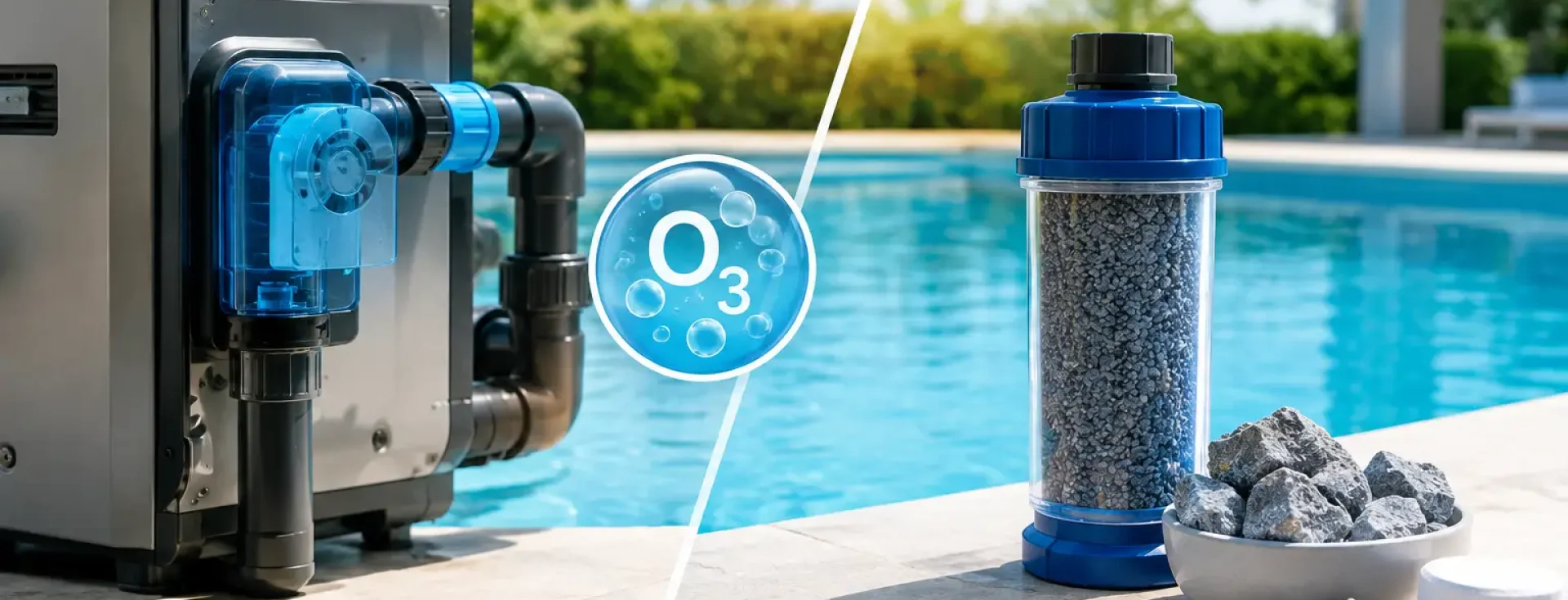
A luxury pool can look immaculate while carrying a water-quality problem that is not visible from the deck. For villa owners, hotel operators, and facility managers, the question of ozone versus mineral sanitizers is not simply about reducing chemical use. It is about selecting a treatment approach that protects swimmers, preserves expensive finishes and equipment, and performs reliably through high water temperatures, intense sun, and changing bather loads.
Both systems can improve the swimming experience when engineered correctly. Neither should be treated as a complete replacement for a properly sized circulation system, filtration, balanced water chemistry, and an approved primary sanitizer. The right choice depends on how the pool is used, how much control the operator requires, and whether the installation is residential, hospitality-led, or commercial.
Ozone Versus Mineral Sanitizers: The Core Difference
Ozone and mineral systems work in very different ways. Ozone is a powerful oxidizer generated on site. A pool ozone unit typically converts oxygen into ozone gas, injects it into the return line or a dedicated contact chamber, and allows it to react with contaminants before treated water returns to the pool. It is highly effective at breaking down organic waste, including oils, lotions, and compounds that contribute to chloramine odor.
Mineral sanitizers release controlled amounts of antimicrobial metals into the water, most commonly silver and copper. Silver is valued for bacterial control, while copper helps suppress algae. Depending on the system, minerals may be delivered through a replaceable cartridge or an electronic ionizer with metal electrodes.
The key distinction is residual protection. Ozone acts quickly but does not remain in the pool water for long. Minerals remain in the water longer, but they act more gradually and are not a dependable stand-alone answer for rapid disinfection under heavy use. In most professionally managed pools, both approaches are paired with a measured chlorine or bromine residual that remains available throughout the basin.
What Ozone Does Best
Ozone is particularly strong where water receives a high organic load. Think of a hotel pool after a busy afternoon, a family villa pool used daily by children, or a temperature-controlled indoor pool where chloramine smell can become noticeable. By oxidizing contaminants before chlorine has to do all the work, ozone can reduce the chlorine demand and improve water clarity.
This can produce a more refined swimmer experience. Many operators notice less of the sharp “chlorine” smell that guests associate with a poorly maintained pool. In reality, that odor is often caused by chloramines, formed when chlorine reacts with sweat, body oils, and other organics. Effective ozone treatment can reduce those compounds, although it does not eliminate the need for good filtration, periodic testing, and appropriate sanitizer levels.
For premium installations, ozone also offers an operational advantage: it is automated. Once the generator, injector, plumbing, and contact arrangement are correctly selected, the system works with the circulation schedule rather than relying on daily cartridge replacement. However, performance depends on proper hydraulic design. An undersized ozone generator or poor gas-to-water contact will not deliver the expected improvement.
Ozone considerations for UAE pools
In Dubai and across the UAE, warm water and strong sunlight can accelerate sanitizer consumption. Outdoor pools also receive fine dust, sunscreen, and frequent organic loading from bathers. Ozone can help manage that demand, but it must be matched to the pool’s flow rate and run time. It is most effective when the circulation system provides sufficient contact time and the filtration plant is maintained to premium standards.
Ozone equipment also requires professional commissioning. Ozone gas must be injected safely, excess gas must be controlled, and materials in contact with ozone must be compatible with it. For commercial or hospitality facilities, these details are essential rather than optional.
Where Mineral Systems Make Sense
Mineral sanitizers appeal to pool owners who want a lower-chemical routine and a simple, visible way to support water quality. They are often well suited to lightly to moderately used residential pools, especially where the owner wants assistance with algae control and is committed to regular water testing.
Copper can be effective against algae, which is valuable in warm, sun-exposed pools. Silver contributes antimicrobial support, and many owners find that a correctly managed mineral system allows them to operate with a lower chlorine level than a conventional chlorine-only pool. The water may feel less harsh, provided the chemistry is balanced.
The important qualification is that minerals work best as a supplementary system. They do not oxidize bather waste with the speed of ozone, and they do not provide the immediate, broad-spectrum residual protection required for many higher-use pools. A controlled chlorine level remains the practical foundation for sanitation in most applications.
Mineral systems need disciplined monitoring. Excess copper can create staining on plaster, grout, fittings, and light-colored surfaces. It can also cause hair discoloration in certain water conditions. High calcium levels, elevated pH, and poor balance can make these risks more likely, which matters in regions where water hardness requires close attention.
Cartridge systems and ionizers
A cartridge-based mineral system is typically straightforward to operate. The cartridge is installed in the plumbing line and replaced according to the manufacturer’s capacity rating and the pool’s actual use. It can be an attractive option for homeowners who want predictable maintenance intervals.
Electronic ionizers use copper and silver electrodes, releasing ions as water passes through the cell. They allow more adjustment, but they also need inspection for scale buildup and periodic electrode replacement. For properties with hard water, the maintenance team should watch the cell closely and keep pH, total alkalinity, and calcium hardness within the specified operating range.
Comparing Cost, Maintenance, and Results
The initial investment for an ozone system is usually higher than for a basic mineral cartridge solution. It involves a generator, injection components, suitable plumbing, and, in higher-specification systems, a contact vessel and off-gas management. The long-term value comes from lower oxidizer demand, improved water quality, and reduced pressure on the main sanitizer program.
Mineral systems often have a lower entry cost, particularly cartridge models. Their ongoing expense is tied to replacement cartridges, electrodes, and testing. They can be economical for smaller residential pools, but their benefits diminish if water chemistry is not managed consistently or if the pool experiences heavy guest use.
Maintenance is not identical to effort. Ozone systems tend to require less frequent hands-on attention but need qualified servicing of the generator, injector, check valves, and air preparation components. Mineral systems are mechanically simpler, yet they call for regular monitoring of metal levels and closer attention to scale and staining risk.
For a luxury villa pool, the decision may come down to priorities. An owner seeking exceptionally clear water, better oxidation, and minimal odor may favor ozone paired with an automated chlorine controller. An owner focused on manageable upkeep and algae support in a smaller, lightly used pool may prefer minerals, provided the system is installed with accurate testing procedures.
For hotels, residential towers, schools, gyms, and other commercial properties, ozone is often the more capable supplementary technology because it handles bather waste more effectively. That said, the final specification should always account for local health requirements, turnover rate, pool volume, usage patterns, and the operator’s ability to document water-quality readings.
Do Not Design Around a “Chlorine-Free” Promise
Claims of completely chlorine-free pool care deserve careful scrutiny. A pool may use ozone or minerals to reduce chlorine consumption, but reducing chlorine is not the same as removing the need for a residual sanitizer. Water is continually exposed to new contaminants, and treatment that occurs only in plumbing equipment cannot protect every part of the pool at every moment.
Professional pool design starts with dependable circulation and filtration, then adds treatment technologies that serve a defined purpose. Automated dosing, pH control, ultraviolet treatment, ozone, mineral systems, and salt chlorination can all have a role. The best combination is the one that creates stable, testable water quality without compromising surfaces, equipment, or swimmer comfort.
Selecting the Right System for Your Property
Choose ozone when your priority is high-performance oxidation, superior clarity, lower chloramine potential, and stronger support for pools with frequent or variable use. It is especially compelling for premium villas, indoor pools, hospitality projects, and facilities where the guest experience must remain consistently polished.
Choose a mineral sanitizer when your pool has a moderate bather load, algae prevention is a central concern, and you are prepared to test metal levels and water balance carefully. It can be a practical supplementary option for residential pools, but it should be specified with realistic expectations about chlorine reduction rather than chlorine elimination.
Aquatic Pools and Fountains can assess the circulation plant, water conditions, pool finish, operating schedule, and expected usage before recommending equipment that fits the property rather than a one-size-fits-all package. A well-chosen sanitizer system should become part of a quieter, more reliable operation – leaving owners and guests to notice the clarity of the water, not the work required to maintain it.