
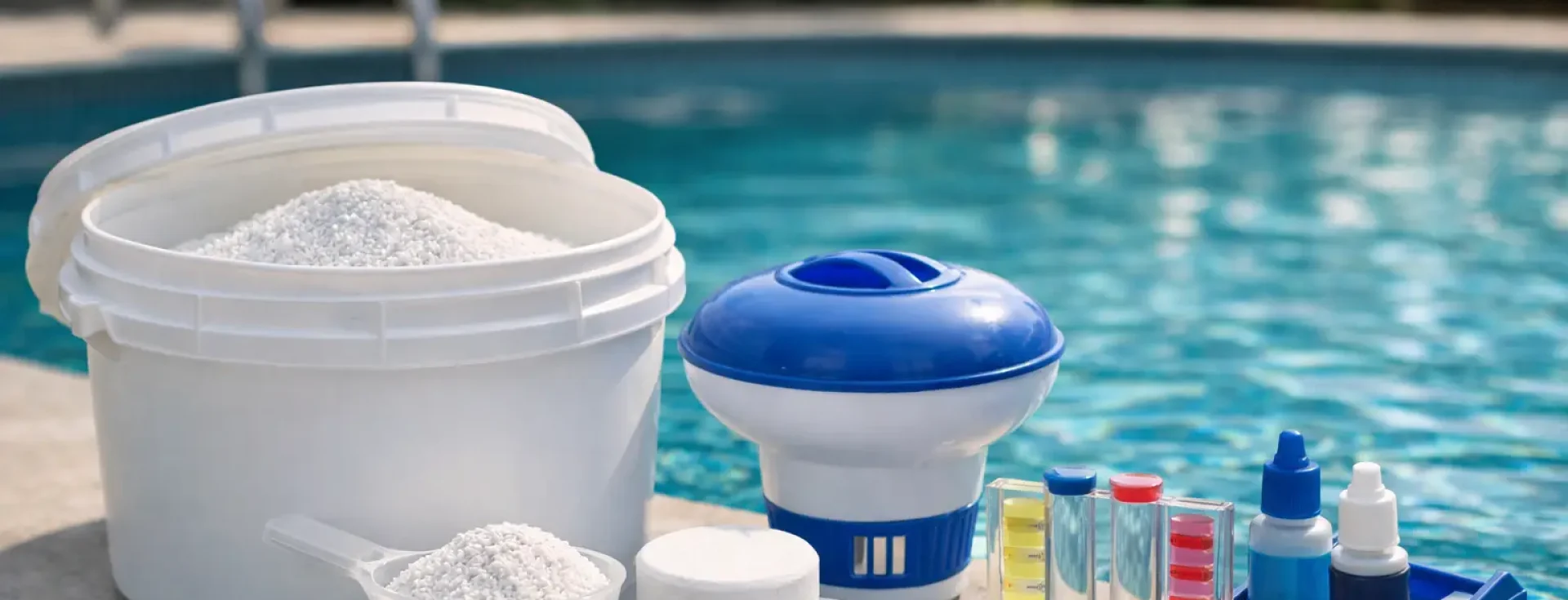
A clear pool can still carry an invisible sanitation problem. In high-use villas, hospitality venues, and commercial facilities, sunlight, heat, swimmer load, and airborne debris can consume chlorine faster than many owners expect. Pool calcium hypochlorite is a powerful solution for restoring and maintaining effective sanitizer levels when it is selected, stored, and applied with professional care.
Often called cal hypo, calcium hypochlorite is a dry chlorine sanitizer widely used in residential and commercial pool maintenance. It offers a high available chlorine content, acts quickly, and does not add cyanuric acid to the water. Those advantages make it a practical choice for premium pools that require dependable water quality without compromising long-term chemical balance.
What Is Pool Calcium Hypochlorite?
Pool calcium hypochlorite is a granular or tablet-form chlorine compound used to sanitize swimming pool water. Most professional-grade products contain a high concentration of available chlorine, commonly around 65% to 73%, although the exact concentration depends on the product formulation.
When added correctly, cal hypo dissolves and releases free chlorine, which helps control bacteria, algae, and organic contaminants introduced by swimmers, leaves, dust, cosmetics, and other debris. It is especially valued for its fast response when chlorine demand rises after heavy pool use or a water-quality event.
Unlike stabilized chlorine products, calcium hypochlorite does not contribute cyanuric acid, often called stabilizer, to the pool. This matters because excessive cyanuric acid can reduce chlorine effectiveness and make routine sanitation more difficult to manage. For pools that already have adequate stabilizer levels, cal hypo can provide a cleaner way to raise free chlorine without increasing that concentration further.
Why Cal Hypo Is Chosen for Premium Pool Care
The principal benefit of cal hypo is its strength. A smaller quantity can deliver meaningful chlorine support, which is useful for larger pools, busy community facilities, hotel environments, and properties where consistent water presentation is essential. It can also be used as part of a corrective treatment program when testing shows low free chlorine or early signs of algae development.
Cal hypo is also a strong option for pools exposed to intense sun and high bather loads. In warm climates, chlorine is consumed rapidly, particularly when circulation is inadequate or when pool water has not been balanced properly. A quality calcium hypochlorite product, combined with reliable filtration and circulation, gives maintenance teams a responsive tool for protecting water clarity and hygiene.
There is a trade-off. Cal hypo adds calcium to the water as it sanitizes. In regions with hard fill water, or in pools that already have elevated calcium hardness, repeated use without monitoring can increase the risk of scale on tile lines, heaters, fittings, and other equipment. This does not make cal hypo unsuitable. It means chemical selection should be based on complete water-test results rather than habit alone.
Pool Calcium Hypochlorite and Water Balance
A sanitizer performs best when the surrounding water chemistry is controlled. Free chlorine, pH, total alkalinity, cyanuric acid, and calcium hardness all influence how a pool looks, feels, and performs. Treating only the chlorine reading may deliver a short-term improvement while leaving the underlying cause unresolved.
Before applying pool calcium hypochlorite, test the water and confirm the current free chlorine level. Check pH as well, because cal hypo can raise it over time. A pH level that is too high can reduce chlorine efficiency and contribute to cloudy water or scale formation. Circulation should be operating properly so that the chemical disperses throughout the pool rather than concentrating in one area.
Calcium hardness deserves particular attention. Pools with plaster, tile, natural stone, heaters, and premium circulation equipment benefit from a balanced saturation condition. Water that is too aggressive can affect surfaces and components, while water that is too scale-forming can leave deposits and reduce equipment efficiency. A professional test and adjustment plan is the most reliable approach for high-value installations.
Stabilizer Levels Affect the Decision
Because cal hypo is unstabilized, it does not protect chlorine from sunlight on its own. Outdoor pools usually need an appropriate cyanuric acid level to prevent rapid chlorine loss from UV exposure. If stabilizer is too low, chlorine may disappear quickly even when the correct dose has been added.
Conversely, if cyanuric acid is already high, choosing cal hypo instead of stabilized chlorine can help avoid making the problem worse. This is one reason a complete water analysis is more useful than selecting chemicals solely by product type or price.
Safe Handling and Storage Requirements
Calcium hypochlorite is an oxidizer, not an ordinary household cleaning product. It must be handled with discipline, kept dry, and stored in its original sealed container in a cool, well-ventilated location. Never place it near fuels, oils, solvents, fertilizers, acids, paper products, or other combustible materials.
Most importantly, never mix cal hypo with any other pool chemical. Mixing chlorine products, especially with acids or stabilized chlorines, can create a dangerous reaction. Use only clean, dry scoops and containers dedicated to that product. Moisture or contamination inside the container can compromise the material and create a safety hazard.
For professional properties, chemical storage should be part of the facility maintenance standard, not an afterthought. Clearly labeled containers, controlled access, dry storage conditions, personal protective equipment, and trained staff protect both the pool operation and the people responsible for it.
Applying Cal Hypo Correctly
Always follow the manufacturer’s label directions for the exact product being used. Available chlorine concentration, application method, and required handling procedures can vary between formulations. Do not estimate doses based on another product or a previous container.
For many granular products, the preferred approach is to pre-dissolve the specified amount in a clean bucket of pool water before distributing it around the pool with the circulation system running. Add chemical to water, never water to chemical. Some products may be designed for direct application or for specific feeder systems, so the label remains the controlling instruction.
Avoid broadcasting dry cal hypo onto delicate surfaces, allowing undissolved granules to settle on the pool floor, or placing it in a skimmer unless the product instructions and pool system design specifically permit it. Concentrated chlorine can discolor surfaces, damage equipment, or create localized chemical stress.
After treatment, allow the water to circulate fully and retest before swimming resumes. The pool should only be reopened when free chlorine and pH are within the recommended operating range. In commercial settings, documented testing and controlled reopening procedures support a safer, more professional operation.
When Cal Hypo May Not Be the Best Choice
Cal hypo is highly effective, but it is not the right answer for every pool. A pool with excessive calcium hardness may require a different sanitation strategy while the water is diluted, treated, or otherwise corrected. Likewise, a pool with very low cyanuric acid may need stabilizer management in addition to chlorine treatment, particularly in sunny outdoor conditions.
It may also be less convenient for owners looking for a completely automated, low-handling routine. Liquid chlorine, salt chlorination, UV systems, ozone, and automated dosing equipment each have different operational benefits. The best solution depends on the pool’s size, finish, water source, usage pattern, equipment room layout, and maintenance expectations.
For luxury villas and commercial assets, the strongest approach is often a tailored program rather than dependence on one chemical alone. Quality circulation equipment, correctly sized filtration, accurate testing, controlled chemical dosing, and scheduled maintenance work together to preserve the appearance and performance of the installation.
Professional Support for Consistent Results
Water treatment should protect more than a chlorine reading. It should preserve finishes, support efficient equipment operation, reduce avoidable service issues, and keep the pool ready for residents, guests, and visitors. This is particularly relevant for high-visibility pools where water clarity and presentation reflect directly on the property.
Aquatic Pools and Fountains supports premium residential and commercial pool environments with quality chemicals, water-testing guidance, equipment expertise, and maintenance-focused technical support. Whether a property requires a reliable cal hypo supply, a balanced sanitation program, or a review of circulation and filtration performance, the right technical advice helps prevent small chemical issues from becoming costly operational problems.
A well-managed pool does not rely on stronger chemicals alone. It relies on the right sanitizer, applied at the right time, with water balance and equipment performance checked as carefully as the pool’s visual finish.