
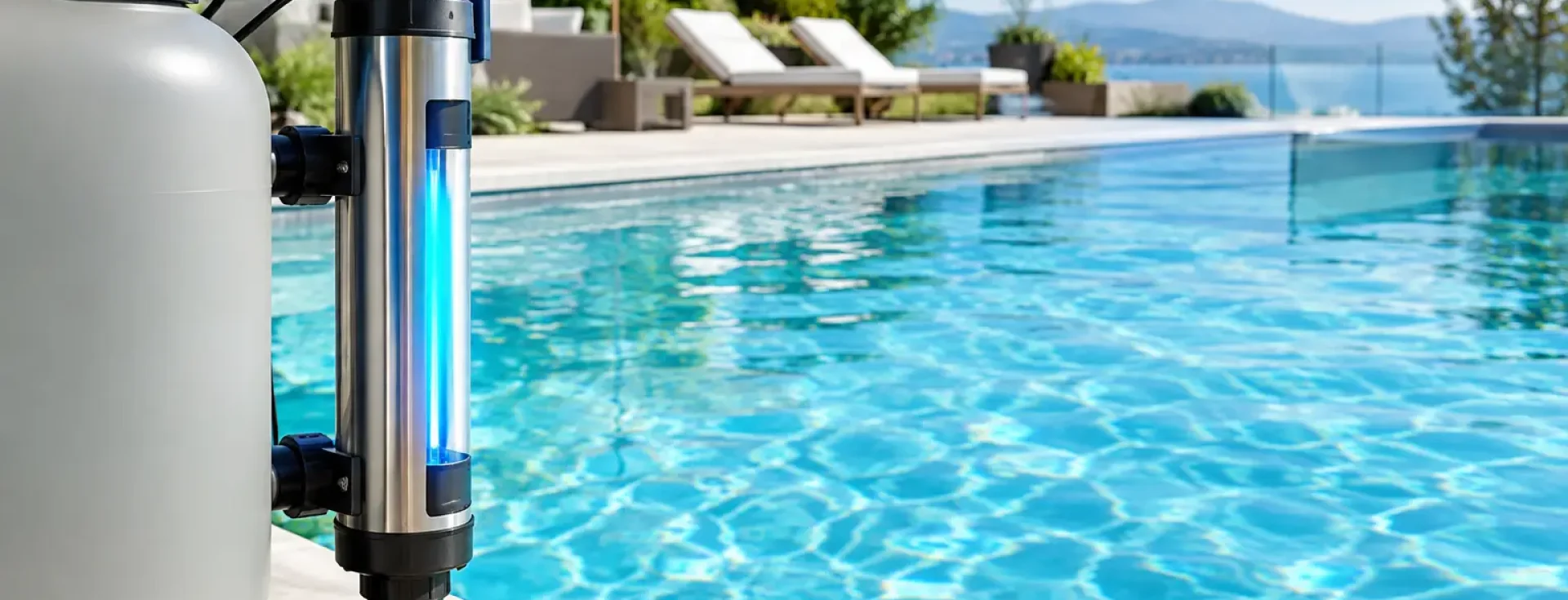
A pool can look crystal clear and still place a heavy demand on chemicals, maintenance teams, and guest confidence. For premium villas, hotels, residential communities, and commercial facilities, ultraviolet disinfection offers a more refined approach to water treatment. The most valuable UV pool sanitizer benefits are cleaner-feeling water, reduced chlorine dependency, and an added layer of protection against microorganisms that conventional treatment may not control as efficiently on its own.
UV technology is not a replacement for a properly designed circulation, filtration, and chemical-control system. It is a high-performance addition that helps the entire system operate with greater consistency. When selected and installed correctly, it supports the elevated water quality expected from luxury aquatic environments.
How a UV Pool Sanitizer Works
A UV pool sanitizer is installed in the circulation line, typically after filtration and before the treated water returns to the pool. As water passes through the chamber, it is exposed to a controlled ultraviolet light. This light disrupts the DNA or RNA of microorganisms, preventing them from reproducing.
The process acts quickly on organisms carried through the circulation system, including bacteria, viruses, algae spores, and chlorine-resistant protozoa. Unlike chemical treatment, UV does not rely on a residual sanitizer in the water to work at the moment of exposure. It treats the water directly inside the unit.
That distinction matters in heavily used pools. Bather load, wind-blown debris, cosmetics, oils, and high temperatures can all increase the sanitation burden. A properly sized UV system helps address that burden before it turns into cloudiness, odor, or excessive chemical consumption.
UV Pool Sanitizer Benefits for Villas and Facilities
A better swimming experience
The chlorine smell many swimmers associate with a pool is often caused by chloramines, not by properly managed free chlorine itself. Chloramines form when chlorine reacts with sweat, body oils, sunscreen, and other contaminants introduced by swimmers. They can contribute to eye irritation, dry skin, and an unpleasant odor around the water.
UV systems are especially effective at breaking down combined chlorine in circulated water. The result can be fresher-smelling water and a more comfortable experience for residents, guests, and regular users. For boutique hotels, wellness facilities, and private villas where presentation matters, this improvement is immediately noticeable.
Lower chlorine demand, not chlorine elimination
One of the strongest UV pool sanitizer benefits is the opportunity to reduce the pool’s chlorine demand. With fewer microorganisms and chloramine compounds placing pressure on the water chemistry, the primary sanitizer can work more efficiently.
However, chlorine or another approved residual sanitizer is still necessary. UV only treats water that passes through its chamber. It does not leave a disinfecting residual in the pool basin, so it cannot protect water between circulation cycles or respond to contamination introduced directly by swimmers. A premium system uses UV and chemical sanitation together, with the chemical program adjusted by qualified technicians rather than reduced by guesswork.
Stronger protection against difficult organisms
Some microorganisms are more resistant to standard chlorine levels than others. Cryptosporidium, for example, can survive in chlorinated water for extended periods. UV treatment provides an additional barrier because it inactivates many chlorine-resistant organisms as they travel through the system.
This is particularly relevant to hospitality pools, apartment communities, schools, fitness clubs, and other facilities with frequent or unpredictable bather loads. The goal is not merely to meet a minimum operating standard. It is to maintain water that performs reliably during busy periods, inspections, and seasonal changes.
More stable water management in warm climates
High ambient temperatures and intense sunlight can accelerate chlorine consumption and make pool chemistry more demanding. In warm regions such as Dubai and the wider UAE, outdoor pools are exposed to conditions that require disciplined circulation, filtration, and treatment design.
UV does not remove the need for routine testing or chemical balancing, but it can reduce the ongoing sanitation load. This gives facility teams a stronger foundation for maintaining clear, balanced water. For owners, it can also mean fewer abrupt corrections after high use, storms, maintenance shutdowns, or periods of extreme heat.
Reduced chemical odor and handling pressure
Lower demand for oxidation chemicals may reduce the frequency and volume of certain chemical additions. That can make pool operations more manageable for maintenance teams while supporting a more pleasant environment around the deck.
The benefit should be viewed realistically. Every pool still requires safe chemical storage, accurate testing, trained handling, and documented maintenance. UV improves the process; it does not make professional water management optional. The best results come from combining the unit with quality dosing equipment, calibrated testing systems, and a clear service schedule.
What UV Does Not Solve on Its Own
A UV sanitizer is a precision component, not a cure for poor pool design or neglected maintenance. If the pump is undersized, the filter is dirty, the circulation pattern is weak, or the chemical balance is uncontrolled, a UV unit cannot compensate for those underlying issues.
Filtration remains essential because UV light works most effectively with clean, well-filtered water. Excessive turbidity, scale, and debris can reduce system performance. The UV lamp and protective sleeve also require scheduled inspection and replacement. A lamp may still appear illuminated after its effective germicidal output has declined, so replacement intervals should follow the equipment manufacturer’s specifications and operating hours.
Sizing is equally critical. A compact residential pool and a high-traffic hotel pool have very different flow rates, turnover requirements, and sanitation loads. Selecting a unit based only on pool volume can lead to disappointing results. The correct specification should account for pump flow, pipework, bather load, filter performance, intended operating hours, and the type of primary sanitizer already in use.
Choosing the Right UV System
For a private villa, the priority may be quiet operation, reduced odor, and clean water that is easy to maintain. For a hotel, residential tower, or commercial facility, the focus often expands to redundancy, peak-load performance, monitoring capability, and integration with existing plant-room equipment.
A professional assessment should begin with the current hydraulic system. Technicians should verify the actual flow rate rather than relying solely on pump nameplate figures. They should also review the filter type, piping configuration, chemical dosing arrangement, electrical supply, and available installation space. Installing UV equipment in the wrong location or at a flow rate beyond its rated capacity limits its effectiveness.
For new construction, UV can be incorporated into the plant-room design from the beginning. This allows cleaner pipe routing, correct bypass arrangements, service access, and space for future maintenance. For existing pools, a retrofit can be highly effective when the installation is designed around the current system rather than forced into an unsuitable section of pipework.
Professional Installation Protects the Investment
Premium pool equipment earns its value through dependable long-term operation. That requires more than purchasing a quality UV chamber. Correct installation, commissioning, water balancing, and service support determine whether the system delivers its intended performance.
Aquatic Pools and Fountains supports residential and commercial clients with UV disinfection solutions that complement high-quality pumps, filters, dosing equipment, and water-testing systems. A coordinated approach protects both the visual standard of the pool and the reliability of the equipment behind it.
For property owners and facility managers, the right question is not simply whether UV is beneficial. It is whether the pool’s complete circulation and treatment system is ready to use UV effectively. A well-specified unit, professionally integrated and routinely maintained, gives premium water environments the confidence, comfort, and consistency their users expect.