Cloudy water that keeps coming back after chemical balancing is usually not a chemistry problem alone. It is often the first practical clue in deciding when replace pool filter media becomes necessary. For villa pools, hotel facilities, and high-use commercial systems, waiting too long can reduce water quality, increase operating pressure, and place avoidable strain on pumps and circulation equipment.
Pool filter media is not designed to perform at the same level forever. Over time, it becomes compacted, worn, contaminated, or less efficient at trapping fine particles. That decline can be gradual, which is why many owners postpone replacement until performance becomes noticeably poor. In premium aquatic environments, that approach is costly. Water appearance suffers first, then energy efficiency, then the service life of connected equipment.
When replace pool filter media depends on the filter type
The right replacement schedule depends on the media inside the filter and how heavily the pool is used. A residential villa pool with disciplined maintenance will age media differently than a hospitality pool, community facility, or real estate asset with frequent daily traffic.
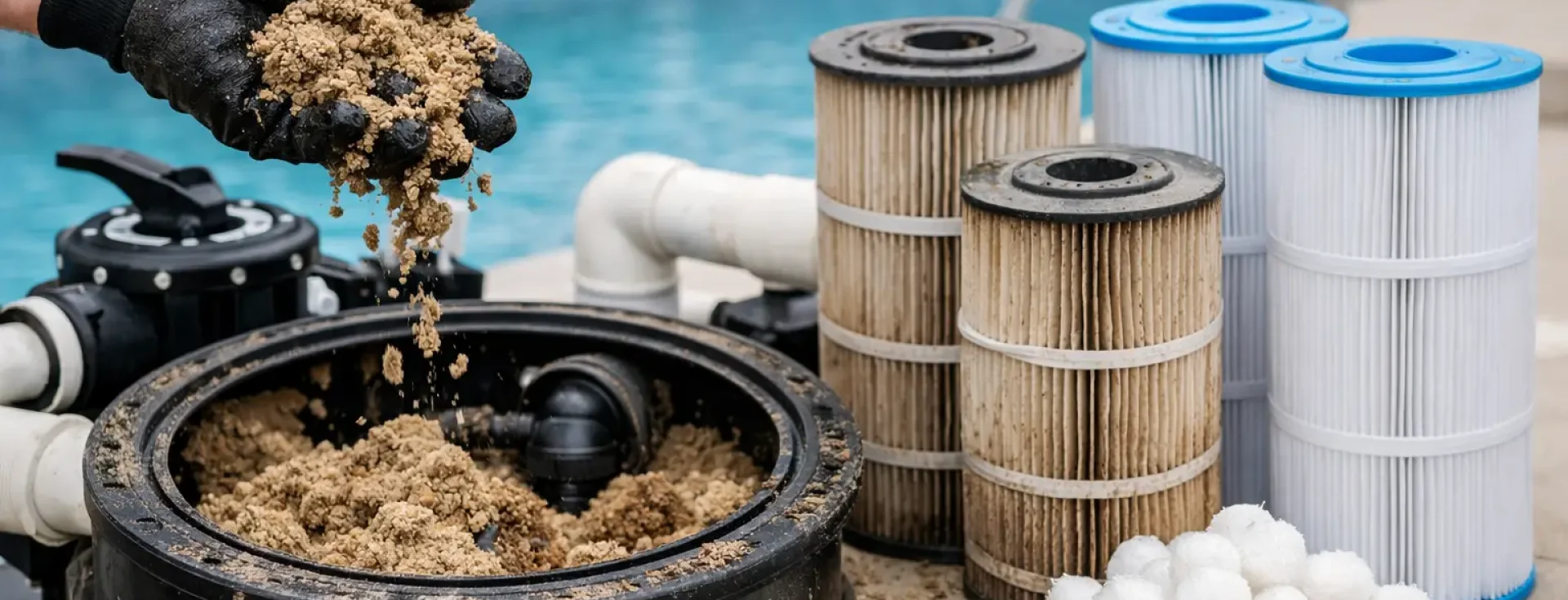
Sand media usually lasts around 3 to 5 years under normal operating conditions. In some well-maintained systems it can stretch longer, but that is not always a sign of good value. Older sand often becomes rounded and less effective, which means filtration quality drops before the media appears fully spent.
Glass media generally offers a longer service life, often around 5 to 8 years. It is valued for improved filtration performance and lower likelihood of channeling compared with lower-grade sand. Even so, glass is not maintenance-free. Oils, scale, and debris buildup can still reduce efficiency over time.
Cartridge filters follow a different pattern because the cartridge itself is the media. Most cartridges need replacement every 1 to 3 years, depending on water balance, cleaning frequency, bather load, and environmental debris. A cartridge that has been cleaned repeatedly but no longer restores flow is no longer delivering premium filtration.
Diatomaceous earth grids and media also require closer monitoring. The DE powder is replenished regularly, but the internal grids or elements wear out and typically need replacement every few years depending on operating conditions. Tears, clogging, or loss of structural integrity affect filtration quality quickly.
The operational signs that replacement is overdue
A filter rarely fails without warning. In most cases, the system gives several clear signals before media replacement becomes urgent.
One of the most common signs is reduced water clarity even when sanitizer levels and pH are within range. If the water looks dull, hazy, or slow to recover after use, the filter may no longer be capturing fine suspended material effectively.
Another sign is rising filter pressure after backwashing or cleaning. A pressure increase is normal as debris accumulates, but if pressure remains elevated or returns too quickly, the media may be compacted, fouled, or channeling. That means water is no longer moving through the media bed as intended.
Shorter cleaning cycles are also a warning. If your team is backwashing more often than before, or if cartridge cleaning delivers only brief improvement, the media has likely lost its working capacity. Frequent maintenance without lasting performance is a strong indicator that replacement is more economical than continued labor.
You may also notice uneven circulation, poor vacuum performance, or debris returning to the pool. These symptoms do not always point to media alone, since valves, pump sizing, and internal filter components can also contribute. Still, media condition should be one of the first technical checks.
Why pool conditions in the UAE can shorten media life
Replacement timing is never based on the calendar alone. Local operating conditions matter, and in demanding climates they matter a great deal.
Pools exposed to fine dust, high temperatures, sunscreen residue, landscaping debris, and heavy year-round use place more stress on filter media than lightly used seasonal pools. In these conditions, media can foul faster and lose efficiency earlier than the standard replacement window suggests.
Commercial and hospitality settings also create more wear because the filtration system runs longer, handles higher bather loads, and must maintain a more consistent visual standard. A luxury pool that looks acceptable at a private home may still fall below the expected standard for a hotel, residential tower, or showcase property.
This is why experienced service planning focuses on performance benchmarks, not just age. Media that technically still functions may still be underperforming relative to the appearance, hygiene, and reliability standards expected in premium aquatic environments.
When cleaning is enough and when replacement is smarter
Not every filtration problem means the media must be replaced immediately. Sometimes a deep clean, correct backwash procedure, or chemical treatment for oils and scale can restore acceptable performance.
That said, there is a clear point where continued cleaning becomes a false economy. If the system returns to poor pressure or weak filtration soon after service, the media is no longer delivering dependable results. The cost of repeated labor, excess water use, chemical adjustment, and pump strain can exceed the cost of timely replacement.
For cartridge systems, visible wear is especially important. Cracked end caps, frayed pleats, flattened fabric, and permanent staining all indicate the cartridge is near the end of its service life. For sand and glass filters, clumping, channeling, calcification, and hardened media beds are stronger indicators than appearance alone.
A technical inspection is the fastest way to separate a maintenance issue from a replacement issue. That matters for property owners and facility managers who need accurate decisions, not guesswork.
How delayed replacement affects the rest of the system
Filter media is often treated as a small consumable decision, but the impact is much broader. Poor media condition can increase head pressure, force pumps to work harder, and reduce overall circulation efficiency. Over time, that can influence energy use, maintenance frequency, and wear on connected equipment.
It also affects chemical performance. When fine contaminants remain in circulation, sanitizers work harder and water balance becomes less stable. You may see recurring cloudiness, increased chlorine demand, and inconsistent water quality even when the chemical dosing plan appears correct.
In high-value residential and commercial properties, appearance matters as much as mechanics. A pool or fountain with flat, dull, or visibly imperfect water does not support a premium environment. Clean water should look polished, not just pass a basic test reading.
A practical replacement approach for owners and facility teams
The best replacement strategy is proactive rather than reactive. Keep a service record of installation dates, pressure readings, backwash frequency, and any decline in water clarity. Those details reveal trends long before complete performance failure.
If the pool is residential and lightly used, an annual inspection may be enough to determine whether the media still meets operating standards. For commercial pools, hospitality assets, and heavily used community systems, inspections should be more frequent and tied to actual load and performance expectations.
It is also worth reviewing whether the existing media type still suits the application. In some systems, upgrading from standard sand to higher-grade glass media can improve filtration quality and reduce long-term maintenance demands. The right choice depends on filter design, operating volume, and the level of finish expected from the water.
Aquatic Pools and Fountains supports this kind of decision with both equipment supply and technical guidance, which is especially valuable for clients managing premium pools where reliability and presentation cannot be compromised.
The right time is before performance becomes visible
If you are asking when replace pool filter media, the best answer is usually earlier than most owners expect. Replacement should happen when the media no longer supports clean, efficient, and stable operation at the standard your property demands, not only when the problem becomes obvious to guests or residents.
Clear water is not just the result of chemicals. It depends on strong hydraulic performance, correct filtration, and media that still does its job with precision. Replacing filter media at the right time protects water quality, preserves equipment, and keeps the entire aquatic space operating the way a premium installation should.