
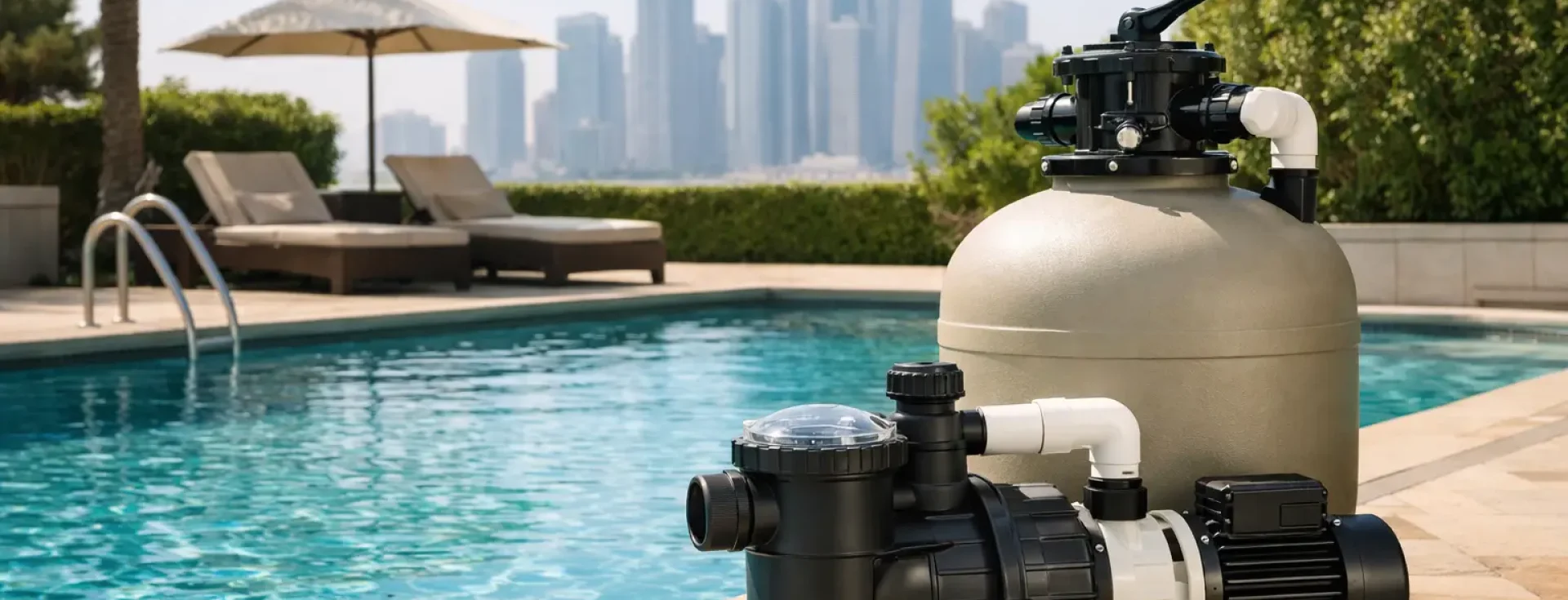
A pool can look immaculate at handover and still lose its clarity within days if circulation is undersized, poorly matched, or incorrectly installed. Swimming pool filter pumps are the working center of every healthy pool system, moving water through the filter, heater, disinfection equipment, and return inlets so each component can perform as intended. For villas, hotels, residential towers, and commercial facilities across the UAE, choosing the right equipment is a decision that affects water quality, operating cost, and long-term maintenance.
Why Swimming Pool Filter Pumps Matter
A filter captures debris, but it cannot do its job without a pump supplying the right flow rate. The pump draws water from skimmers and main drains, pushes it through the filtration system, and returns treated water to the pool. When circulation is consistent, chemicals distribute more evenly, fine debris is removed more effectively, and the risk of stagnant areas is reduced.
The consequences of poor selection are usually visible. An undersized pump may leave the water cloudy, increase algae risk, and struggle to support heaters, chlorinators, or water features. An oversized pump can create excessive pressure, waste electricity, produce unnecessary noise, and shorten the life of filters and pipework. Premium pool performance is not about selecting the biggest unit. It is about engineering a balanced system.
This is especially relevant in the UAE, where high ambient temperatures, frequent pool use, airborne dust, and demanding hospitality standards place greater pressure on circulation equipment. A system that is adequate on paper may not deliver the same result in a heavily used rooftop pool or a luxury villa pool exposed to heat and sand.
Start With the Required Flow Rate
Pump selection begins with the pool volume and the required turnover rate. Turnover is the amount of time needed for the full water volume to pass through the filtration system. Residential pools commonly require a full turnover within several hours, while commercial pools, hotel pools, and high-bather-load facilities may require more frequent circulation based on their operating conditions and applicable requirements.
Pool volume alone is not enough. The required flow rate must account for the distance from the pool to the plant room, pipe diameter, fittings, bends, elevation changes, filter resistance, and additional equipment. A pool with a heat-cool pump, UV system, salt chlorinator, automatic dosing unit, or decorative water feature needs a circulation design that considers the total hydraulic load.
For example, a compact villa pool with a nearby equipment room may operate efficiently with a different pump specification than a pool of the same volume located several floors below a tower podium. The second installation can have substantially higher resistance due to longer pipe runs and vertical lift. Selecting by horsepower alone ignores these realities.
Flow Rate and Head Pressure Must Be Considered Together
A pump curve shows the relationship between flow and head pressure. As resistance in the system increases, the flow delivered by the pump decreases. This is why a pump’s maximum flow rating should never be treated as its actual site performance.
A professional assessment identifies the design flow needed, then checks whether the pump can achieve that flow at the calculated total dynamic head. The filter must also be sized to accept the flow without excessive pressure or poor filtration. This coordinated approach protects every part of the system rather than treating the pump as an isolated purchase.
Match the Pump to the Filter and Equipment Room
Swimming pool filter pumps and filters should be selected as a working pair. A pump that pushes more water than the filter can accommodate can cause channeling in media filters, reduced filtration efficiency, frequent backwashing, and unnecessary strain. If the pump is too small for the filter and plumbing design, water movement may be inadequate.
Sand filters remain a trusted choice for many residential and commercial pools because they are durable, practical, and effective for routine filtration. Cartridge filters can be suitable where water conservation, compact footprints, or fine filtration are priorities, although cleaning requirements must be planned. Glass media filters offer excellent filtration performance and can be an attractive option for premium installations seeking a refined, long-term solution.
The equipment room itself also deserves attention. A premium pump should be accessible for inspection, basket cleaning, service, and replacement. There must be adequate ventilation, a properly designed drainage arrangement, suitable isolation valves, and a stable base that limits vibration. In commercial projects, clear labeling and service access save time during routine maintenance and emergency response.
Single-Speed, Variable-Speed, or Commercial-Duty Pumps?
The right motor technology depends on usage, schedule, and project objectives. Single-speed pumps can be appropriate for straightforward systems with fixed operational requirements. Their initial cost is often lower, and they remain a familiar option for some applications.
Variable-speed pumps provide greater control. They can run at lower speeds for routine filtration and increase output when backwashing, operating water features, heating, vacuuming, or managing peak bather loads. Because lower-speed operation generally uses less energy and produces less noise, variable-speed technology is often a strong choice for villas, hospitality properties, and developments focused on efficient operation.
Commercial-duty pumps are designed for higher flow demands, extended operating hours, and more intensive service environments. They may be needed for large pools, competition pools, hotel facilities, water features, or installations with multiple filtration lines. Their selection should include motor protection, control compatibility, service availability, and the ability to integrate with automated building or pool management systems.
The best option depends on the entire hydraulic design. A variable-speed model offers real advantages, but it cannot correct incorrect pipe sizing or an undersized filter. Likewise, a heavy-duty commercial pump is not automatically the premium choice for a quiet residential pool where low noise and efficient low-speed circulation matter more.
Consider Water Features, Heating, and Treatment Systems
Modern pools are rarely simple circulation loops. Infinity edges, spa jets, cascades, fountains, deck jets, in-floor cleaning systems, and water walls often need dedicated pumps or carefully separated hydraulic circuits. Asking one filtration pump to operate every function can compromise both water quality and visual performance.
Heating and cooling equipment also requires a specified flow range. Too little flow can trigger faults or reduce heat transfer, while too much flow may increase resistance and operating pressure. Salt chlorinators, UV units, ozone systems, and chemical dosing equipment require correct placement and flow conditions to perform reliably.
For this reason, a technical review should examine the full equipment schedule before selecting the pump. It is more cost-effective to design the correct circulation arrangement at the beginning than to rework plumbing and controls after commissioning.
Installation Quality Protects Pump Performance
Even leading global brands require precise installation. The suction side of the system must be airtight, as small air leaks can cause priming problems, noisy operation, and reduced flow. Pipework should be correctly supported, valves should be installed where they can be serviced, and the pump should not be forced to pull water through unnecessarily restrictive plumbing.
Electrical protection is equally important. Pumps require correct voltage, grounding, weather-appropriate components, and control settings matched to the motor. In UAE outdoor installations, protection from direct weather exposure, heat buildup, and dust accumulation supports reliable operation.
At Aquatic Pools and Fountains, equipment selection can be supported by technical guidance, professional installation, and ongoing maintenance planning. This gives property owners and project teams one experienced partner for the pump, filter, controls, treatment equipment, and service requirements around the complete pool environment.
Maintenance Keeps Circulation at Its Best
A quality pump is durable, but it still needs routine attention. The strainer basket should be cleaned before debris restricts flow. Pressure readings should be monitored because a rising filter pressure often indicates the need for cleaning or backwashing. Unusual noise, air bubbles at the return inlets, leaks around seals, and declining water movement should be inspected promptly.
Variable-speed pumps should also be programmed for the pool’s real operating needs. A residential pool may benefit from longer, low-speed filtration with scheduled higher-speed periods. A hotel pool may need a different program for peak guest hours, cleaning cycles, and water-feature operation. The correct schedule balances clarity, energy use, and equipment life.
A circulation system should feel quiet, controlled, and dependable in the background. When selecting swimming pool filter pumps, invest in correct sizing, compatible filtration, professional installation, and a maintenance plan that protects the standard your property is designed to deliver.